
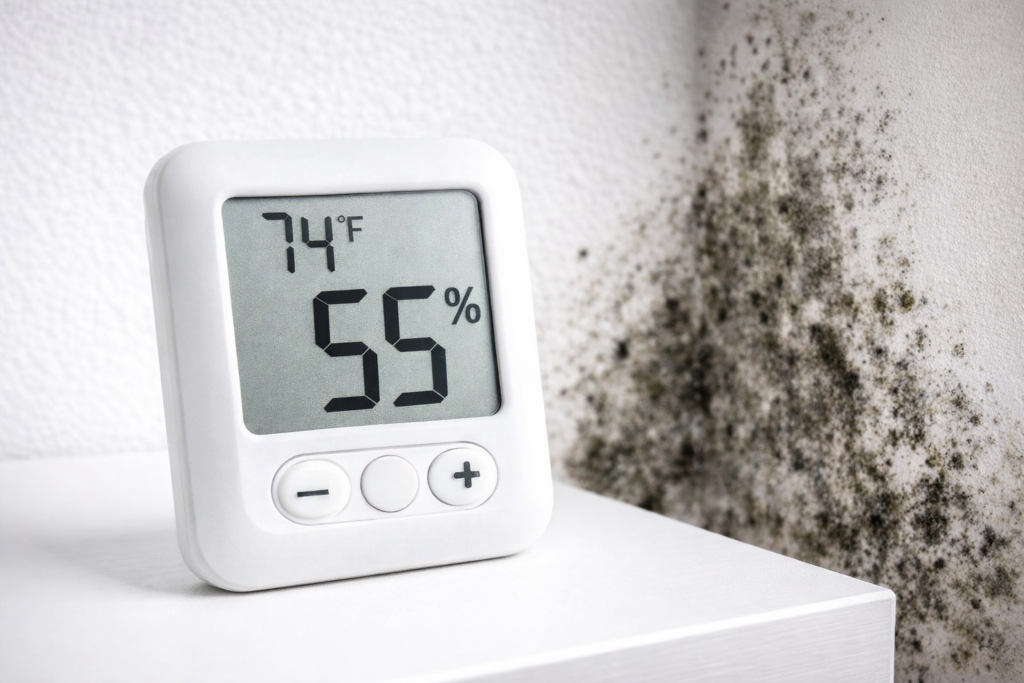
Can mold grow at 55% humidity? This is a common question for homeowners trying to prevent mold and moisture problems indoors. While mold usually becomes more likely above 60% humidity, levels around 55% can still create conditions where mold spores begin to grow if moisture accumulates.
The short answer is: mold growth becomes possible around this level, but it depends on several factors such as temperature, ventilation, and surface moisture. Understanding how humidity affects mold can help you prevent damage to your home and protect your health.
According to the EPA, indoor humidity should generally stay between 30% and 50%.
Is 55% Humidity High Enough for Mold to Grow?
Mold requires three main conditions to grow:
- Moisture
- Organic material (like wood, drywall, or dust)
- Warm temperatures
When indoor humidity reaches around 55%, the environment becomes more favorable for mold spores to settle and begin developing on damp surfaces.
However, mold does not usually start growing immediately at 55% humidity alone. Problems tend to appear when humidity stays elevated for long periods or when condensation forms on surfaces.
For example, areas like bathrooms, basements, kitchens, and poorly ventilated rooms can create micro-environments where moisture accumulates and mold growth becomes more likely.
What Humidity Level Causes Mold?
Experts generally agree that mold risk increases significantly when indoor humidity rises above 60%.
According to environmental health recommendations, maintaining indoor humidity between 30% and 50% is considered the safest range for preventing mold growth and maintaining healthy indoor air.
Here is a simple guideline for humidity levels:
Humidity Levels and Mold Risk
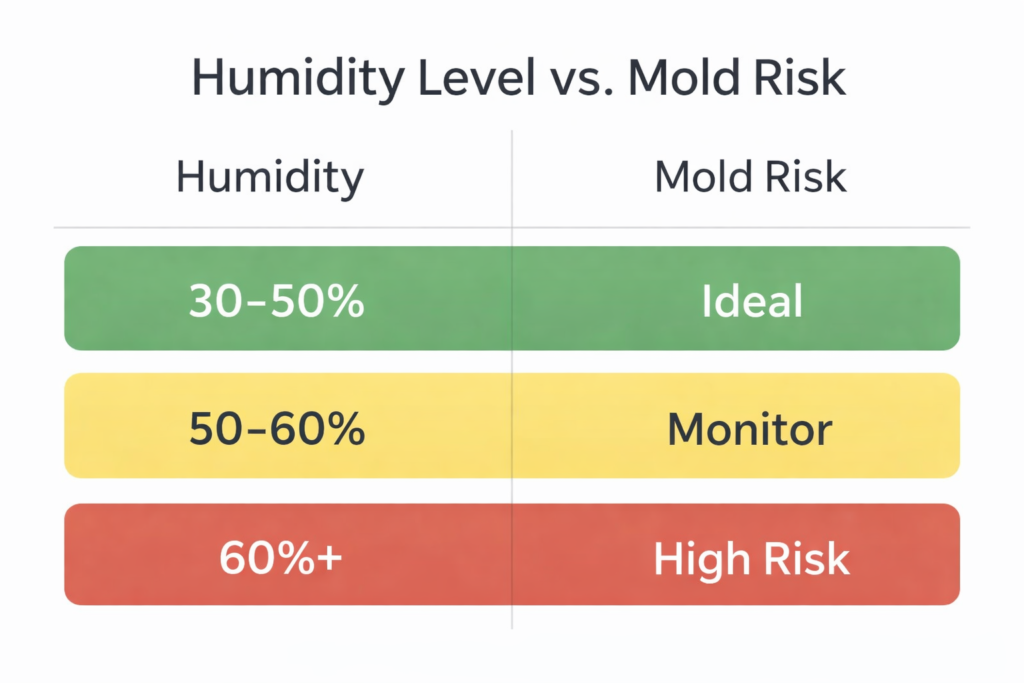
| Humidity Level | Mold Risk |
|---|---|
| Below 30% | Too dry |
| 30%–50% | Ideal range |
| 50%–60% | Monitor conditions |
| Above 60% | High mold risk |
At 55% humidity, your home is approaching the upper edge of the recommended range. While mold may not appear immediately, conditions are becoming favorable for growth if moisture persists. ideal indoor humidity level
Why Mold Can Still Appear at 55% Humidity
Even if your home’s average humidity is around 55%, mold can still develop in certain locations where moisture accumulates.
This happens because humidity is not always evenly distributed throughout a house.
Common areas where mold can grow despite moderate humidity include:
- Behind furniture placed against cold walls
- Inside closets with limited airflow
- Basements and crawl spaces
- Bathrooms with poor ventilation
- Window frames where condensation forms
In these spots, localized humidity can easily exceed 60–70%, creating ideal conditions for mold spores to grow. Is 60% humidity too high indoors?
How Long Does Mold Take to Grow?
Mold spores exist naturally in the air and can begin developing quickly when the right conditions appear.
In humid environments with sufficient moisture, mold can start forming in as little as 24 to 48 hours.
This is why controlling humidity is so important. Preventing excess moisture in the first place is far easier than removing mold once it spreads.
How to Prevent Mold When Humidity Is Around 55%
If your home’s humidity level regularly sits around 55%, there are several steps you can take to reduce mold risk.
Improve ventilation
Proper airflow helps moisture evaporate and prevents damp areas from forming. Use bathroom fans, kitchen exhaust systems, and open windows when possible.
Monitor humidity levels
Using a digital hygrometer allows you to track indoor humidity and quickly identify when levels start rising.
Use a dehumidifier if necessary
In humid climates or damp basements, a dehumidifier can keep humidity within the recommended 30–50% range.
Fix leaks and condensation
Water leaks, pipe condensation, and roof damage can all introduce moisture that encourages mold growth.
Keep air circulating
Ceiling fans and air circulation prevent stagnant humid air from building up in certain areas of the home.
How to Measure Indoor Humidity
The easiest way to monitor humidity levels in your home is by using a hygrometer. A hygrometer is a small device that measures the amount of moisture in the air.
Most digital hygrometers display both temperature and relative humidity, making it easy to track indoor conditions throughout the day.
These devices are inexpensive and can be placed in different rooms to identify areas where humidity may be higher.
By checking humidity regularly, homeowners can detect potential moisture problems before mold begins to develop.
If humidity frequently rises above 55–60%, using a dehumidifier or improving ventilation can help restore a healthier balance indoors.
Does 55% Humidity Cause Mold in Different Rooms?
Humidity levels can vary throughout a home, which means mold risk is not the same in every room. Even if the average indoor humidity is around 55%, certain spaces may trap moisture more easily.
Bathrooms, basements, kitchens, and laundry rooms often experience higher humidity levels because of water usage and limited ventilation.
For example, hot showers can raise bathroom humidity above 70% for short periods of time. If moisture remains trapped in the room, mold may begin developing on grout, ceilings, or walls.
Basements are another common area where mold appears. These spaces tend to stay cooler and may trap damp air, especially in older homes with poor ventilation.
Keeping humidity under control in these rooms is essential for preventing mold growth throughout the house.
Is 55% Humidity Safe Indoors?
In most homes, 55% humidity is considered slightly above the ideal range but still manageable. The key is ensuring that humidity does not continue rising or remain high for extended periods.
Maintaining humidity closer to 40–50% provides a comfortable indoor environment while minimizing the risk of mold, dust mites, and other moisture-related problems.
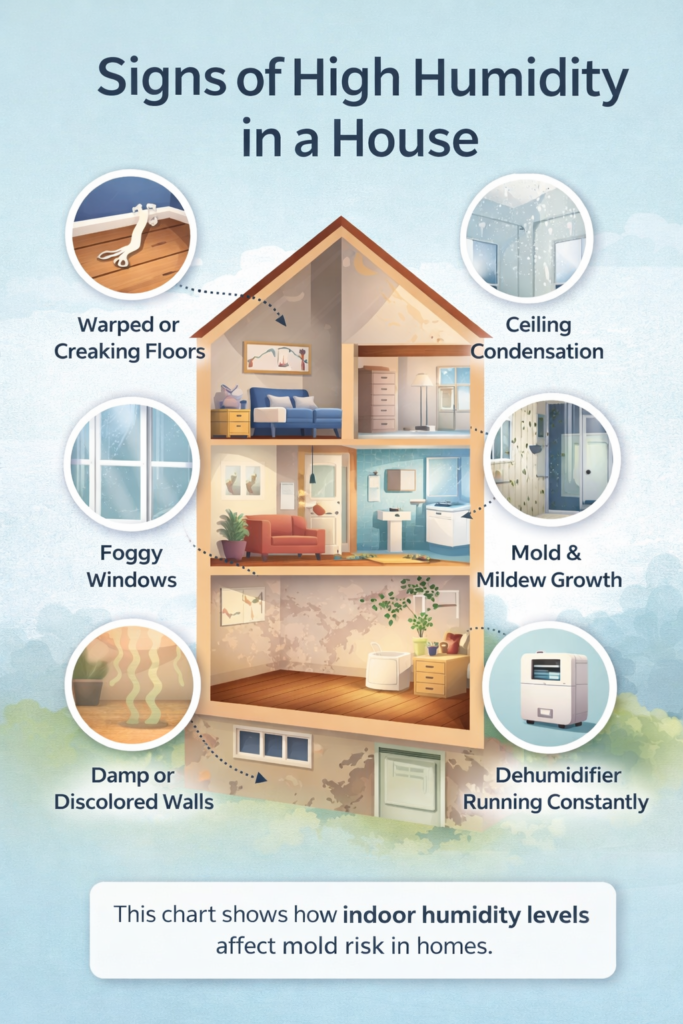
Signs Your Home May Have High Humidity
Even when indoor humidity is around 55%, certain conditions can allow moisture to accumulate in parts of your home. Poor ventilation, temperature differences, and hidden moisture sources can all contribute to localized humidity problems.
Learning to recognize the early signs of high humidity can help prevent mold growth before it becomes a serious issue.
- Condensation on windows – When warm indoor air meets cooler glass surfaces, moisture forms droplets.
- Musty odors – Persistent damp smells are often one of the first indicators of mold development.
- Damp or discolored walls – Moisture trapped in drywall or paint can cause stains or peeling.
- Foggy mirrors and windows – Bathrooms and kitchens often show the first signs of excess humidity.
- Mold spots in corners – Dark spots appearing near ceilings, baseboards, or behind furniture.
If you notice these symptoms in your home, it may be a sign that indoor humidity is staying too high for too long, even if your hygrometer reads around 55%. Improving ventilation, running exhaust fans, and monitoring humidity levels regularly can help reduce the risk of mold growth.
Health Risks of Mold in Humid Homes
Mold growth inside a home can lead to several health issues, particularly for individuals with allergies, asthma, or respiratory conditions.
Mold spores released into the air can trigger symptoms such as coughing, nasal congestion, throat irritation, and itchy eyes.
In sensitive individuals, prolonged exposure to mold may worsen asthma symptoms and lead to breathing difficulties.
Children, elderly individuals, and people with weakened immune systems are often more vulnerable to mold-related health problems.
Maintaining proper humidity levels is the key to Can Mold Grow at 55% Humidity.
Is 55% humidity too high indoors?
Humidity levels around 55% are slightly above the ideal indoor range but are generally manageable. However, if humidity remains at this level for long periods, it can increase the risk of mold growth.
At what humidity level does mold start to grow?
Mold growth becomes more likely when indoor humidity rises above 60%. Keeping humidity between 30% and 50% is typically recommended to reduce mold risk.
How can I lower humidity in my home?
Improving ventilation, using exhaust fans, fixing leaks, and running a dehumidifier can all help lower indoor humidity levels.
Final Thoughts
Can Mold Grow at 55% Humidity? Mold can begin growing when indoor humidity levels stay elevated and moisture accumulates on surfaces. While 55% humidity alone does not automatically cause mold, it is close to the threshold where problems can develop.
Keeping indoor humidity between 30% and 50%, improving ventilation, and monitoring moisture levels are the best ways to prevent mold growth and maintain a healthy home environment.