
The ideal indoor humidity level for most homes is between 30% and 50%. Keeping humidity within this range helps prevent mold growth, reduce condensation, and improve indoor comfort year-round.
Quick answer: The ideal indoor humidity level is between 30% and 50%. Levels above 60% increase mold risk, while levels below 30% can cause dry air discomfort.
Indoor humidity plays a critical role in comfort, air quality, and long-term home maintenance. When moisture levels are too high or too low, problems like mold growth, condensation, dry air discomfort, and structural damage can begin to appear. Understanding the ideal humidity level for your home helps you maintain a healthier and more stable indoor environment year-round.
The Recommended Indoor Humidity Range (30–50%)
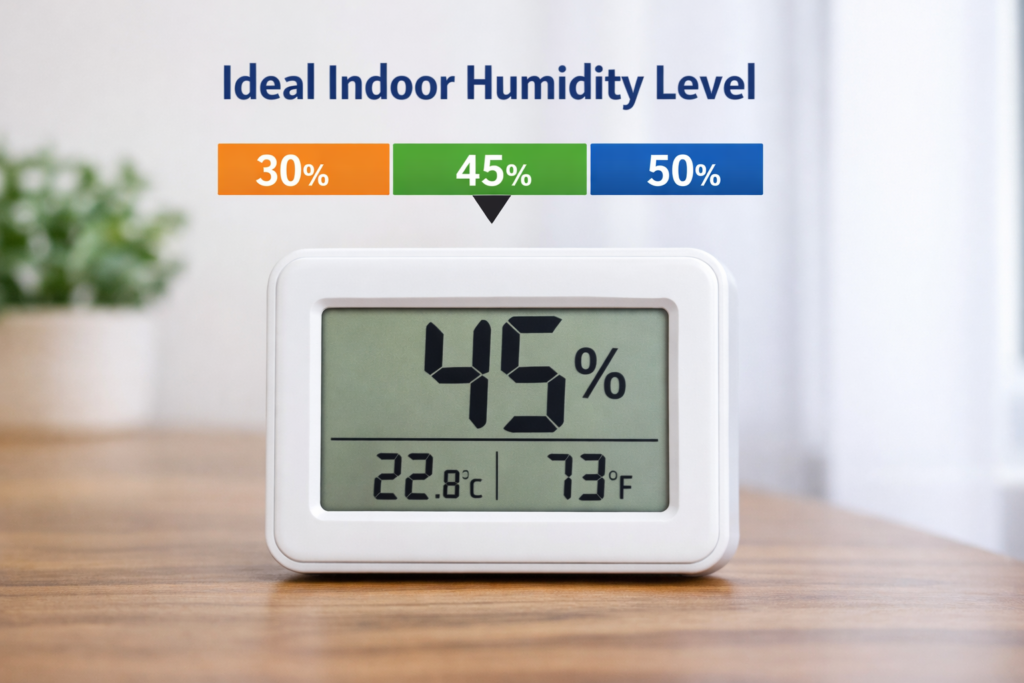
The ideal indoor humidity level for most homes falls between 30% and 50%. This range is widely recommended by building science experts and environmental agencies because it balances comfort, air quality, and moisture control.
At levels above 60%, excess moisture can begin to create conditions favorable to mold growth, dust mites, and condensation on windows. On the other hand, humidity below 30% may result in dry air discomfort, static electricity, and potential damage to wood materials over time.
Keeping humidity within the 30–50% range helps maintain a stable and healthy indoor environment throughout the year.
| Humidity Level | What It Means | Risk |
| Below 30% | Too dry | Static electricity, dry skin and airways, cracked wood or paint |
| 30–50% (EPA ideal range) | Ideal indoor humidity | Balanced comfort with minimal mold or dryness risk |
| Above 60% | Too humid | Mold growth, dust mites, condensation, and moisture damage |
Why Is 30–50% the Recommended Humidity Range?
According to building science recommendations and environmental agencies such as the EPA, the 30–50% indoor humidity range is recommended because it represents a balance between moisture control and comfort. At this level, indoor air is humid enough to prevent excessive dryness, but not so humid that it promotes mold growth or condensation problems.
Relative humidity directly affects how moisture interacts with building materials such as drywall, insulation, wood flooring, and paint. When indoor humidity stays within the recommended range, it helps protect these materials from expansion, contraction, and long-term structural damage.
Additionally, maintaining humidity within 30–50% can reduce allergens like dust mites and improve overall air quality, creating a healthier living environment.
Closer to the edges of that range? See whether 60% humidity is too high indoors, or whether 40% humidity is too low for comfort.
What Does the EPA Say About Ideal Indoor Humidity?
The U.S. Environmental Protection Agency (EPA) recommends maintaining indoor relative humidity between 30% and 50%. According to the EPA, keeping humidity within this range helps reduce the risk of mold growth, condensation, and moisture-related damage. The EPA’s guide to indoor moisture control puts it directly: keep relative humidity below 60%, ideally between 30% and 50%.
When indoor humidity rises above 60%, the likelihood of mold and dust mites increases significantly. For this reason, the EPA emphasizes consistent monitoring and proper ventilation to maintain a stable indoor environment.
Sitting right at the edge of that range? We break it down in detail in can mold grow at 55% humidity.
How Relative Humidity Affects Indoor Comfort
Relative humidity influences how warm or cool your home feels. High humidity can make air feel heavier and warmer than it actually is, while low humidity can make indoor spaces feel cooler and drier. Maintaining balanced humidity levels improves perceived comfort without over-relying on heating or air conditioning systems. If your AC is running but the air still feels sticky, see why you might feel humid even with the AC on.
Not sure how relative humidity differs from other ways of measuring moisture? See relative humidity vs. absolute humidity explained.
What Happens If Indoor Humidity Is Too High?
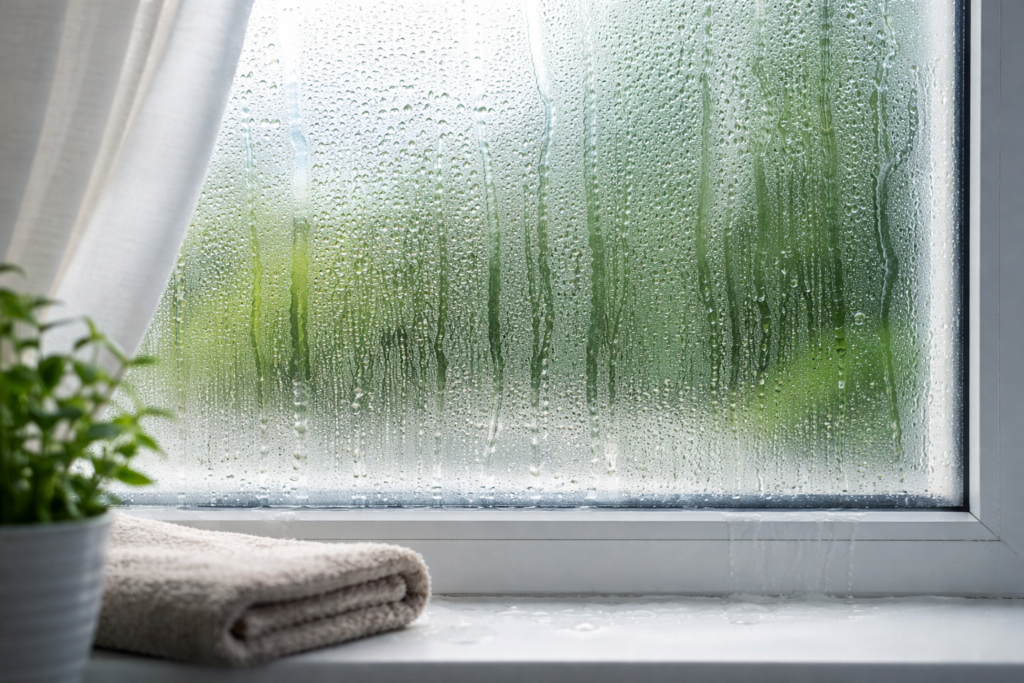
When indoor humidity levels rise above 60%, excess moisture can begin to create problems throughout the home. High humidity provides the ideal environment for mold growth, mildew, and dust mites — all of which can negatively impact air quality and respiratory health.
You may start noticing condensation forming on windows, damp smells in basements, or moisture collecting in bathrooms and poorly ventilated areas. Over time, excessive humidity can damage wood flooring, warp doors, and contribute to peeling paint or bubbling drywall.
For the exact threshold to watch for, see what humidity level prevents mold growth.
In particularly humid climates, managing indoor moisture often requires mechanical solutions such as dehumidifiers or improved ventilation systems.
Common Signs of High Humidity in a Home
- Condensation on windows
- Musty odors
- Visible mold spots
- Damp basement air
- Peeling paint or warped wood
For the full list of warning signs and what to do about each one, see signs your home has high humidity. If condensation on windows is your main issue, check out why condensation forms on windows.
What Happens If Indoor Humidity Is Too Low?
Indoor humidity below 30% can create a different set of problems. While low humidity does not promote mold growth, it can negatively affect comfort, air quality, and building materials.
Dry indoor air may cause irritated skin, dry throat, and static electricity. In colder climates, excessively low humidity during winter months can also lead to cracking in wood flooring, shrinking door frames, and damage to furniture over time.
Maintaining humidity within the recommended 30–50% range helps prevent both moisture-related damage and excessive dryness.
Common Signs of Low Indoor Humidity
- Dry or irritated skin
- Static electricity
- Cracked wood or furniture
- Gaps in hardwood floors
- Increased respiratory discomfort in winter
For the full list of warning signs and what to do about each one, see signs your home has low humidity. Dry skin and static are two of the most common complaints — see how humidity affects your skin and hair for the full picture.
Ideal Humidity Levels by Room
While 30–50% is the general recommendation for most homes, certain rooms may require slightly different humidity control strategies depending on ventilation, moisture exposure, and usage.
Understanding how humidity behaves in specific areas of the home helps prevent localized moisture problems and improves overall indoor comfort.
For a more detailed breakdown, see our guide on ideal humidity levels by room.
Basement Humidity Level
Basements tend to accumulate more moisture due to limited ventilation and proximity to soil. Ideally, basement humidity should remain closer to 30–50%, but never exceed 60%. In humid climates, dehumidifiers are often necessary to maintain stable levels and prevent mold growth.
Bedroom Humidity Level
Bedrooms should generally maintain humidity between 30% and 50% for optimal comfort and air quality. Balanced humidity levels can improve sleep comfort and reduce allergens such as dust mites.
For sleep quality specifically, see our guide to the best humidity level for sleeping, and if you’re adding a humidifier, check how to choose the right humidifier for your bedroom.
Bathroom Humidity Level
Bathrooms experience temporary spikes in humidity due to showers and poor ventilation. While short-term increases are normal, humidity should return to below 60% quickly with proper exhaust fans or ventilation systems.
Bathrooms are also the most common spot for mold — see humidity and mold in bathrooms for prevention tips.
The table below summarizes the recommended indoor humidity levels by room:
| Room | Recommended Range | Notes |
| Basement | 30–50% | May require dehumidifier in humid climates |
| Bedroom | 30–50% | Improves comfort and air quality |
| Bathroom | Below 60% after use | Use ventilation to reduce moisture |
How to Measure Indoor Humidity Levels
The most accurate way to determine your indoor humidity level is by using a hygrometer. Hygrometers are small devices designed to measure relative humidity and are widely available in both analog and digital formats. Regularly checking your ideal humidity level ensures that indoor conditions stay within the recommended range.
Many modern thermostats and smart home systems also include built-in humidity sensors. However, standalone hygrometers often provide more precise readings, especially in areas like basements or bathrooms where moisture levels fluctuate.
To get the most accurate measurement, place the hygrometer in a central location away from direct airflow, windows, or heating vents.
Do You Need a Hygrometer?
If you are unsure whether your home has high or low humidity, a hygrometer is an inexpensive and practical starting point. Monitoring humidity levels allows you to take action before moisture problems develop. Not sure which type to buy? See how to choose a hygrometer for your home.
In many cases, identifying sustained levels above 60% can help determine whether a dehumidifier or ventilation improvement is necessary. For reference, the National Institute of Standards and Technology (NIST) maintains the calibration standards behind accurate hygrometer readings.
When Do You Need a Dehumidifier?
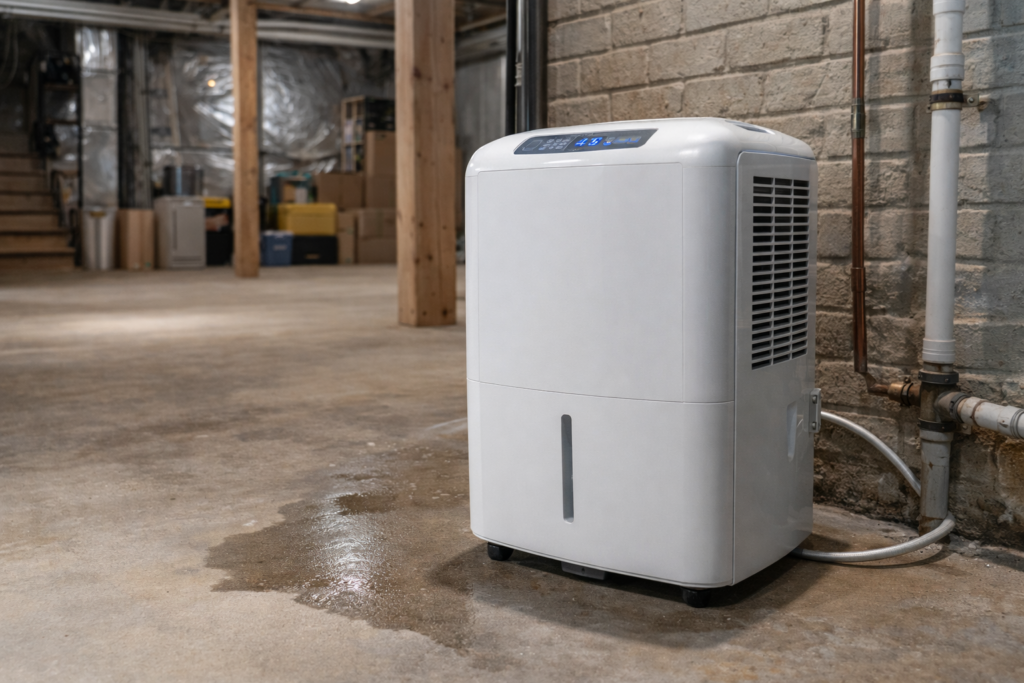
A dehumidifier becomes necessary when indoor humidity consistently exceeds 60% and natural ventilation is not sufficient to restore balance. Persistent moisture problems such as condensation, damp odors, or visible mold growth are strong indicators that mechanical humidity control may be required. For more on how these units work, see how a dehumidifier works.
Homes in humid climates, properties with finished basements, or houses with limited airflow are especially prone to elevated moisture levels. In these cases, a properly sized dehumidifier can help stabilize indoor humidity within the recommended 30–50% range. Choosing the right model depends on room size and moisture severity. You can compare options in our detailed dehumidifier buying guide.
Before purchasing a unit, it is important to consider room size, moisture severity, and drainage options to ensure effective performance.
Signs You May Need a Dehumidifier
- Indoor humidity consistently above 60%
- Condensation on windows
- Musty odors in enclosed spaces
- Damp basement air
- Recurring mold spots
When shopping for a unit, look for a model certified by ENERGY STAR — certified dehumidifiers remove moisture efficiently without driving up your electricity bill.
Frequently Asked Questions About Ideal Humidity Levels
What is the best humidity level for a house year-round?
For most homes, the best indoor humidity level is between 30% and 50% year-round. This range helps prevent mold growth, reduce condensation, and maintain overall comfort.
Is 55% humidity too high indoors?
Humidity at 55% is slightly above the recommended range but generally not dangerous. However, sustained levels above 60% increase the risk of mold and moisture-related damage.
Does indoor humidity affect air quality?
Yes. High humidity can promote mold and dust mites, while very low humidity can cause dry air discomfort. Maintaining 30–50% helps support healthier indoor air.
What humidity level prevents mold growth?
Keeping indoor humidity below 60% significantly reduces the likelihood of mold growth. Ideally, maintaining levels between 30% and 50% offers the best protection.
How Climate Affects Ideal Indoor Humidity Levels
Climate plays an important role in determining how humidity behaves inside a home. In humid regions, maintaining indoor levels below 50% may require consistent dehumidification, especially during summer months. In contrast, colder climates often experience low indoor humidity during winter due to heating systems that dry out the air.
Seasonal adjustments may be necessary to maintain comfort while still keeping humidity within the recommended 30–50% range. Monitoring levels throughout the year ensures better long-term moisture control and indoor air stability.
Maintaining the ideal humidity level can be more challenging in extreme climates without proper monitoring.
Conclusion
Maintaining the ideal indoor humidity level between 30% and 50% is one of the most effective ways to protect your home and improve comfort. Balanced humidity reduces the risk of mold, prevents material damage, and supports healthier indoor air quality.
By monitoring humidity levels and addressing issues early — whether through ventilation improvements or dehumidifiers — homeowners can maintain a stable and healthy indoor environment year-round.
If your levels are running high, start with our guide on how to reduce humidity naturally before reaching for a dehumidifier.