
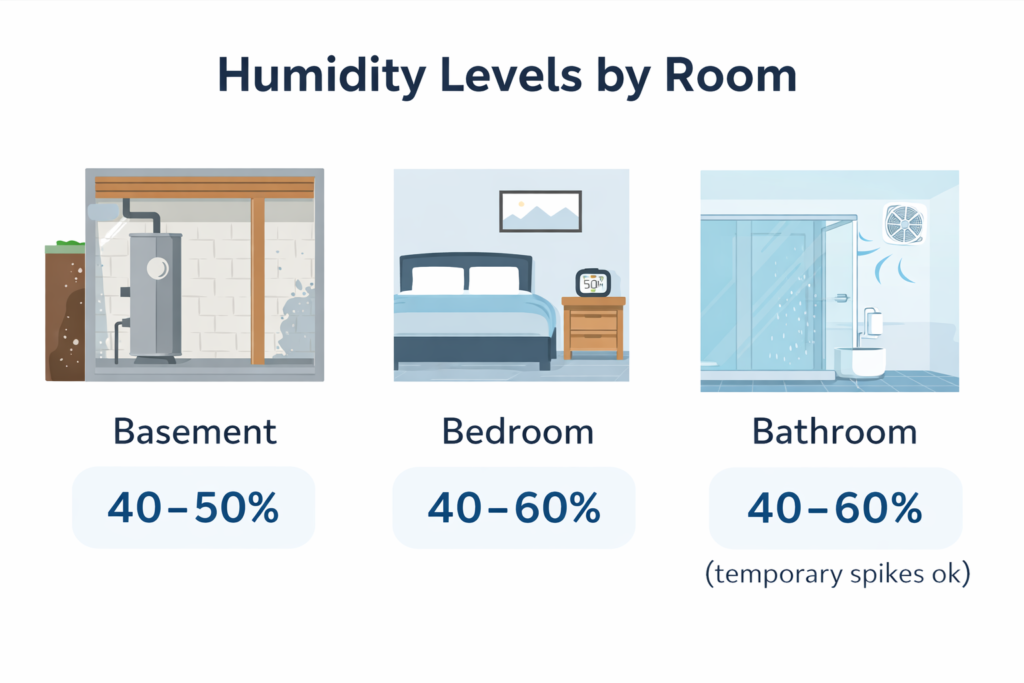
Not every room in your home should have the exact same humidity level.
Basements, bedrooms, and bathrooms all behave differently when it comes to moisture. Temperature, ventilation, daily use, and exposure to outdoor air all influence humidity patterns.
Understanding humidity levels by room allows you to prevent mold growth, structural damage, poor indoor air quality, and long-term moisture problems. Instead of using a single target number for the entire house, it’s more accurate — and more effective — to adjust humidity expectations based on each space.
This guide explains the ideal humidity levels by room and how to manage them properly.
Humidity Levels by Room: Quick Reference Chart
| Room | Ideal Humidity Range | Why |
|---|---|---|
| Basement | 40–50% | Below-ground moisture and cooler temperatures raise mold and structural-damage risk once humidity stays above 60%. |
| Bedroom | 30–50% | Keeps sleep quality and respiratory comfort in a healthy range; risk increases if it stays above 60%. |
| Bathroom | 30–50% (baseline) | Short spikes to 70–80% during showers are normal — problems start only if humidity lingers instead of drying out. |
Why Humidity Varies From Room to Room
Indoor humidity is affected by several variables:
- Room temperature
- Airflow and ventilation
- Sun exposure
- Daily activities (showering, sleeping, laundry)
- Location within the house (above ground vs below ground)
For example, a basement tends to be cooler and more prone to condensation. A bathroom experiences temporary humidity spikes. A bedroom, on the other hand, requires stable levels for comfort and sleep quality.
That’s why managing humidity levels by room is more effective than relying on a single whole-house average.
Generally, the EPA recommends keeping indoor humidity below 60%, ideally between 30% and 50%, and each room benefits from slightly different targets within that range.
If you need a broader overview, see our complete guide on ideal humidity levels for homes.
Ideal Humidity Levels by Room
Below are the recommended ranges for three of the most moisture-sensitive areas of a home: basements, bedrooms, and bathrooms.
According to the U.S. Environmental Protection Agency (EPA), indoor relative humidity should be kept below 60%, ideally between 30% and 50%. That EPA range is the baseline the ranges below are built around, with small, legitimate adjustments for how each room actually behaves.
Ideal Humidity for Basements
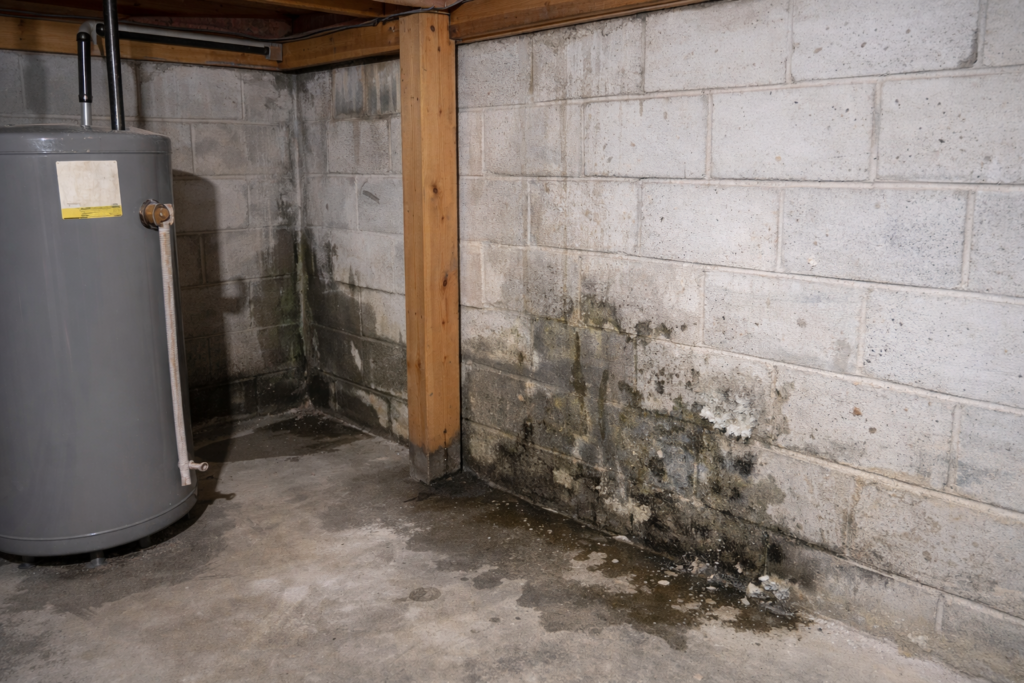
Basements are the most vulnerable area in most homes when it comes to moisture.
Because they are:
- Partially or fully below ground
- Cooler than upper floors
- Surrounded by soil that retains moisture
- Often poorly ventilated
Condensation is more likely to form in basements when humid air meets cool surfaces, which is why the EPA’s guide to mold and moisture flags basements as a priority area for moisture control.
Recommended Basement Humidity Range:
40%–50% is ideal
Humidity should never consistently exceed 60%.
When basement humidity levels rise above 60%, risks increase significantly:
- Mold growth on walls and insulation
- Structural wood damage
- Rust on metal fixtures
- Musty odors
- Increased pest activity
Basements benefit from slightly lower humidity than the rest of the house because cooler air holds less moisture before condensation occurs.
If you notice warning signs, review the signs your home has high humidity to confirm whether action is necessary.
Ideal Humidity for Bedrooms
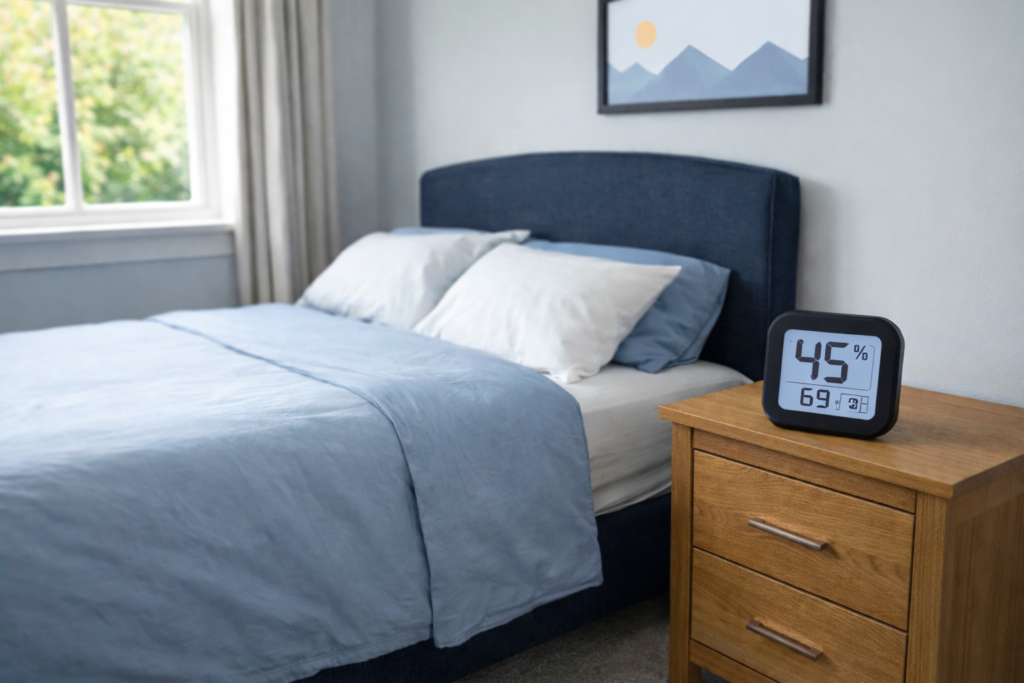
Bedrooms require balanced humidity for comfort and respiratory health — Mayo Clinic notes that keeping indoor humidity in a healthy range eases breathing and skin symptoms overnight.
Humidity that is too low (below 35%) can cause:
- Dry throat
- Irritated sinuses
- Static electricity
- Cracked lips or skin
Humidity that is too high (above 60%) can contribute to:
- Poor sleep quality
- Increased dust mite activity
- Mold growth in closets
- Lingering odors
Recommended Bedroom Humidity Range:
30%–50% is ideal
Humidity should never consistently exceed 60%.
This range supports:
- Comfortable breathing
- Better sleep
- Reduced allergy symptoms
- Stable indoor air quality
Because bedrooms are occupied for long periods, maintaining proper humidity levels by room in sleeping areas directly affects daily comfort and health.
If humidity remains elevated, improving ventilation or following our guide on how to reduce humidity naturally can help restore balance.
Ideal Humidity for Bathrooms
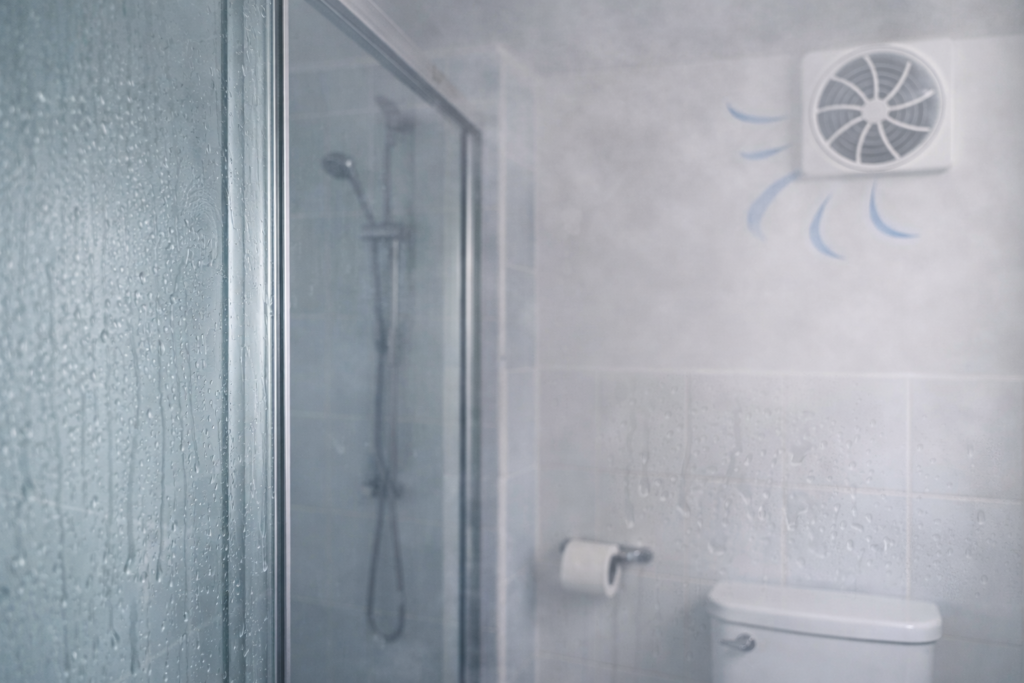
Bathrooms are unique because humidity spikes are normal.
Hot showers can temporarily raise humidity above 70% or even 80%. The key difference is duration.
Recommended Bathroom Humidity Range:
30%–50% is the ideal baseline between showers
Temporary spikes up to 70–80% during and right after a shower are normal
Humidity should return below 60% within 30–60 minutes, settling back near the 30–50% baseline
If moisture lingers long after showers, problems may develop:
- Mold on ceiling corners
- Mildew on grout
- Peeling paint
- Persistent damp smell
Proper exhaust fan use is critical in bathrooms. Running the fan during showers and for 15–20 minutes afterward helps return humidity to safe levels.
When evaluating humidity levels by room, bathrooms are less about peak levels and more about recovery time.
Quick Comparison Table
| Room | Ideal Range | Risk Level Above | Primary Concern |
|---|---|---|---|
| Basement | 40–50% | 60%+ | Mold & structural damage |
| Bedroom | 30–50% | 60%+ | Sleep & air quality |
| Bathroom | 30–50% (baseline) | 70%+ (temporary) | Surface mold & mildew |
This breakdown shows why managing humidity room-by-room is more effective than using a single number for the entire house.
Why Room-Specific Control Matters
If you monitor humidity only in one central location, you may miss hidden problems.
For example:
- Your living room may read 50%, while your basement sits at 65%.
- Your hallway may seem fine, but a bathroom without ventilation may stay elevated for hours.
Moisture problems often start locally before spreading.
Understanding humidity levels by room allows you to:
- Identify hidden risk areas
- Prevent localized mold growth
- Protect building materials
- Improve indoor air quality
Localized control also helps determine whether you need:
- Better ventilation
- A basement dehumidifier
- Exhaust upgrades
- A whole-house solution
Seasonal Considerations
Humidity levels by room can change throughout the year.
Summer
- Outdoor air may already be humid.
- Basements are especially vulnerable.
- Air conditioning may not remove enough moisture.
Winter
- Indoor air often becomes dry.
- Bedrooms may drop below 35%.
- Bathrooms may experience condensation due to cold surfaces.
Because of seasonal variation, measuring humidity in different rooms at different times of year provides a clearer picture than a single reading.
How to Monitor Humidity in Each Room
To manage humidity levels by room effectively, you need accurate measurement.
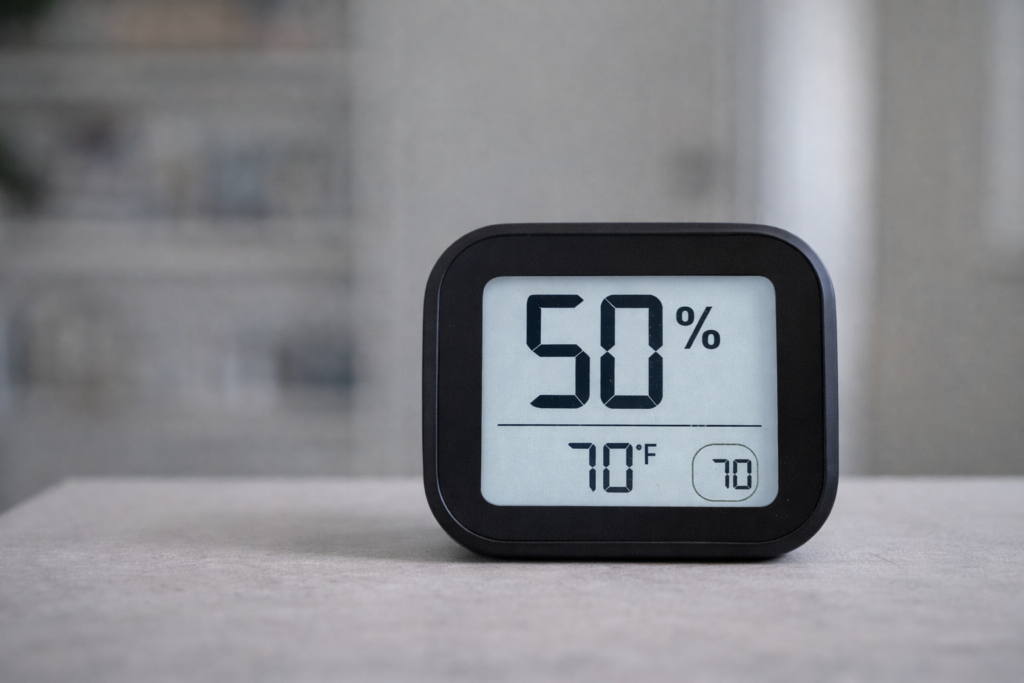
Use a digital hygrometer and place it:
- In the basement away from direct wall contact
- On a nightstand in bedrooms
- Outside the direct shower spray in bathrooms
Avoid placing sensors:
- Near windows
- Next to vents
- Directly above radiators
Monitoring readings over several days helps identify patterns rather than isolated spikes.
If humidity frequently exceeds recommended levels, corrective action should be taken.
When to Consider Room-Specific Equipment
Natural ventilation improvements may be sufficient if humidity is only slightly elevated.
However, if certain rooms consistently exceed safe thresholds:
- Basements may require a dedicated ENERGY STAR certified dehumidifier.
- Bathrooms may need stronger exhaust fans.
- Bedrooms may benefit from improved airflow.
Room-specific control is often more energy-efficient than installing an oversized whole-house system.
Frequently Asked Questions
What is the ideal humidity range for a bedroom?
Aim for 30–50% in bedrooms, and avoid letting it sit above 60% for extended periods. That range supports easier breathing, better sleep, and lower dust mite activity, while still avoiding the dry throat and static that show up below 30%.
Is 60% humidity in the bathroom a problem?
Not on its own. Hot showers routinely push bathroom humidity to 70–80% for a few minutes, and that’s normal. It becomes a problem only if the exhaust fan isn’t used and humidity stays above 60% for hours instead of returning toward the 30–50% baseline within 30–60 minutes.
Why does the basement need lower humidity than other rooms?
Basements are cooler and closer to the soil, so the air there holds less moisture before it condenses on walls and pipes. Keeping basement humidity at 40–50%, rather than letting it drift toward the 60% mold threshold, gives you a larger safety margin.
What humidity range does the EPA recommend for a house?
The EPA recommends keeping indoor relative humidity below 60%, ideally between 30% and 50%. That whole-house target is the baseline this guide uses for each room, with small adjustments for how bedrooms, bathrooms, and basements actually behave day to day.
How do I know if humidity is too high in one specific room?
A single whole-house reading can hide a problem room. Place a digital hygrometer in each space you’re concerned about, away from windows, vents, and radiators, and track it over several days. A room that consistently reads above 60% needs targeted ventilation or a dehumidifier, even if the rest of the house looks fine.
Final Thoughts
Managing humidity properly requires more than a single target number.
Understanding humidity levels by room allows you to tailor moisture control to each space, preventing mold, improving comfort, and protecting your home’s structure.
Basements benefit from slightly lower levels. Bedrooms require balanced humidity for sleep and health. Bathrooms demand fast moisture recovery after spikes.
By monitoring each room individually and responding early, you can maintain a healthier and more stable indoor environment year-round.