
In this practical guide, we’ll show you how to reduce humidity naturally at home using simple, actionable steps. If your home feels sticky, smells musty, or your windows fog up even when it’s not cold outside, humidity levels may be too high.
In this guide, you’ll learn exactly how to reduce humidity naturally using simple, practical methods.
Ideally, indoor humidity should stay between 40% and 60%. If you’re unsure what level your home should maintain year-round, read our complete guide on ideal humidity levels for homes. When levels rise above 60%, you increase the risk of mold growth, dust mites, condensation damage, and poor air quality.
The good news? In many cases, you can reduce humidity naturally — without buying a dehumidifier.
Below are 10 proven ways how to reduce humidity naturally using simple, practical methods.
Why Reducing Indoor Humidity Matters
Excess moisture inside your home can lead to:
- Mold growth
- Peeling paint
- Warped wood
- Musty smells
- Increased allergy symptoms
- Condensation on windows and walls
Even everyday activities release moisture into the air:
- A hot shower can release up to 1–2 liters of water vapor
- Cooking without ventilation adds significant humidity
- Drying clothes indoors can raise humidity levels quickly
According to the EPA, when indoor humidity rises above 60%, the risk of moisture-related problems increases quickly. That’s why controlling indoor moisture is essential — especially in coastal or naturally humid climates. Improving ventilation is one of the easiest ways to reduce humidity naturally.
10 Natural Ways to Reduce Humidity at Home
If your humidity levels are slightly elevated, these natural methods can make a noticeable difference.
1. Improve Ventilation
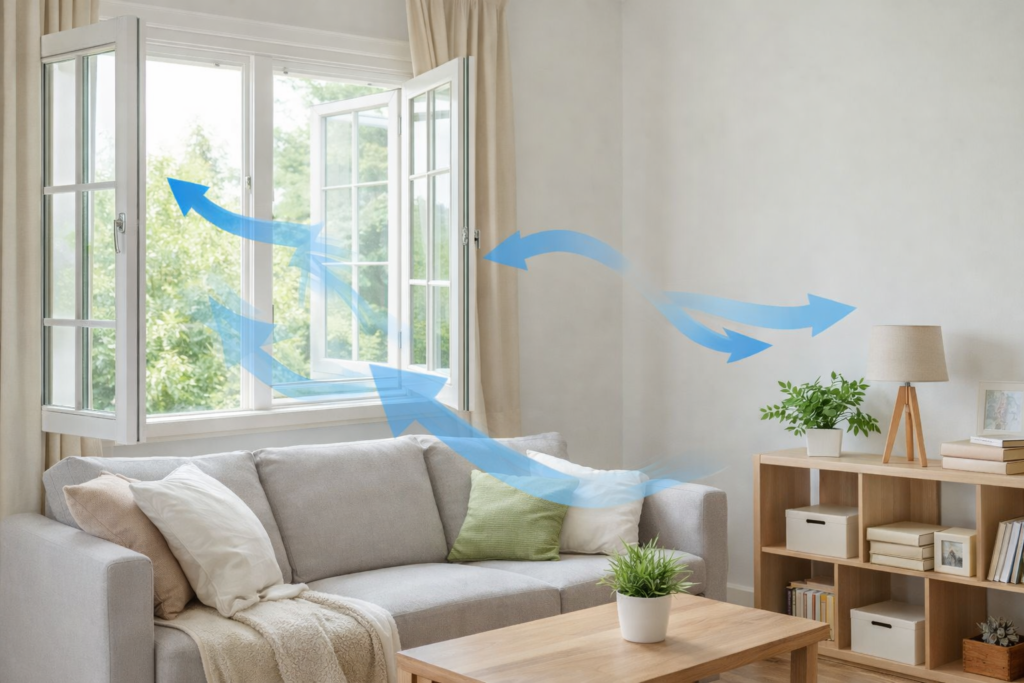
The best way to reduce humidity naturally is by improving airflow through proper ventilation.
- Open windows on opposite sides of the house to create cross-ventilation.
- Ventilate for 10–20 minutes daily, especially after cooking or showering.
Fresh air helps replace moist indoor air with drier outside air (when outdoor humidity is lower).
2. Use Exhaust Fans Properly
Bathroom and kitchen exhaust fans are essential.
- Run bathroom fans during showers and for 15–20 minutes afterward.
- Use kitchen vents when boiling water or cooking.
If you don’t use them consistently, moisture lingers.
3. Fix Leaks Immediately
Small plumbing leaks or roof issues can dramatically increase indoor humidity over time.
Check for:
- Dripping pipes
- Leaking faucets
- Damp areas under sinks
- Water stains on ceilings
Even minor leaks contribute to long-term moisture buildup.
4. Avoid Drying Clothes Indoors
Air-drying laundry inside releases large amounts of moisture into the air.
If possible:
- Dry clothes outdoors
- Use a vented dryer
- Increase ventilation if indoor drying is unavoidable
This alone can significantly reduce indoor humidity.
5. Take Shorter, Cooler Showers
Long, hot showers produce steam quickly.
To reduce humidity:
- Keep showers shorter
- Use warm instead of very hot water
- Keep the bathroom door closed
- Run exhaust fans
Steam spreads rapidly throughout the house if not controlled.
6. Increase Air Circulation with Fans
Even ceiling or portable fans help.
Air movement:
- Prevents stagnant moisture pockets
- Helps evaporate surface condensation
- Improves comfort levels
Fans don’t remove moisture, but they help distribute air more effectively.
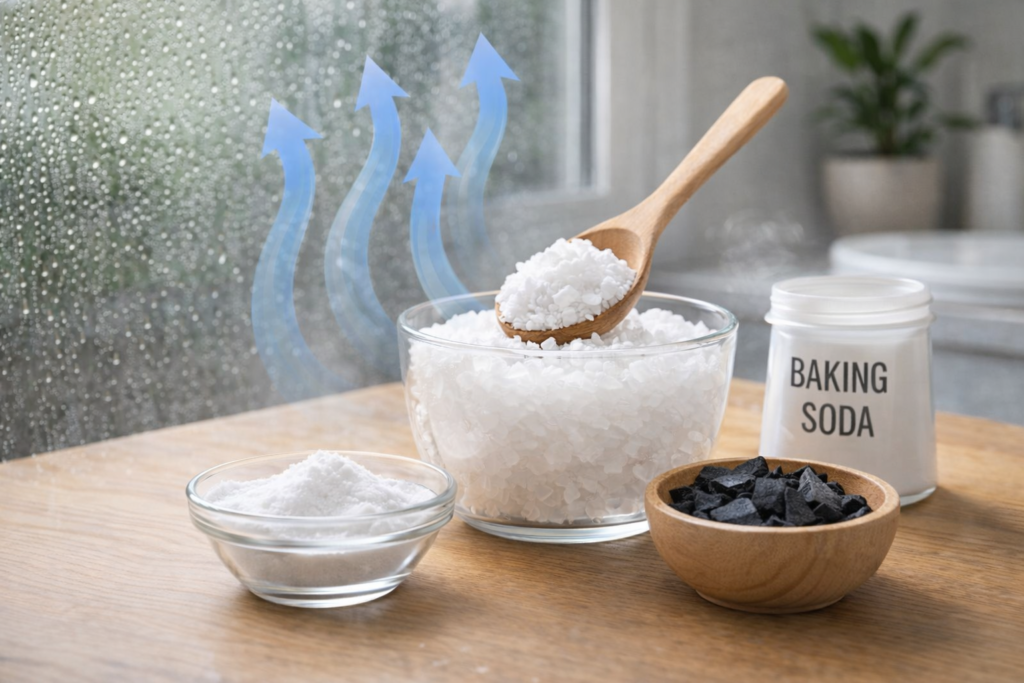
7. Use Natural Moisture Absorbers
Certain materials naturally absorb moisture:
- Baking soda
- Rock salt
- Charcoal
- Silica-based moisture absorbers
Place them in:
- Closets
- Small bathrooms
- Storage areas
- Cabinets
They work best in small enclosed spaces.
8. Seal Windows and Doors
Poor insulation allows humid outdoor air to enter.
Check for:
- Gaps in window frames
- Worn weather stripping
- Drafts around doors
Sealing these reduces external moisture infiltration.
9. Keep the Basement Dry and Decluttered
Basements trap moisture easily.
To reduce humidity:
- Avoid storing cardboard directly on floors
- Use shelving
- Keep walls clean and dry
- Improve ventilation
Basements are often the most humid part of a home.
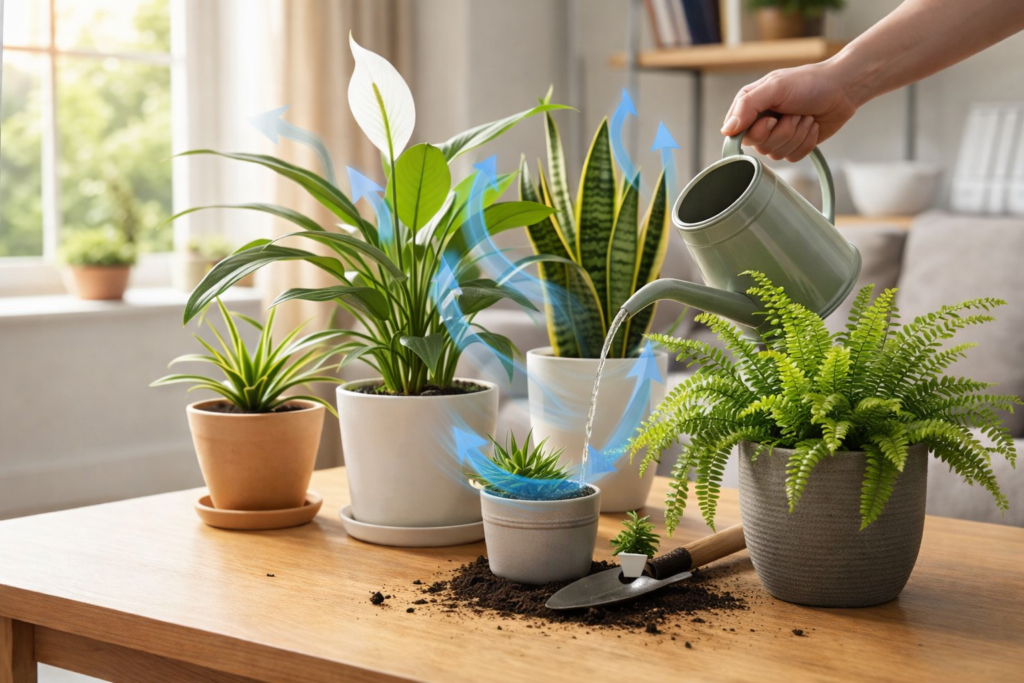
10. Reduce Indoor Plants (If Overcrowded)
Plants release moisture through transpiration.
A few plants are fine, but excessive indoor plants in small spaces may increase humidity.
Balance is how to reduce humidity naturally.
When Natural Methods Actually Work (And When They Don’t)
Natural humidity control works best when indoor humidity is only slightly elevated.
| Indoor Humidity Level | Are Natural Methods Enough? |
|---|---|
| 40–60% | Yes, usually sufficient |
| 60–70% | Sometimes — depends on climate |
| 70%+ | Rarely enough on their own |
If humidity remains consistently high, especially above 70%, it may indicate a larger issue such as poor ventilation or structural moisture problems. In that case, you may want to understand the signs of high humidity in your home.
In those cases, a properly sized home dehumidifier may be the most effective long-term solution.
How to Measure If It’s Working
The only reliable way to know if humidity is decreasing is to measure it.
Use a digital hygrometer to track indoor humidity daily. A hygrometer is the easiest way to monitor indoor moisture levels accurately.
Place it:
- In living areas
- Away from windows
- Away from kitchens and bathrooms
Track readings for a week after implementing natural methods.
Quick Natural Humidity Reduction Checklist
- Ventilate daily (10–20 minutes). Ventilation works best when outdoor humidity is lower than indoor levels.
- Use exhaust fans during and after showers
- Fix plumbing leaks immediately
- Avoid drying clothes indoors
- Seal windows and doors
- Use moisture absorbers in small spaces
- Monitor humidity with a hygrometer
Frequently Asked Questions
How long does it take to reduce humidity naturally?
In mild cases, you can see improvement in a few days. If the home has ongoing moisture sources (leaks, poor ventilation, damp basement), it can take longer until the root cause is fixed.
Does opening windows always help?
Not always. If the outdoor air is humid (rainy days, coastal weather), opening windows can make humidity worse. Ventilate when outdoor air feels drier than indoor air.
Is 60% humidity too high indoors?
Yes. Indoor humidity above 60% increases the risk of condensation and mold growth — especially in basements and bathrooms.
What is the fastest way to reduce humidity naturally?
Improving ventilation and using moisture-absorbing materials are the quickest natural ways to reduce indoor humidity levels.
Can plants help reduce humidity indoors?
Some houseplants can absorb small amounts of moisture from the air, but they are not a complete solution for high humidity problems.
Final Thoughts
Reducing humidity naturally is possible — especially if levels are only slightly elevated.
However, if your home remains above 60–65% humidity despite consistent effort, you may need additional solutions.
The key is early action.
Humidity problems are easier to prevent than to fix. Now you know how to reduce humidity naturally before investing in equipment.