
Understanding what humidity level prevents mold growth is the first step to protecting your home. The answer is straightforward: keep indoor relative humidity below 50%. When humidity stays above that threshold — especially above 60% — mold can begin forming on walls, ceilings, and surfaces within 24 to 48 hours.
This guide covers the exact numbers to target, how risk changes by room, and what to do when levels are already too high.
Mold needs three things to thrive: a food source (any organic material), warmth, and moisture. You can’t remove the walls or lower your home’s temperature, but you can control moisture — and that starts with keeping indoor humidity within the right range.
The short answer: keep relative humidity below 50% to prevent most household mold from forming. But that number isn’t the whole story. The ideal range shifts by season, room, and climate. This guide breaks it all down so you know exactly what to target — and what to do when levels creep up.
What Humidity Level Prevents Mold Growth?
Most mold species begin to colonize surfaces when relative humidity (RH) stays above 60% for 24 to 48 hours. At 70% RH and above, mold can appear within 24 hours on damp materials like drywall, wood framing, or carpet backing.
The EPA recommends keeping indoor relative humidity between 30% and 50% to prevent mold growth. Below 50%, most mold species cannot establish themselves on typical home surfaces. Above 60%, the risk rises sharply — and above 70%, mold can appear within a single day under the right conditions.
Here’s a quick reference for how mold risk scales with humidity:
| Indoor Humidity Level | Mold Risk | What You May Notice |
|---|---|---|
| Below 50% | ✅ Low | No visible signs; ideal range |
| 50% – 60% | ⚠️ Moderate | Watch vulnerable areas (basement, bathroom) |
| 60% – 70% | 🔴 High | Condensation on windows, musty smell |
| Above 70% | 🔴 Very High | Visible mold growth possible within 24–48 hrs |
Keep in mind that surface temperature matters too. A wall that’s colder than the air around it can have near-100% humidity at its surface even when the room reads 55% RH. That’s why mold often appears in corners, behind furniture, or along exterior walls — not just in visibly damp areas.
Surface temperature also plays a role. A cold wall or pipe can have near-100% surface humidity even when the room reads 55% RH overall. That is why mold often appears in corners, behind furniture, or along exterior walls rather than in the most obvious spots.
The Safe Zone: 30% to 50% Relative Humidity
Both the EPA and ASHRAE (American Society of Heating, Refrigerating and Air-Conditioning Engineers) recommend keeping indoor humidity between 30% and 50% year-round. Staying in this range does more than just block mold — it also reduces dust mite populations, minimizes condensation, and keeps wood floors and furniture stable.
In summer, aim for the lower half of that range (30–45%) because outdoor humidity is already high. In winter, 35–45% tends to feel most comfortable while still preventing mold.
Humidity Levels by Room: Where Mold Risk Is Highest
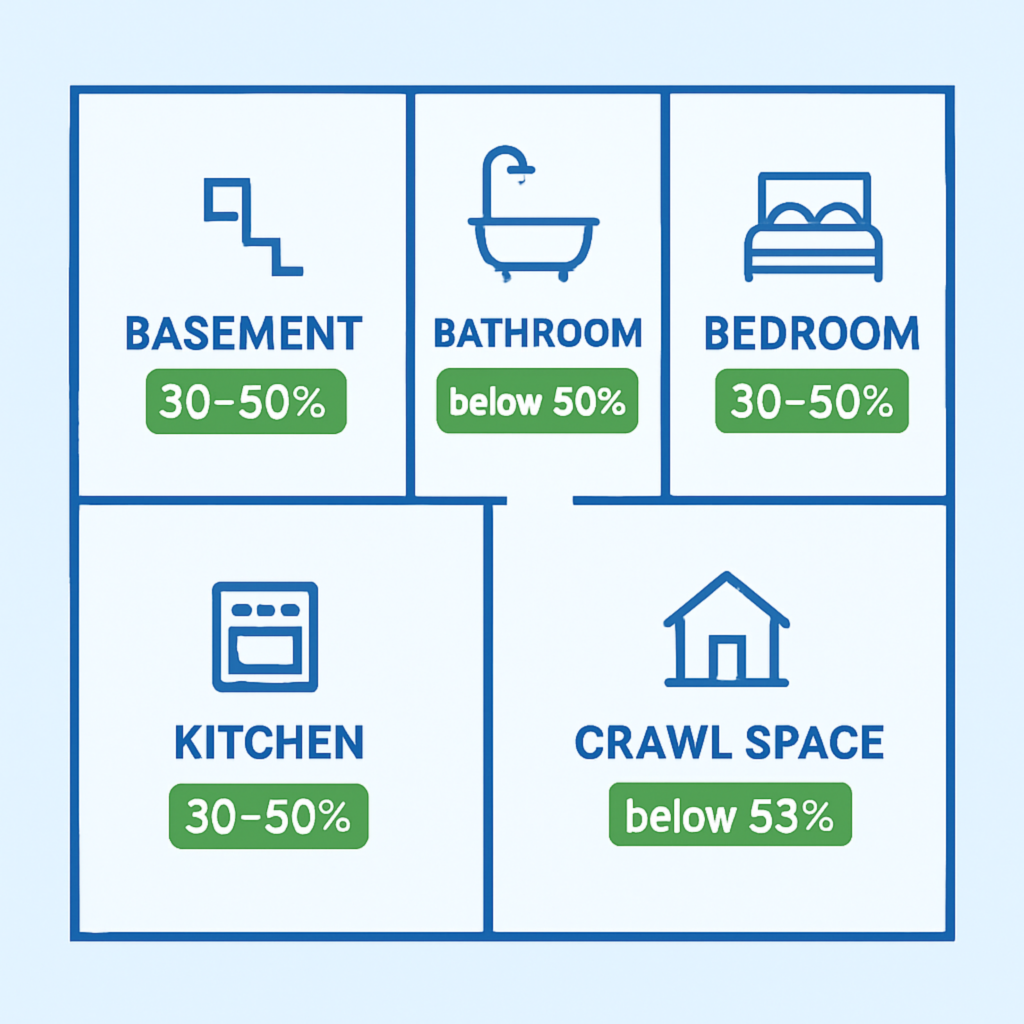
Not every room in your home carries the same mold risk. Areas that generate moisture through daily activities — cooking, showering, breathing — need more attention.
Basement
Target: 30% – 50%. Basements stay cooler than the rest of the house, making condensation far more likely. They also have concrete surfaces that absorb and release moisture. A dedicated dehumidifier is often necessary here, especially from spring through late summer.
Bathroom
Target: 50% or below after use. Humidity spikes during showers — often reaching 90% or higher — but the key is how quickly it drops back down. Run the exhaust fan during your shower and for at least 15 minutes afterward. Without a fan, open a window immediately after showering.
Bedroom
Target: 30% – 50%. Each person sleeping in a room releases roughly one liter of moisture overnight through breath and perspiration. In closed rooms, this builds up over time. Good ventilation and avoiding drying laundry indoors makes a significant difference.
Kitchen
Target: 30% – 50%. Cooking releases steam, so always use the range hood when boiling water or cooking with liquid. The cabinet under the sink is another common trouble spot — check it periodically for minor leaks or drips that go unnoticed.
Living Room / Main Areas
Target: 30% – 50%. These areas are usually the easiest to control through normal HVAC operation. Mold issues here are typically a symptom of a bigger moisture problem elsewhere in the house.
Crawl Space
Target: Below 55%. Crawl spaces are one of the most overlooked mold sources in a home. Moisture that builds up there can migrate upward into living areas. A vapor barrier (crawl space encapsulation) is the most effective long-term fix for unfinished crawl spaces.
Warning Signs That Humidity Is Already Too High
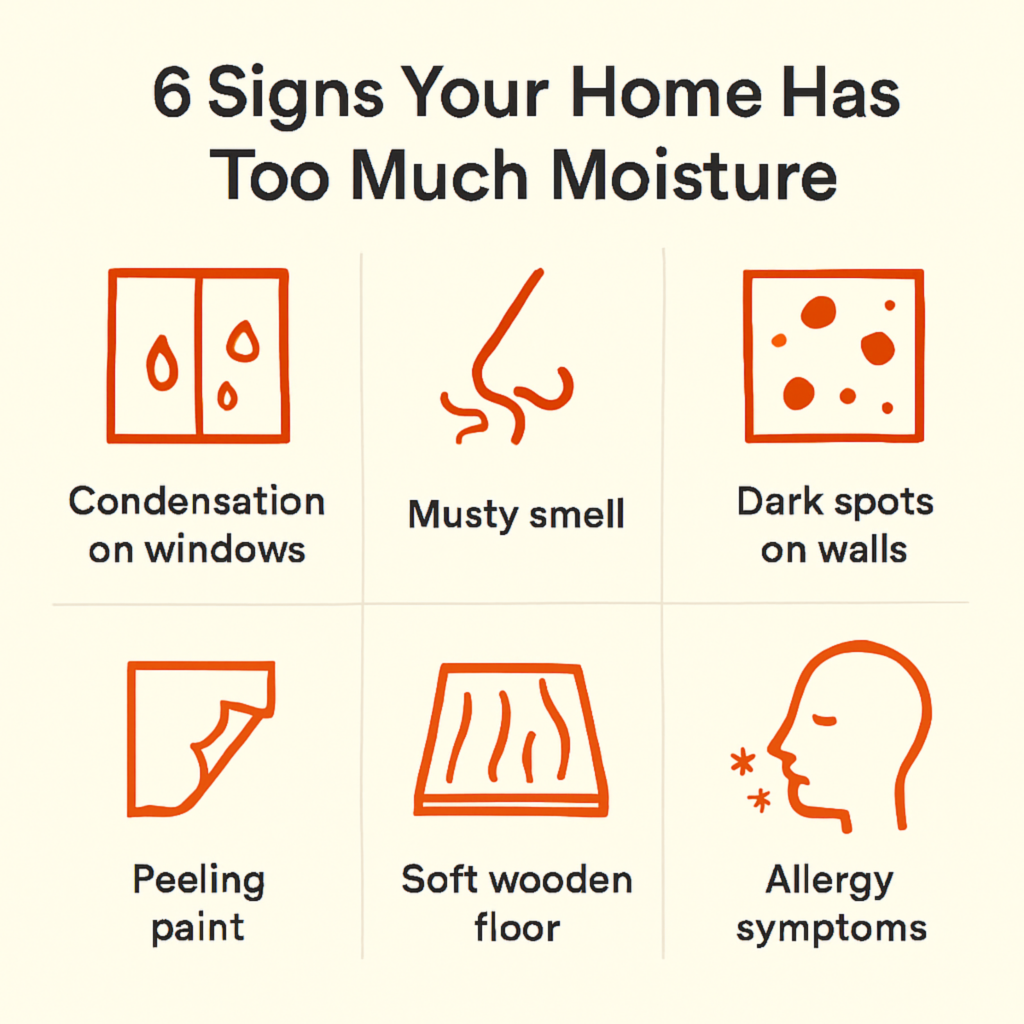
You cannot reliably gauge indoor humidity by feel. These signs suggest levels are already elevated and worth checking with a meter:
Warning Signs of High Indoor Humidity
- Condensation or fog on windows, mirrors, or cold pipes
- Musty or earthy odor, especially in enclosed spaces
- Visible dark spots on walls, ceilings, or grout lines
- Peeling paint or bubbling wallpaper
- Wood floors that feel soft, spongy, or are warping at the edges
- Increased allergy or asthma symptoms indoors
How to Measure Humidity to Prevent Mold Growth
A hygrometer is the only reliable way to know what humidity level prevents mold growth in your specific home. Digital hygrometers cost between $10 and $40 and show both temperature and relative humidity. Place one in your basement, bathroom, and bedroom — the three highest-risk areas in most homes.
Check readings in the morning and evening for at least a week to spot patterns. A single reading can be misleading; consistent measurements over time give you a clear picture.
For ongoing monitoring, smart humidity sensors from brands like Govee or Inkbird connect to a phone app and log data automatically. This makes it easy to see which rooms stay above the 50% threshold without manually checking each day.
What to Do When Humidity Is Above 50%
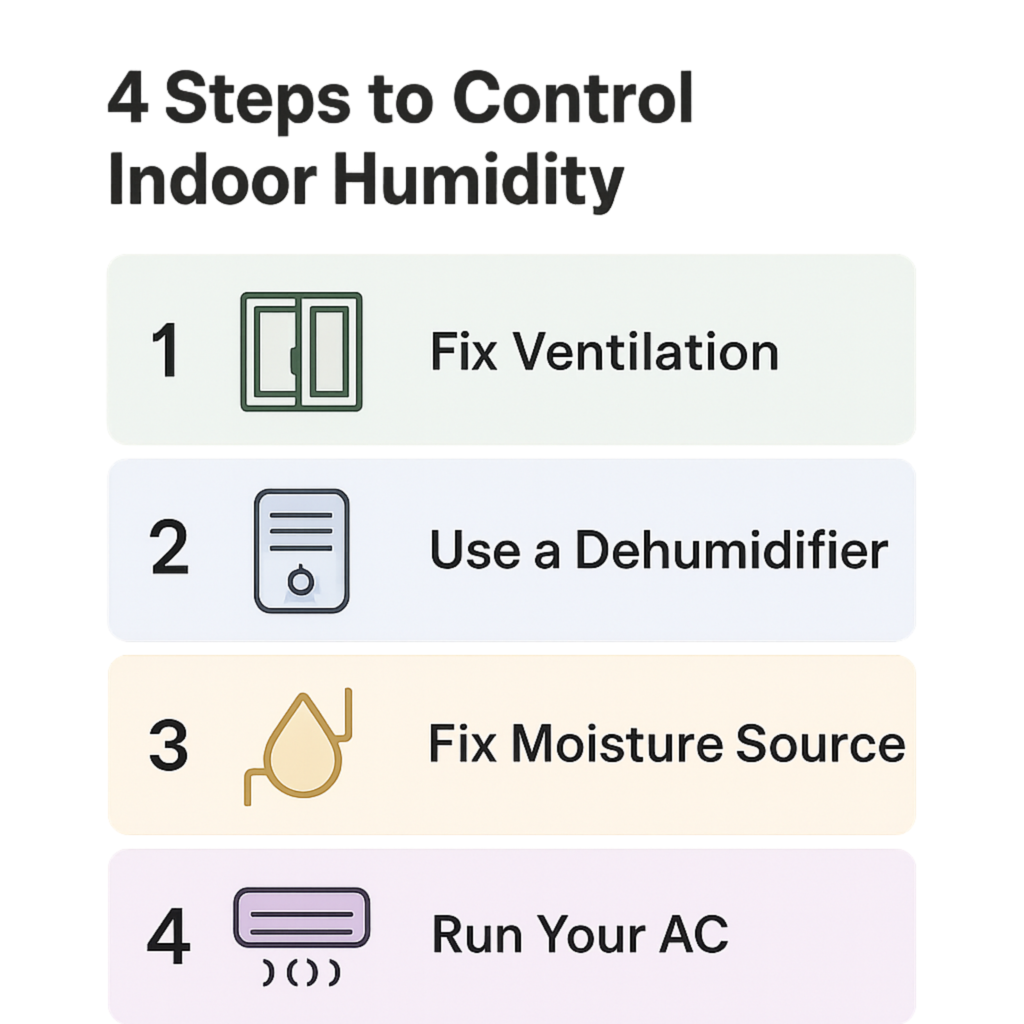
Once you’ve confirmed your indoor humidity is consistently above 50%, there are several approaches to bring it back into the safe range. The right method depends on how severe the problem is and which areas are affected.
1. Improve Ventilation First
Before buying any equipment, confirm that existing ventilation actually works. Bathroom fans and dryer vents should exhaust directly outdoors — not into an attic or crawl space, which is a surprisingly common installation error. This one fix alone often reduces indoor humidity noticeably.
2. Use a Dehumidifier
A dehumidifier is the most direct solution for rooms with consistently high humidity. For a basement or large living area, a 30–50 pint unit is typically sufficient. Smaller 20–22 pint models work well for bedrooms or closets.
Look for models with a built-in humidistat so the unit cycles automatically once it reaches your target level. Energy Star certified units cost significantly less to run over a full season.
3. Address the Moisture Source
A dehumidifier treats the symptom, not the cause. If humidity keeps returning, investigate the source: a slow plumbing leak, poor foundation drainage, a cracked basement wall, or a missing crawl space vapor barrier. Fixing the source is the only permanent solution.
4. Run Your Air Conditioner
Air conditioning removes moisture as it cools. Running central AC consistently during humid months controls humidity in main living areas without needing a separate dehumidifier. Some units have a dedicated “dry” mode that prioritizes dehumidification over cooling.
5. Open Windows Strategically
This only helps when outdoor humidity is lower than indoor humidity — which in summer is often not the case. Check the outdoor dew point before opening windows. If it’s above 55°F, outdoor air will likely add moisture, not remove it.
What About Low Humidity?
While knowing what humidity level prevents mold growth is important, humidity that’s too low causes its own problems. Below 30%, you may notice dry skin and sinuses, static electricity, and cracking in wood floors or furniture. This is most common in cold climates during winter when heated air becomes very dry.
If readings consistently fall below 30%, a humidifier brings levels back into the safe range. Whole-home models attach to your HVAC system; portable units work well for individual rooms.
Seasonal Humidity Management
Summer Strategy
Summer is peak mold season in most U.S. regions. Hot outdoor air holds more moisture, which enters your home every time a door or window opens. Keep windows closed during the hottest, most humid parts of the day. Run AC and/or a dehumidifier in problem areas. Check basement readings weekly.
Winter Strategy
Heating systems dry out indoor air. The risk of humidity being too low increases, though basements and crawl spaces can still hold moisture from summer. Monitor with a hygrometer through the season and use a humidifier if readings fall consistently below 30%.
Spring and Fall
These transitional seasons are when temperature swings create the most condensation. A wall that was cold all winter can “sweat” in spring as warmer air moves in. Inspect corners and exterior walls during these months and run ventilation proactively.
Frequently Asked Questions
What humidity level kills mold?
Mold doesn’t die from low humidity — it goes dormant. When moisture returns, it can reactivate. To truly eliminate mold, you need to physically remove it and address the moisture source. Low humidity (below 50%) prevents new growth but won’t kill existing colonies.
Can 55% humidity cause mold?
At 55% RH in the main living area, the risk is low for most surfaces. However, surfaces that are cooler than the air — such as exterior walls, pipes, or basement floors — can have higher effective surface humidity and may still support mold growth over time. That’s why 50% or below is the recommended upper limit.
How quickly can mold grow in a humid room?
Under ideal conditions (70%+ humidity, warm temperature, organic material), mold can begin colonizing within 24 to 48 hours. This is why flood damage and water leaks require fast response — waiting even a day or two can allow mold to establish.
Is a dehumidifier enough to prevent mold?
A dehumidifier controls humidity effectively, but it’s not a complete solution if there’s an active moisture source like a leak or inadequate drainage. Use a dehumidifier as part of a broader moisture management approach: fix leaks, ensure ventilation, and monitor levels regularly.
What is the best humidity level to sleep in?
For sleep comfort and mold prevention, 40% to 50% RH is the ideal bedroom humidity. This range keeps the air comfortable for breathing without creating conditions for mold growth on walls or bedding.
Bottom Line
Knowing what humidity level prevents mold growth gives you a clear target: keep indoor relative humidity between 30% and 50% at all times. The most important rooms to monitor are the basement, bathroom, and any area that has experienced water damage or leaks.
Start with a hygrometer to get accurate readings. From there, ventilation improvements and a dehumidifier for problem areas will handle most situations. Catching high humidity early — before mold appears — is always easier and cheaper than dealing with it after the fact.
If you’re not sure where to start, the most impactful first step is placing a hygrometer in your basement or bathroom and checking it over the next week. From there, you’ll have real data to guide your decisions.