
Is 60% humidity too high indoors?
If your indoor humidity monitor reads 60%, you might be wondering whether that number is safe — or if mold is about to become a problem.
Short answer: 60% humidity is slightly above the recommended indoor range and may increase mold risk if it remains elevated over time.
While 60% is not immediately dangerous, sustained humidity at this level can create conditions that allow mold, dust mites, and condensation problems to develop.
Let’s break down what 60% really means — and when you should take action.
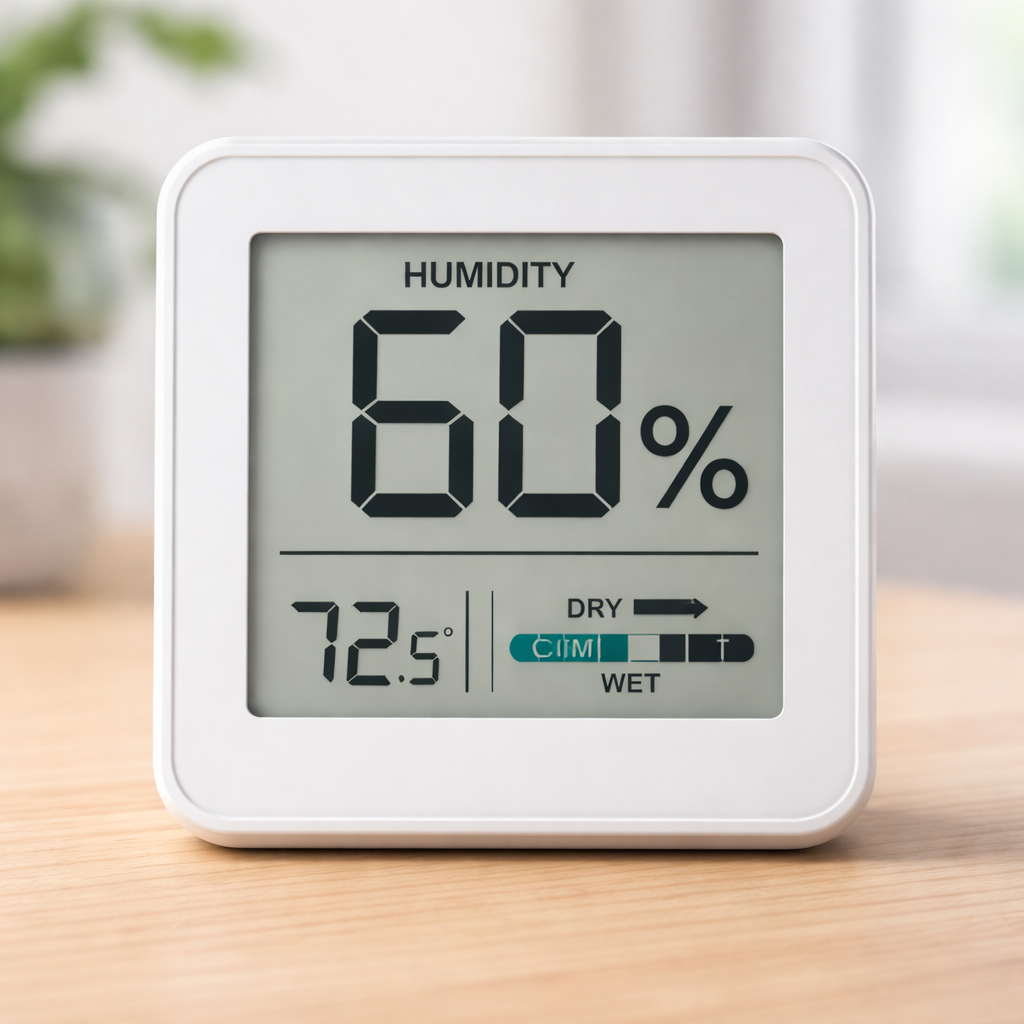
What Is the Recommended Indoor Humidity Level?
Most health and environmental authorities recommend keeping indoor relative humidity between 30% and 50%.
- 30–50% → Ideal indoor range
- Below 30% → Too dry (can cause irritation)
- Above 50% → Increased moisture risk
The U.S. Environmental Protection Agency (EPA) and building science experts agree that staying under 50% helps reduce mold growth and condensation issues.
If you’re unsure what your target range should be, read our full guide on ideal indoor humidity levels.
Indoor relative humidity above 60% increases excess moisture in the air and may impact overall indoor air quality.
This lines up with guidance from the EPA’s indoor air quality design tools for schools, which recommends that indoor relative humidity “be maintained below 60%, ideally between 30% and 50%” to protect occupants and prevent moisture damage.
Is 60% Humidity Dangerous?
In most cases, 60% humidity is not immediately dangerous to your health.
However, the real concern is not the number itself — it’s how long humidity stays at 60% or higher.
Prolonged indoor humidity at 60% can:
- Encourage mold growth
- Increase dust mite populations
- Cause condensation on windows and walls
- Create musty odors
- Damage wood, drywall, and insulation
Humidity problems are cumulative. A short spike after cooking or showering is normal. But consistent 60% readings for days or weeks can create moisture buildup inside walls and on surfaces. Many homeowners ask if 60% humidity is too high during summer.
Can Mold Grow at 60% Humidity?
Yes — mold growth becomes much more likely once indoor humidity consistently exceeds 60%.
Most mold species begin to thrive when:
- Relative humidity stays above 55–60%
- Air circulation is poor
- Surfaces remain damp
- Condensation occurs regularly
Even if your overall room reads 60%, certain surfaces (like corners, behind furniture, or basement walls) may reach much higher localized moisture levels.
The Centers for Disease Control and Prevention (CDC) advises keeping indoor humidity “as low as you can — no higher than 50%,” since mold grows wherever moisture is present, including around leaks, windows, and damp surfaces.
This is why mold often appears first in:
- Basements
- Bathrooms
- Closets with poor airflow
- Window frames
Why Mold Risk Increases Above 60% Humidity
Mold spores are always present in indoor air. What determines whether mold grows is not the presence of spores — but the availability of moisture.
When relative humidity rises above 60%, porous materials such as drywall, wood, carpet, and insulation begin absorbing moisture from the air.
Over time, this creates micro-environments on surfaces where moisture content exceeds safe levels — even if the room itself feels dry.
Research in building science shows that mold growth risk increases significantly once sustained relative humidity exceeds 55–60%. Understanding whether 60% humidity is too high depends on duration.
This is why many building standards use 50% as a safety buffer.
When Is 60% Humidity a Bigger Problem?
Humidity at 60% becomes more concerning in specific situations:
1. During Winter
Cold outdoor air increases condensation indoors. At 60% humidity, moisture may collect on windows and walls, leading to hidden mold growth.
2. In Basements
Basements naturally retain moisture. 60% humidity in a basement often means surface dampness is already present.
3. If You’ve Had Mold Before
Homes with previous mold problems are more sensitive to elevated humidity.
4. If Levels Stay Elevated for Weeks
Duration matters more than short-term spikes.
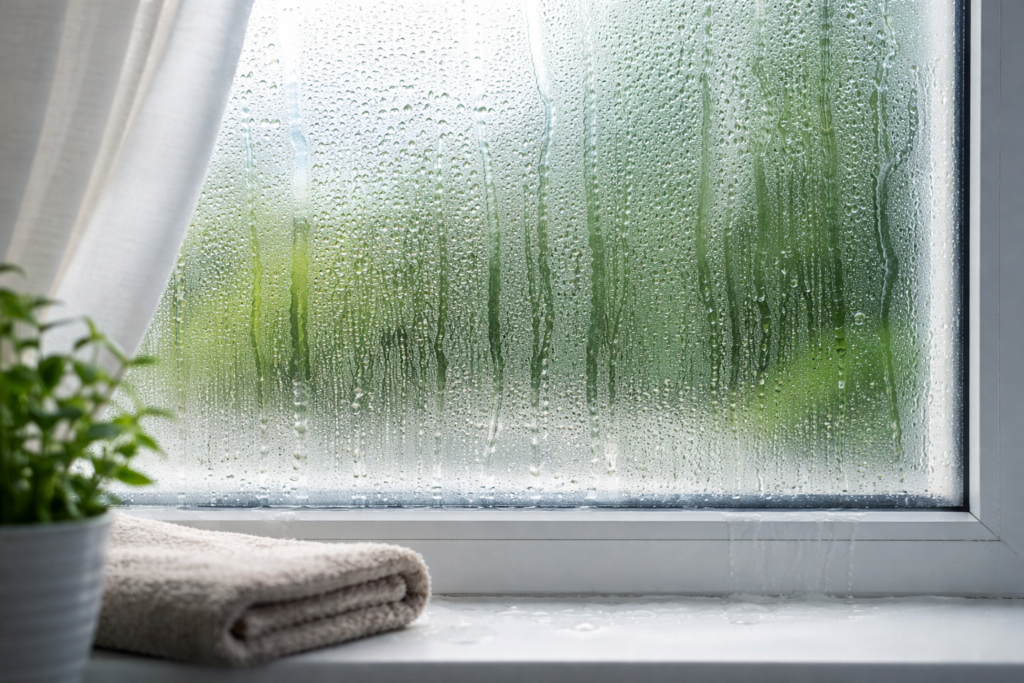
Room Humidity vs Surface Humidity
Your humidity monitor measures air moisture — not the moisture inside walls or materials.
At 60% indoor humidity, cold surfaces (like exterior walls or windows) can reach dew point more easily, creating condensation even when the room reading seems moderate.
This is why mold often develops behind furniture, in corners, or inside closets before you notice any visible warning signs.
Humidity problems often begin at the surface level before becoming visible in the room as a whole.
60% vs 50%: Does That 10% Really Matter?
Yes — it matters more than most people think.
Mold growth and dust mite activity increase exponentially once humidity passes 50%.
That additional 10% can:
- Double microbial growth potential
- Increase condensation frequency
- Accelerate material degradation
While 50% is considered a safe upper boundary, 60% crosses into a higher-risk zone — especially in poorly ventilated homes.
How to Lower 60% Indoor Humidity
If your home consistently reads 60% or higher, here are effective steps to reduce it:
Improve Ventilation
- Open windows when outdoor air is dry
- Use exhaust fans in bathrooms and kitchens
Proper ventilation is also central to building-science guidance: ASHRAE’s position on limiting indoor mold and dampness calls for ventilation designed to keep spaces below key moisture thresholds, reducing the conditions that let mold take hold.
Use Air Conditioning
Air conditioners naturally remove moisture while cooling.
Fix Water Leaks
Plumbing leaks, roof leaks, and foundation cracks add hidden moisture.
Run a Dehumidifier
In humid climates or damp basements, a dehumidifier may be the most reliable solution.
Increase Air Circulation
Fans help prevent moisture from settling on surfaces.
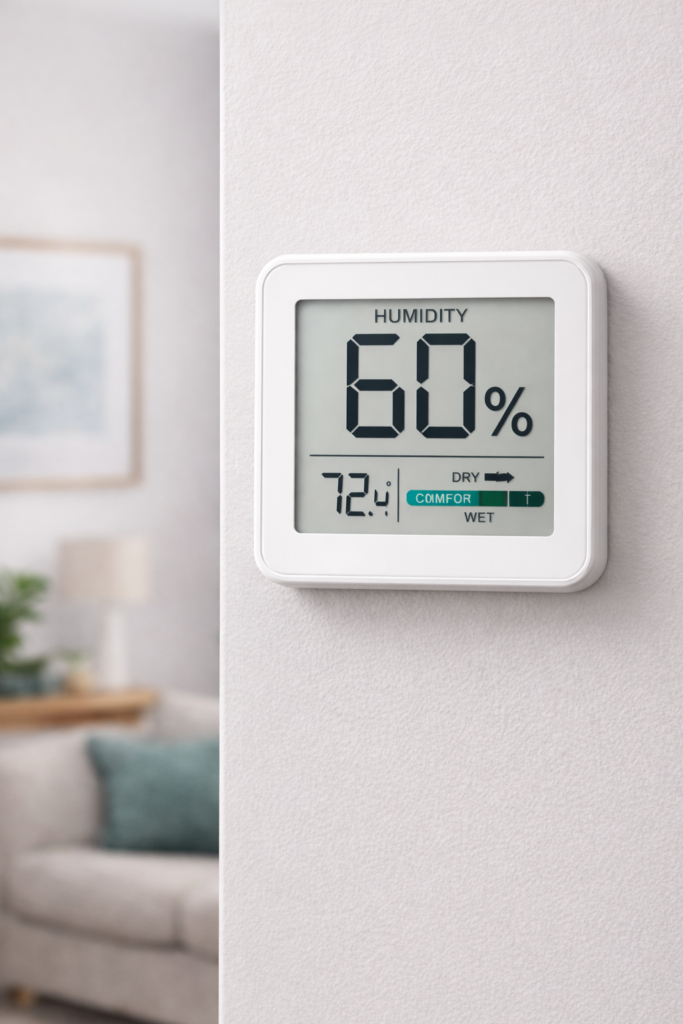
Indoor Humidity Risk Chart
| Humidity Level | Risk Level |
|---|---|
| 30–50% | Ideal |
| 50–60% | Monitor closely |
| 60–70% | Increased mold risk |
| 70%+ | High mold and structural risk |
Can You Sleep in 60% Humidity?
Yes, but sleep comfort may decrease.
Higher humidity can make rooms feel warmer and may:
- Disrupt sleep quality
- Increase nighttime sweating
- Aggravate allergies
- Encourage dust mites in bedding
For sleeping comfort, most experts recommend staying between 40–50%.
Is 60% Humidity Bad for Electronics or Furniture?
Over time, yes.
Consistent humidity above 60% can:
- Warp wood furniture
- Cause swelling in doors and cabinets
- Promote corrosion in electronics
- Damage books and paper materials
Does Climate Matter?
Yes. A 60% humidity level in a dry climate may behave differently than in a humid coastal or tropical environment.
- In dry climates, 60% may occur temporarily and drop quickly.
- In humid climates, 60% can remain constant for weeks.
- In poorly insulated homes, 60% can lead to condensation even faster.
Duration and building quality matter as much as the humidity percentage itself.
Final Verdict: Is 60% Humidity Too High?
Occasionally? Not a major concern.
Consistently? Yes — it’s above the recommended safe range.
Keeping humidity under 50% is the best way to minimize mold risk, protect your home, and maintain healthy indoor air.
If your home regularly sits at 60% or higher, it’s worth taking steps to reduce it — especially in moisture-prone areas like basements and bathrooms.
Frequently Asked Questions
Is 60% humidity too high in winter?
Yes. In winter, 60% humidity often leads to condensation on windows and hidden moisture inside walls.
Does 60% humidity cause mold?
It increases the likelihood of mold growth, especially if sustained over time.
What humidity level is unsafe indoors?
Anything consistently above 60% increases moisture-related risks.
Should I use a dehumidifier at 60%?
If levels remain above 60% for extended periods, a dehumidifier can help restore safe humidity levels.