
How to choose the right humidifier comes down to three things: your room size, your budget, and how much upkeep you’re willing to do — not which one has the most features on the box. Picking one sounds simple until you’re standing in front of a dozen options that all promise the same thing: better air, better sleep, less dry skin.
This guide breaks down the real differences between humidifier types, how to size one for your bedroom, and the maintenance habits that keep it from doing more harm than good. If you haven’t checked your bedroom’s current humidity yet, it’s worth doing that first — see our guide on the best humidity level for sleeping for the 40% to 50% target most sleep experts recommend.
Cool Mist vs. Warm Mist Humidifiers
The first decision is temperature. Cool mist humidifiers release room-temperature moisture using either an ultrasonic disk or a fan blowing air through a wet wick. They’re quieter to run for long stretches, use less energy, and carry no burn risk, which is why the Mayo Clinic recommends cool mist over warm mist for households with children.
Warm mist humidifiers (steam vaporizers) boil water before releasing it as vapor. The boiling process kills some bacteria in the tank, and some people find the warmth soothing for congestion, but the unit stays hot to the touch and adds a small amount of heat to the room — not ideal if you already run warm at night.
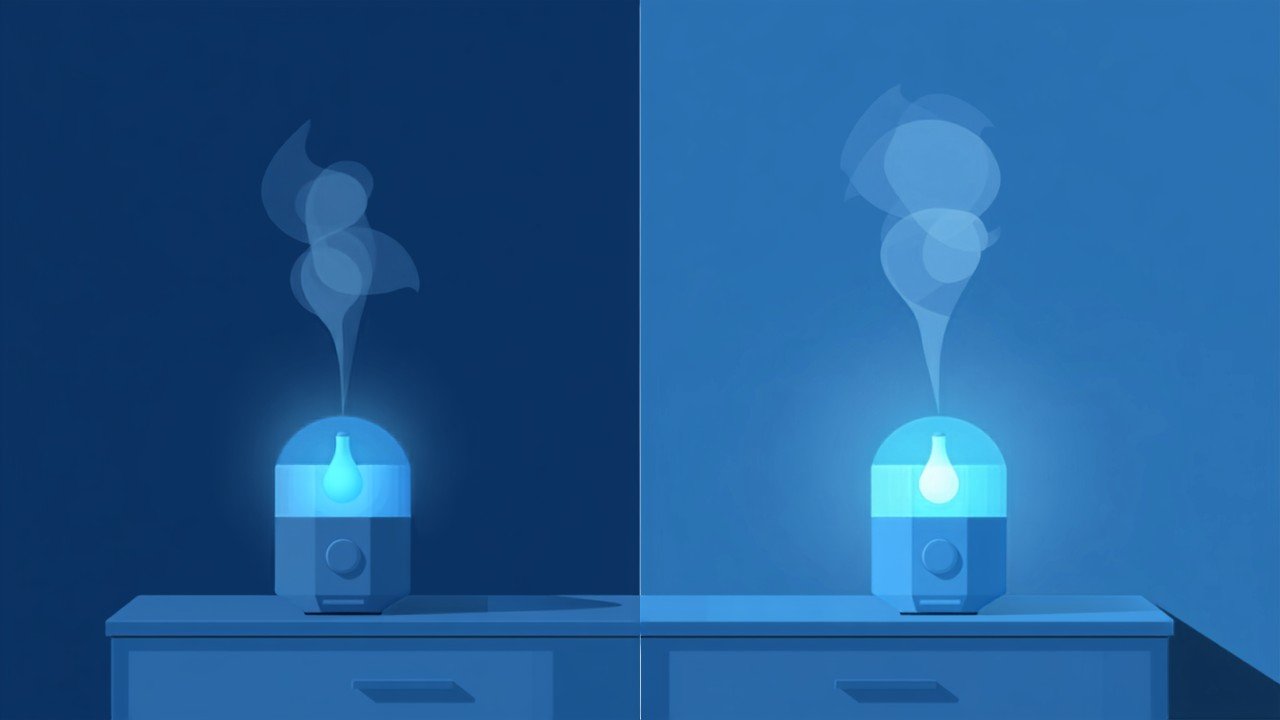
Within cool mist, there are two mechanisms worth knowing. Ultrasonic humidifiers use a vibrating diaphragm to create a fine mist and run almost silently, but they can release mineral dust (“white dust”) into the air if you use hard tap water. Evaporative humidifiers use a fan and a wick filter — they self-regulate somewhat, since output slows as the air becomes saturated, but the fan adds a bit more noise and the wick filter needs periodic replacement. For a bedroom specifically, noise level is worth weighing on its own: ultrasonic units run close to silent, which matters for light sleepers — see our guide on fixing a noisy humidifier if yours is louder than it should be.
What Size Humidifier Do You Need for Your Bedroom?
Humidifiers are usually rated by tank capacity and coverage area rather than room square footage alone, but as a starting point: a standard bedroom (around 200 to 300 square feet) is well served by a 1 to 1.5 gallon tank, enough for a full night of operation on the low or medium setting. Larger rooms, or bedrooms with vaulted ceilings, benefit from a 2 to 3 gallon console-style unit so you’re not refilling at 3 a.m. Oversizing isn’t free — a humidifier that’s too powerful for the room can push humidity past the ideal range faster than you’d expect, especially in smaller spaces. Check your room-by-room humidity targets before deciding on capacity.
Where to Place a Humidifier in Your Bedroom
Placement affects both performance and safety. Set the unit on a flat, elevated surface — a nightstand or dresser — rather than directly on the floor or carpet, where settled moisture can encourage mold in fibers underneath. Keep it a few feet from the bed rather than right beside your head; this spreads moisture evenly through the room instead of misting your face and pillow directly. Avoid placing it near electronics, wood furniture, or directly against a wall, all of which can be damaged by concentrated moisture over time.
Tap Water vs. Distilled Water
Tap water works, but it’s not the best choice. It contains minerals that build up as scale inside the tank and can be dispersed into the air as fine white dust, which settles on furniture and can irritate the lungs. Distilled or demineralized water avoids this almost entirely and is the option both the EPA and Mayo Clinic recommend for reducing mineral buildup and germ growth in home humidifiers.
How to Clean and Maintain Your Humidifier
A humidifier is one of the few appliances that can make your indoor air quality worse if you neglect it. Standing water in the tank is an easy environment for bacteria and mold to grow, and the unit then aerosolizes whatever is living in that water directly into the room you sleep in.
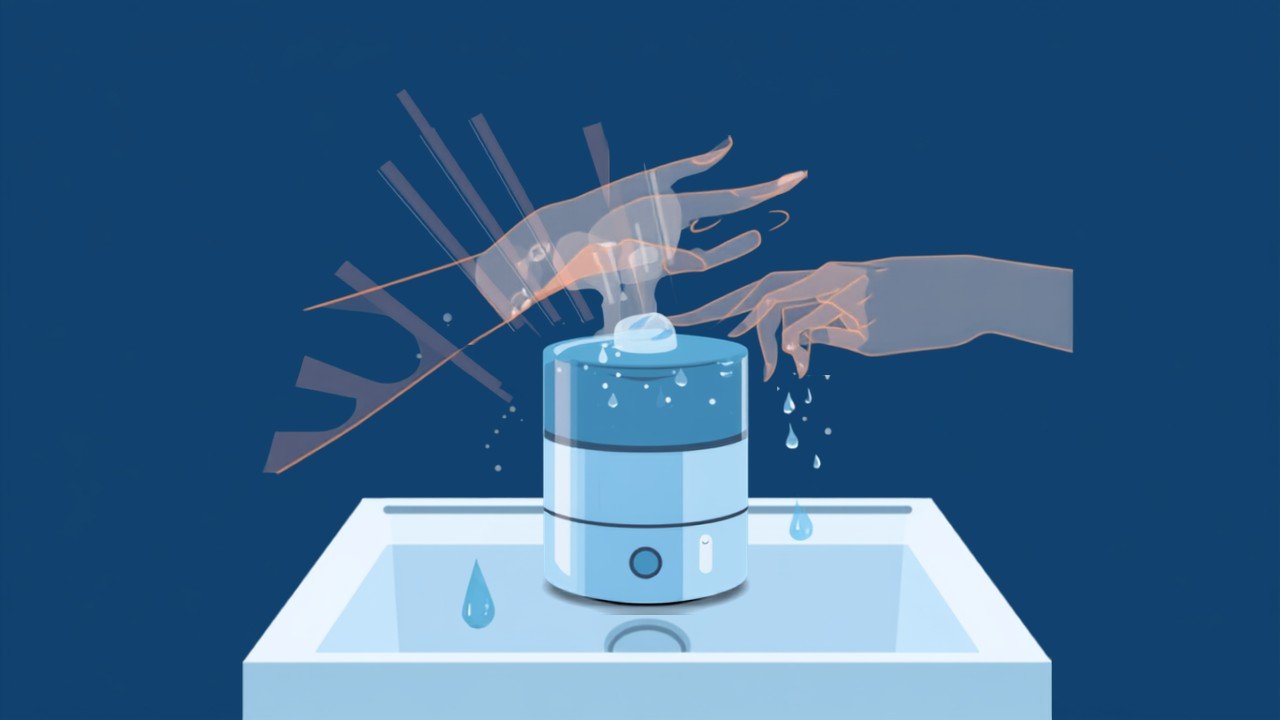
The EPA’s guidance on home humidifier care recommends emptying the tank and wiping it dry daily, and doing a deeper clean with a brush every third day to remove any film or scale from the interior surfaces. If you use a cleaning agent, rinse thoroughly afterward so no residue gets released into the air during use. Skipping this because the unit “seems fine” is the most common humidifier mistake — buildup isn’t always visible until it’s significant.
Humidifiers for Winter vs. Year-Round Use
Most households only need a humidifier seasonally. Winter heating dries indoor air significantly, often pushing bedroom humidity below 30% even when the outdoor air isn’t especially dry — that’s when a humidifier earns its keep. In summer, most climates don’t need one at all, and running it alongside high outdoor humidity can push your bedroom past the ideal range and into mold-risk territory. If you’re unsure whether you need one right now, a cheap hygrometer will tell you in a day rather than guessing — see our guide to monitoring humidity for what to look for.
Common Humidifier Mistakes to Avoid
A few habits undo most of the benefit of running a humidifier at all. Running it continuously without checking a hygrometer often overshoots the target range, especially in smaller rooms. Adding essential oils directly to the tank (rather than a dedicated diffuser tray) can damage internal components and isn’t something most manufacturers support. And letting water sit in the tank between uses — even for a day or two — gives bacteria a head start before you’ve even turned the unit back on. The CDC’s guidance on waterborne germs at home also recommends emptying humidifier tanks daily and using distilled water to limit bacterial growth.
Humidifiers in a Baby’s Room
Cool mist is the only recommended option for a nursery — warm mist and steam vaporizers carry a real burn risk if a curious toddler gets close. Keep the unit out of reach on a dresser rather than the floor or crib rail, and clean it more frequently than you would in an adult bedroom, since infants spend far more total hours breathing that air. We cover target humidity ranges for nurseries specifically in our guide to the best humidity level for sleeping.
Bottom Line
For most bedrooms, a cool mist humidifier with a 1 to 1.5 gallon tank, filled with distilled water and cleaned every few days, covers the job without the drawbacks of warm mist units. Match the size to your room, keep it a few feet from the bed, and check a hygrometer occasionally rather than running it on faith — that’s really the whole decision.
Related reading: Cool Mist vs. Warm Mist Humidifier: Which Is Better? and Humidifier White Dust: What Causes It and How to Stop It.
Frequently Asked Questions
What’s the difference between a cool mist and warm mist humidifier?
Cool mist humidifiers release room-temperature moisture using an ultrasonic disk or a fan and wick, while warm mist humidifiers (steam vaporizers) boil water before releasing it as vapor. Cool mist is quieter, uses less energy, and has no burn risk, making it the safer default for bedrooms and homes with children. Warm mist adds a small amount of heat and some people prefer it for congestion relief, but it needs more caution around kids and pets.
Is tap water safe to use in a humidifier?
Tap water is safe from a health standpoint but not ideal for the machine. It contains minerals that build up as scale inside the tank and can be released into the air as fine white dust, which settles on furniture and can irritate the lungs over time. Distilled or demineralized water avoids this and is the option recommended by the EPA and Mayo Clinic for reducing mineral buildup and germ growth.
How often should I clean my humidifier?
Empty the tank and wipe it dry daily, and do a deeper clean with a brush every third day to remove film, scale, or deposits from the interior surfaces. If you use a cleaning agent, rinse thoroughly afterward so no residue is released into the air during use. Skipping regular cleaning is the most common cause of humidifier-related mold and bacteria growth.
Can a humidifier make a room too humid?
Yes. Running a humidifier continuously without checking a hygrometer can easily push a small or medium bedroom above the 60% relative humidity ceiling that health agencies such as the EPA identify as the mold and dust-mite risk threshold. This is especially likely if the unit’s tank capacity is oversized for the room. Checking a hygrometer periodically is the simplest way to avoid overshooting.
What size humidifier do I need for my bedroom?
A standard bedroom of around 200 to 300 square feet is well served by a 1 to 1.5 gallon tank, which covers a full night on the low or medium setting. Larger bedrooms or rooms with high ceilings do better with a 2 to 3 gallon console-style unit so you’re not refilling in the middle of the night. Oversizing for a small room can push humidity past the ideal range faster than expected.