
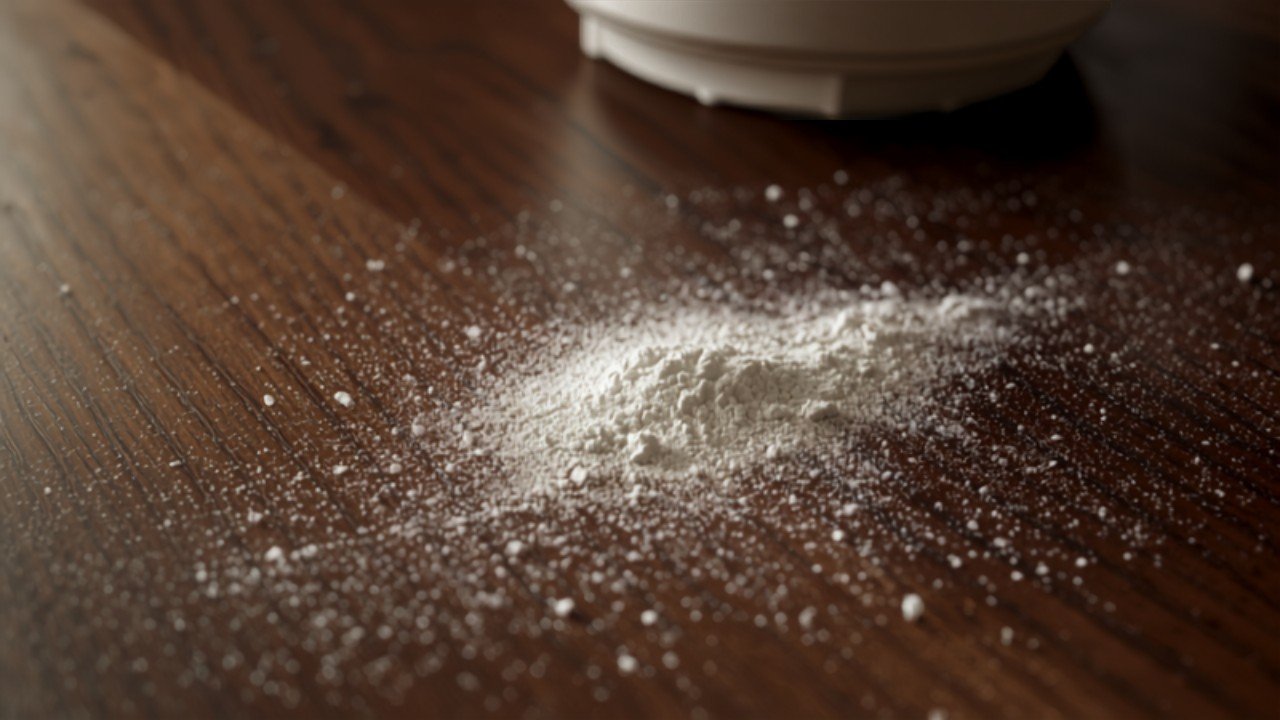
Humidifier white dust is mineral residue — mostly calcium and magnesium from tap water — that gets shattered into airborne particles by an ultrasonic humidifier and then settles as a fine white powder on furniture, electronics, and floors. It’s not mold, and it’s not a sign your unit is broken; it’s just hard water being launched into the air along with the mist.
This guide covers exactly why it happens, whether it’s worth worrying about, and how to stop it for good. For general humidity targets once your humidifier is dialed in, see our ideal humidity level guide.
What Actually Causes White Dust
Tap water isn’t pure H2O — it carries dissolved minerals, primarily calcium and magnesium, in amounts that vary depending on how hard your local water supply is. An ultrasonic humidifier creates its mist by vibrating a plate at high frequency to shake water into microscopic droplets. That vibration doesn’t distinguish between water molecules and dissolved minerals — it launches both into the air together. As the water portion of each droplet evaporates, the mineral residue is left behind as a fine particulate that eventually settles as visible white dust.
Why Only Ultrasonic Humidifiers Do This
The mechanism matters. Evaporative humidifiers pull air through a water-saturated wick filter — the wick physically traps minerals as water passes through it, so very little mineral content becomes airborne. Warm mist humidifiers boil the water; minerals don’t evaporate at the same rate as water vapor, so they’re left behind in the tank rather than released into the room. Ultrasonic units skip both of those natural filtering steps, which is exactly why white dust is a problem unique to them.
Is White Dust Actually Harmful to Breathe?
For most healthy adults, it’s mainly a cleaning nuisance rather than a health emergency. But the science is more concerning than most people assume. A peer-reviewed study on aerosolized tap water minerals from ultrasonic humidifiers found that the particles produced are fine enough to classify as PM2.5 — small enough to bypass the nose and throat’s natural filtering and travel deep into the lungs. The same research modeled how much of that mineral particulate actually reaches the lungs after eight hours of humidifier use and found children absorb roughly 3.5 times more mineral mass per pound of body weight than adults do, since a larger share of what they breathe in gets deposited in their smaller airways. If you’re concerned about broader humidifier health effects beyond white dust, our can a humidifier make you sick guide covers that in more depth.
Separately, a Virginia Tech environmental engineering expert has pointed out that tap water can occasionally carry trace amounts of heavy metals — arsenic, cadmium, lead, or manganese — depending on the local supply, and an ultrasonic humidifier will aerosolize those right along with the more common calcium and magnesium. This is a bigger consideration for infants and toddlers with developing lungs or existing asthma and allergies, especially if the unit runs for long overnight stretches, than for a healthy adult using one occasionally. None of this means you need to panic about an ultrasonic humidifier you already own — but it does mean the fix below is worth doing, not just a cosmetic annoyance.
How to Clean White Dust Off Furniture and Electronics
A damp microfiber cloth handles most surfaces without issue — the mineral residue isn’t sticky or stubborn, it just needs to be wiped rather than dry-dusted (dry dusting tends to just redistribute it into the air again). For electronics like TV screens or laptop keyboards, use a dry microfiber cloth first, then a barely-damp one if residue remains, and avoid spraying liquid directly onto any device. Wood furniture with a noticeable film benefits from a wood-safe cleaner afterward, since plain water alone can leave streaks.
Does Water Hardness Determine How Bad It Gets?
Yes, directly. Homes on well water or in regions with notoriously hard municipal supplies will see white dust show up faster and heavier than homes with softer water, simply because there’s more dissolved calcium and magnesium per gallon to begin with. If you have a whole-house water softener, you may notice less white dust than a neighbor on the same municipal supply without one — though softened water isn’t the same as demineralized water and can still leave some residue, since softening typically swaps calcium and magnesium for sodium rather than removing minerals entirely.
If you’re not sure how hard your water is, most municipal water utilities publish an annual water quality report with hardness figures, and inexpensive test strips can confirm it for well water. Knowing your starting point helps you decide whether distilled water is worth the recurring cost, or whether a demineralization cartridge in a moderately hard-water home will be enough on its own.
Is an Ultrasonic Humidifier Still Worth Using?
Despite the white dust issue, ultrasonic humidifiers remain popular for good reason: they’re nearly silent, energy-efficient, and produce a visible mist that makes it easy to see the unit is working. The mineral problem is entirely solvable with the water source rather than the unit itself, which is why most manufacturers and indoor air quality guidance point to distilled water as the standard recommendation rather than advising against ultrasonic technology altogether. The exception is households with infants, toddlers, or anyone with asthma or respiratory sensitivity running the unit for long overnight stretches — in those cases, either committing fully to distilled water or choosing an evaporative model from the start is the more cautious call given what the inhalation research shows.
How to Stop White Dust From Happening
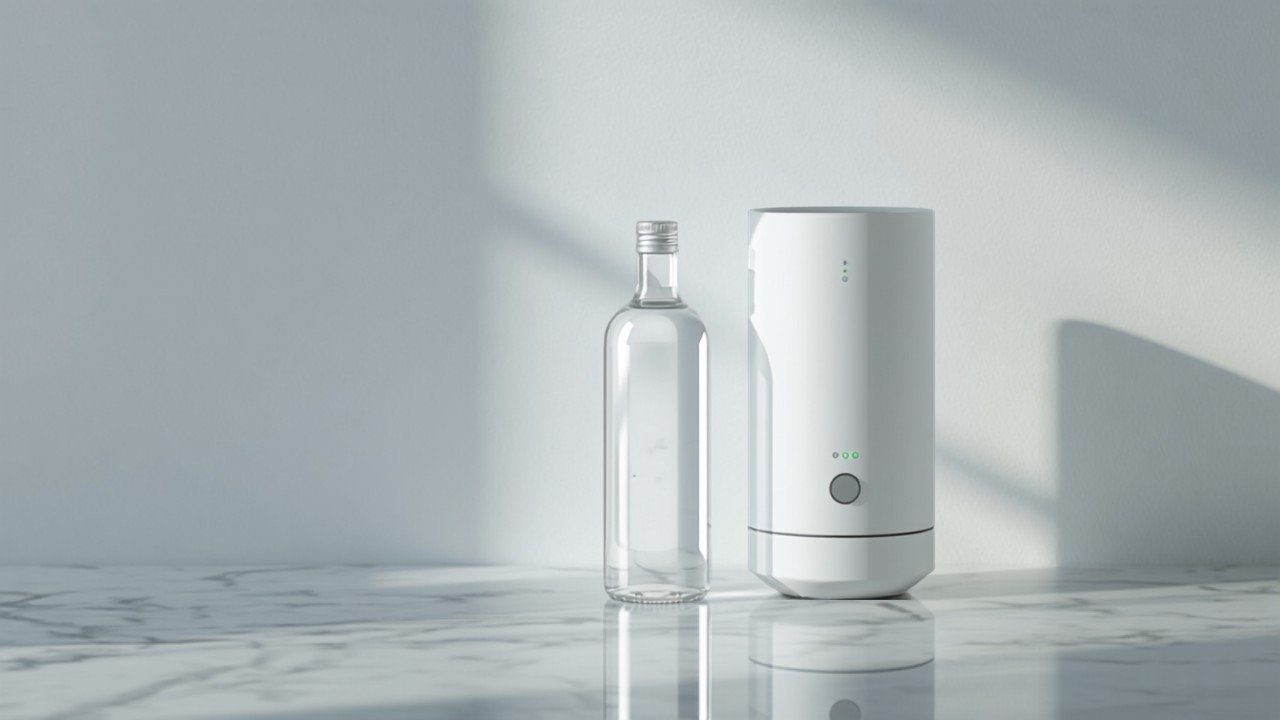
- Switch to distilled or demineralized water. This is the only fix that eliminates the problem completely, since it removes the minerals causing it before they ever reach the ultrasonic plate — a recommendation echoed by the EPA’s guidance on the use and care of home humidifiers. Reverse osmosis (RO) water works nearly as well if distilled isn’t convenient.
- Use a demineralization cartridge. These sit inside the tank and trap minerals from regular tap water before they can be aerosolized. Most need replacing every 30-40 tank fills, depending on how hard your water is — recurring white dust is your practical signal that it’s time to swap the cartridge.
- Switch to an evaporative or warm mist model if white dust keeps recurring despite the steps above. Both technologies handle mineral content differently by design, so the problem doesn’t come up in the first place.
- Clean the tank and ultrasonic plate regularly. Mineral scale that builds up on the plate itself can make the problem worse over time, independent of your water source.
Common Mistakes That Make White Dust Worse
A few habits quietly make the problem worse without people realizing it. Topping off an old tank with fresh water instead of emptying and refilling it lets mineral concentration build up over several days, since evaporated water leaves its dissolved minerals behind in whatever’s left in the tank — so each refill on top of old water is slightly more mineral-dense than the last. Running the humidifier at maximum mist output constantly, rather than the level actually needed to hit your target humidity, also means more total mineral-laden mist is being produced per hour than necessary.
Skipping regular tank cleaning is another factor: mineral scale that accumulates on the ultrasonic transducer plate itself can change how the mist is produced, sometimes making dust output worse even after you’ve switched to better water. A simple weekly rinse with a diluted vinegar solution (per most manufacturer manuals) keeps the plate clear and helps whatever water-source fix you’ve made actually work as well as it should.
Finally, some people assume boiling tap water before adding it to an ultrasonic tank removes the minerals the way boiling does in a warm mist unit — it doesn’t. Boiling kills bacteria and can reduce some volatile compounds, but calcium and magnesium don’t evaporate; they stay fully dissolved in the water whether it was boiled or not, so this step does nothing for white dust specifically, even though it’s a reasonable practice for reducing germs.
Bottom Line
Humidifier white dust is mineral residue from tap water, produced specifically by the ultrasonic mechanism — not a sign of a broken unit or mold growth. Switching to distilled water or adding a demineralization cartridge solves it almost entirely, and given what the research shows about fine mineral particulates reaching deep into the lungs, it’s worth fixing rather than just wiping down furniture every few days. If you’re also dealing with humidity that’s running too high or too low in the same room, our is 60% humidity too high guide and humidity levels by room guide cover the target ranges to aim for.
Related reading: Humidifier vs. Vaporizer: What’s the Difference? and How Often Should You Clean Your Humidifier?.
What is humidifier white dust?
It’s mineral residue, mostly calcium and magnesium from tap water, that gets aerosolized by an ultrasonic humidifier and settles as a fine white powder on nearby surfaces once the water portion evaporates.
Is humidifier white dust dangerous to breathe?
Research shows the particles are fine enough to reach deep into the lungs, and can include trace heavy metals from tap water. It’s more of a concern for infants, toddlers, and people with asthma or respiratory sensitivity than for healthy adults, but it’s worth addressing rather than ignoring.
Does distilled water really stop white dust completely?
Yes. Distilled and demineralized water have had their mineral content removed, so there’s nothing left to aerosolize. It’s the single most effective fix.
Why doesn’t my warm mist humidifier produce white dust?
Warm mist units boil the water, and minerals like calcium and magnesium don’t evaporate the way water does, so they stay behind in the tank instead of being released into the room.
How often should I replace a demineralization cartridge?
Most need replacing every 30-40 tank fills, though this varies with how hard your water is. If white dust starts reappearing, that’s a practical sign the cartridge is due for replacement.