
The difference in humidifier vs vaporizer devices comes down to mechanism and intended use: a vaporizer boils water into steam and is typically built for short-term, sick-room use with medicated inhalants, while “humidifier” is the broader category that includes both cool-mist and warm-mist devices meant for longer-term, whole-room humidity control. In practice, a vaporizer is really a specific kind of warm-mist humidifier, not a separate technology.
How Each One Actually Works
A vaporizer heats water with an internal element until it boils, releasing warm steam into the room. A cool-mist humidifier uses one of two other mechanisms instead: an ultrasonic diaphragm that vibrates water into a fine mist, or an evaporative wick and fan that pulls room air through a moistened filter. Because a vaporizer’s water is briefly boiling inside the unit, it’s the only one of the three that produces genuinely hot steam at the point of release, even though all three eventually humidify the room to a similar relative humidity.
Medicine Cups Are the Real Differentiator
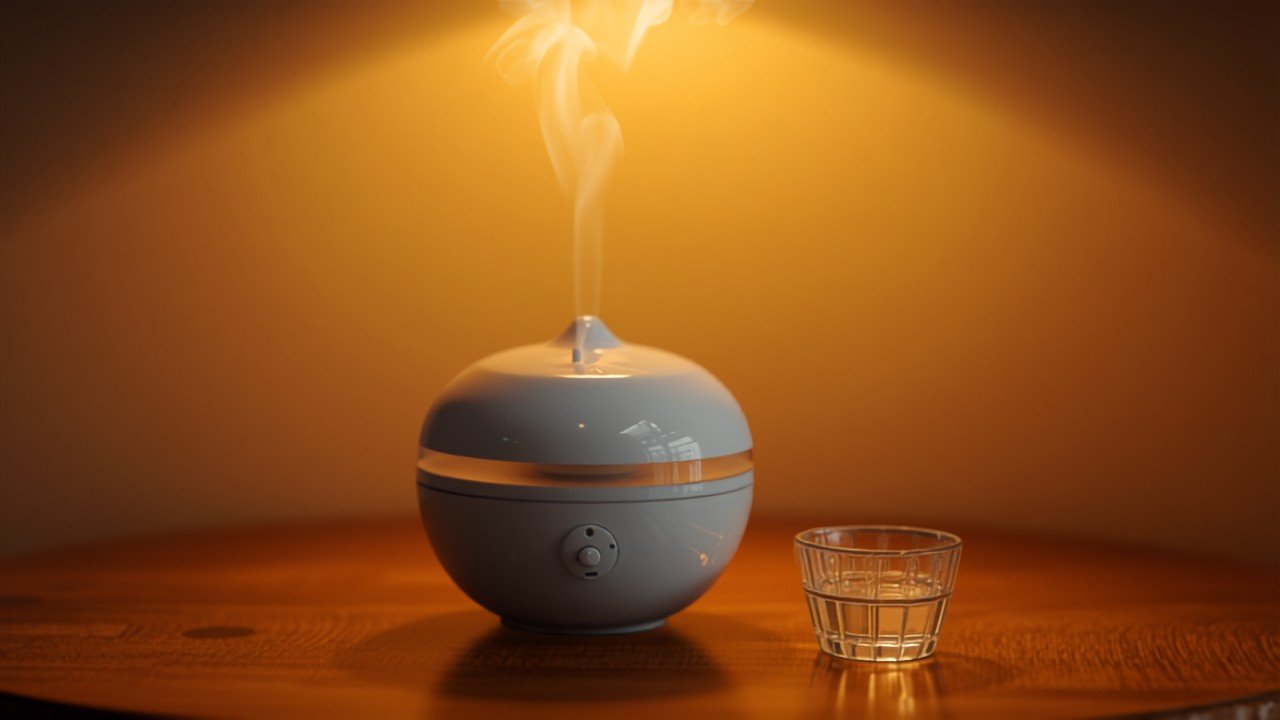
The feature that most clearly sets a vaporizer apart is a small medicine cup or inhalant chamber built into the unit, designed for menthol-based over-the-counter inhalant products that vaporize along with the steam. Most cool-mist humidifiers don’t include this feature and manufacturers generally advise against adding anything to the water tank besides water and, in some cases, a specific descaling or antimicrobial additive. If part of what you want out of a device is the ability to add a chest-congestion inhalant, that’s a vaporizer-specific feature, not something most standard humidifiers support.
Effectiveness for Colds and Congestion
For the actual job of relieving cold and flu congestion, research consistently finds that cool mist and warm mist perform about the same: the added humidity loosens mucus and eases irritated nasal passages regardless of whether the mist is warm or cool. The medicine cup gives a vaporizer a secondary benefit a plain humidifier doesn’t have, but the humidity itself isn’t more therapeutic just because it came from boiling water.
Safety Is Where They Really Diverge
This is the most important practical difference. Because a vaporizer boils water, tipping it over can cause a genuine burn — the EPA’s guidance on home humidifiers explicitly warns to keep steam vaporizers out of children’s reach because steam and boiling water may cause burns — which is why pediatric guidance consistently steers households with young children toward cool-mist humidifiers instead. A cool-mist unit has no heating element and no hot water to spill, making it meaningfully safer in a room where a child or pet might knock it over. Manufacturer safety instructions for steam vaporizers, such as Vicks’ own warm steam vaporizer manual, reinforce this: they tell users to keep the unit out of children’s reach and supervise it constantly, since the escaping steam and hot water inside can cause severe burns. If a vaporizer’s steam output or medicine cup is something you specifically want, keep it out of reach and supervise its use rather than leaving it running unattended in a nursery, and check our guide on high indoor humidity if you’re worried about over-humidifying a small room with either device.

Running Cost and Maintenance
Boiling water continuously uses noticeably more electricity than an ultrasonic or evaporative mechanism, so a vaporizer running for several nights during an illness will cost more to operate than a comparable cool-mist unit over the same period. On the maintenance side, vaporizers are less prone to the white dust problem that affects ultrasonic humidifiers with hard tap water, since boiling doesn’t aerosolize mineral content the way ultrasonic vibration does — though they still need regular cleaning to prevent mineral buildup on the heating element itself.
Which One Should You Actually Buy?
- Sick room, adults only, want a medicated inhalant option: a vaporizer is a reasonable, purpose-built choice.
- Nursery or a room with young children or pets: a cool-mist humidifier, for the burn-risk reasons above.
- Whole-room, long-term humidity control (not just during a cold): a standard cool-mist or warm-mist humidifier sized for the room, not a small sick-room vaporizer.
- Lowest running cost for extended overnight use: an evaporative or ultrasonic cool-mist humidifier over a vaporizer’s continuous boiling.
If you land on a standard humidifier rather than a vaporizer, sizing and mist type matter more than the medicine-cup feature — the choice between cool mist and warm mist for a standard humidifier comes down mostly to safety around kids and pets (cool mist is safer) versus the warm mist’s slight edge in easing congestion for adults, our ideal humidity level guide covers the target range to aim for once it’s running, and our humidity levels by room breakdown is useful if the room is a nursery or bedroom specifically.
Why the Terminology Gets Confusing
Part of the confusion comes from how loosely both words get used in everyday conversation and in retail listings. Plenty of products labeled “vaporizer” are really just warm-mist humidifiers with a medicine cup bolted on, and some cool-mist humidifiers get called “vaporizers” by shoppers simply out of habit, since older generations grew up with the classic steam vaporizer as the default sick-room device. Mayo Clinic’s own guidance on warm-mist versus cool-mist devices treats the underlying mechanism, not the marketing name, as what actually matters for safety and effectiveness — which is the more useful way to think about the category when you’re comparing products.
What a Classic Steam Vaporizer Actually Contains
A traditional steam vaporizer is a fairly simple appliance: a water reservoir, a heating element that brings it to a boil, a steam outlet, and usually a small plastic cup mounted near the outlet for a menthol or eucalyptus-based inhalant tablet or liquid. There’s no fan in most designs — the rising steam carries the vapor and moisture into the room on its own. This simplicity is part of why steam vaporizers remain inexpensive, but it’s also why there’s no cool-mist option within the vaporizer category itself; if it doesn’t boil the water, it isn’t a vaporizer by the traditional definition, it’s simply a humidifier. That simplicity also means fewer parts to clean and replace compared to an ultrasonic humidifier’s transducer or an evaporative model’s wick filter, which is a minor maintenance advantage for a device that’s typically only running for a few days at a time during an illness rather than continuously year-round.
Common Mistakes When Choosing Between Them
- Buying a vaporizer for a child’s room because it’s marketed as a “cold and flu” device, without registering that it’s the warm-mist, higher-burn-risk option.
- Assuming a cool-mist humidifier can safely take the same medicated inhalant liquid a vaporizer’s medicine cup is designed for — check the manual, since most cool-mist units explicitly warn against it.
- Running either device non-stop for weeks at a time as a general-purpose humidifier when a properly sized whole-room humidifier would be a better long-term fit.
- Placing either device on the floor within reach of toddlers or pets, which matters even more for a vaporizer given the scalding risk.
What the Research Actually Says About Effectiveness
A Cochrane systematic review of heated, humidified air for the common cold found no reliable evidence that warm, humidified air relieves cold symptoms better than other approaches, which lines up with the broader clinical consensus: added humidity in general may help loosen congestion and soothe irritated airways, but there’s no meaningful evidence that steam specifically outperforms cool mist for symptom relief. That means the decision between a vaporizer and a cool-mist humidifier really does come down to the practical factors covered above — safety around children, whether you want a medicine-cup feature, and running cost — rather than one having a therapeutic edge the other lacks. If anything, the extra caution required around a vaporizer’s hot water is a real cost that has to be weighed against a feature (the medicine cup) that a bowl of hot water and a towel over your head could technically replicate in a pinch, minus the convenience.
Related reading: How Often Should You Clean Your Humidifier? and Can You Put Essential Oils in a Humidifier?.
Is a vaporizer just a type of humidifier?
Functionally, yes. A vaporizer is a warm-mist device that boils water to create steam, which is one of the two basic humidifier mechanisms (the other being cool mist). The term “vaporizer” in common use usually implies a smaller, sick-room device built to accept a medicated inhalant, not a distinct technology from humidifiers as a category.
Is a vaporizer safer or more dangerous than a humidifier?
It depends which humidifier you’re comparing it to. A vaporizer is more dangerous than a cool-mist humidifier around children and pets, since it boils water and can cause burns if tipped over. It’s roughly comparable in risk to a warm-mist humidifier, which uses the same heating element.
Can I put medicine in a regular humidifier?
Only if it’s specifically designed for it. Most cool-mist humidifiers are not built to accept medicated inhalants and manufacturers generally advise against adding anything but water. Vaporizers, by contrast, typically include a small medicine cup specifically for menthol-based inhalant products.
Do vaporizers or humidifiers use more electricity?
Vaporizers use more electricity per hour, since heating water to boiling takes considerably more energy than a cool-mist device’s ultrasonic or evaporative mechanism. For occasional short-term use during an illness, the difference in cost is minor.
Which should I buy for a baby’s nursery?
A cool-mist humidifier. Pediatric guidance consistently recommends cool mist over vaporizers or warm-mist humidifiers for children’s rooms specifically because of the burn risk from hot water or steam, which matters more in a room a child can reach unsupervised.
Bottom Line
A vaporizer is a warm-mist device built for short-term sick-room use, distinguished mainly by its medicine cup and its higher burn risk from boiling water. A humidifier is the broader category, and a cool-mist model is the safer, more versatile choice for most households, especially anywhere children or pets are present. Choose based on who’s in the room and whether the medicated-inhalant feature actually matters to you, not on which name sounds more medical.