
How often should you clean your humidifier? As a general rule: empty and refill the tank daily, do a full clean weekly, and deep-clean with vinegar monthly, or every third day for the water itself if you want to follow the EPA’s most conservative guidance. Standing water sitting in a humidifier tank is exactly the kind of stagnant, room-temperature environment bacteria and mold thrive in, so the cleaning schedule matters just as much as picking the right humidity level in the first place.
The Daily Task: Empty and Refill
Every day, empty any water left in the tank, wipe it dry with a clean towel, and refill with fresh water rather than topping off what’s already there. Water that sits in a tank overnight starts supporting bacterial growth almost immediately, and simply adding more water on top doesn’t dilute that contamination meaningfully. This daily habit is the single easiest way to keep a humidifier from becoming a source of the exact air-quality problems it’s supposed to help with. It takes under two minutes and costs nothing, which makes it the cheapest insurance you can build into a daily routine. This lines up with the CDC’s own guidance to empty humidifier tanks every day and let them air dry after cleaning.
The Weekly Task: A Full Clean
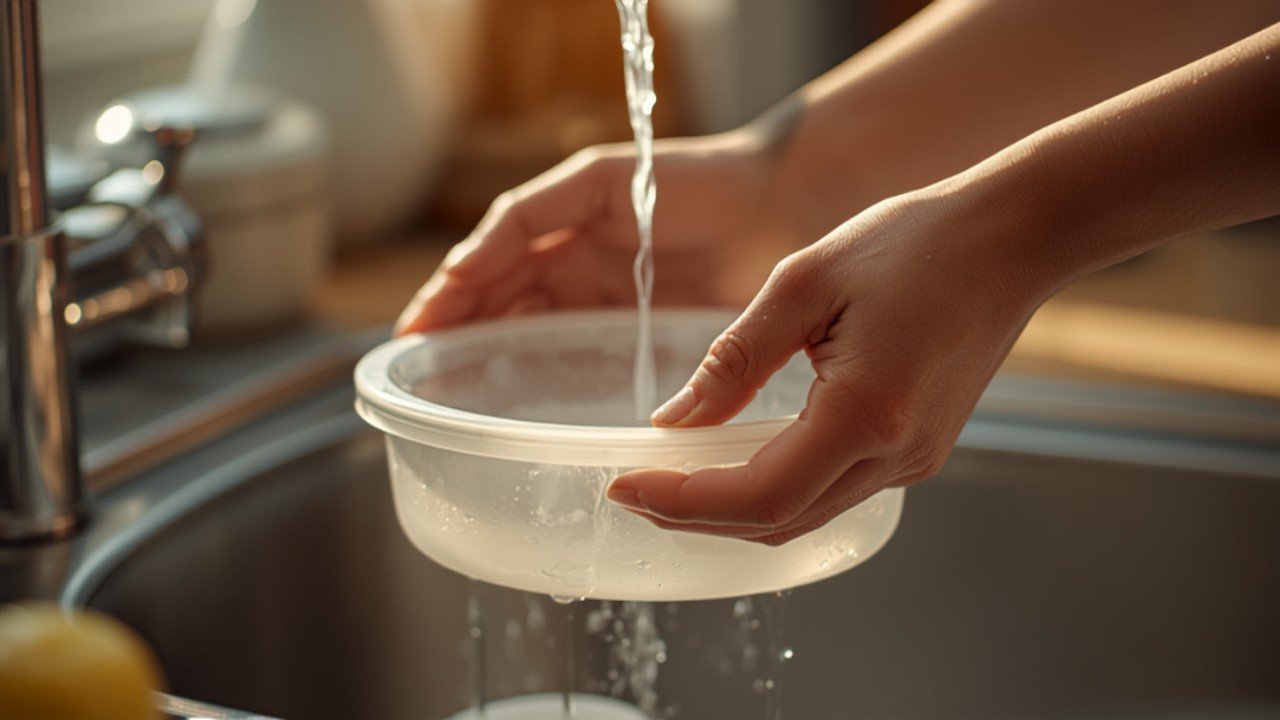
Once a week, take the tank and any removable parts apart and wash them, not just rinse them. A mix of warm water and a small amount of dish soap handles general grime, but for mineral deposits and any early buildup, a solution of equal parts water and white vinegar left to sit for 20-30 minutes before scrubbing is the standard recommendation across manufacturer guidance and independent testing alike. Rinse thoroughly afterward, since any leftover vinegar smell will end up in the mist. A soft brush or an old toothbrush works well for getting into corners and around the base, which is where mineral scale and biofilm tend to accumulate first.
The Monthly Task: A Deep Vinegar Soak
Once a month, or once a season at minimum, go beyond the weekly wipe-down and do a full soak: fill the tank with a stronger vinegar solution (or straight white vinegar for heavily mineral-stained units) and let it sit for several hours or overnight. This loosens mineral scale and any biofilm that a quick weekly clean doesn’t fully remove, especially in ultrasonic humidifiers where mineral buildup on the transducer plate directly affects performance and can contribute to the white dust problem. After soaking, scrub any remaining residue, rinse several times, and let all parts air-dry completely before reassembling, since reassembling while still damp just reintroduces moisture into places bacteria can grow.
Why the EPA Recommends Every Third Day for Water Changes
The Environmental Protection Agency’s guidance is more conservative than most manufacturer manuals, recommending water changes and tank cleaning every third day specifically to stay ahead of bacterial growth before it becomes visible or smellable. This stricter schedule matters more for anyone using a humidifier around infants, people with respiratory conditions, or immunocompromised household members, where even low-level bacterial or mold exposure carries more risk than it would for a healthy adult. If your household includes any of these higher-risk groups, it’s worth defaulting to the EPA’s tighter schedule rather than the more relaxed weekly cadence some manufacturers list as a minimum. The CDC’s guidance on controlling Legionella in humidifiers and similar devices makes the same point: any device that holds standing water and releases it as mist needs a regular disinfection routine.
Cleaning Frequency by Humidifier Type
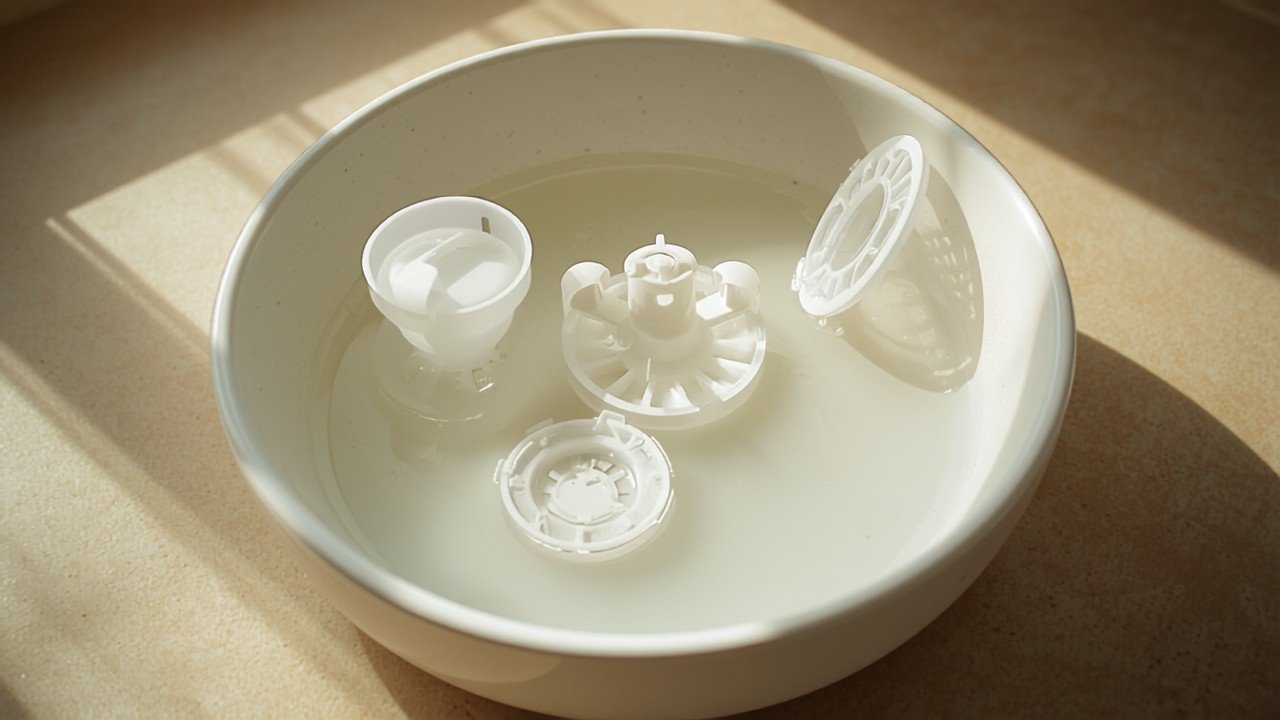
Not every humidifier design has the same cleaning demands. Ultrasonic humidifiers use a vibrating plate that’s especially prone to mineral scale buildup, so they benefit most from frequent vinegar descaling and are also the type most associated with visible white dust when mineral-rich tap water is used. Evaporative humidifiers rely on a wick filter that needs regular replacement in addition to tank cleaning, since a saturated, aging filter becomes its own breeding ground for mold even if the tank itself is kept clean. Steam vaporizers heat water to produce mist, and that heat kills most bacteria in the water itself, which is part of why vaporizers are sometimes considered lower-maintenance than cold-mist humidifiers — though the tank still needs regular cleaning to prevent mineral buildup.
Filters Need Their Own Schedule
If your humidifier uses an evaporative wick filter, that filter needs replacement on its own timeline, typically every 1-2 months depending on water hardness and how many hours a day it runs. A filter that’s overdue for replacement gets progressively worse at trapping minerals, which both reduces humidifying efficiency and increases what gets released into the room air. Check your model’s manual for the exact interval, since hard-water areas often need more frequent replacement than the standard guidance suggests.
What to Use, and What to Avoid
Stick to white vinegar, mild dish soap, and hydrogen peroxide for routine cleaning — all three are effective against mineral scale and mild bacterial growth without leaving a residue that gets aerosolized into the room. Consumer Reports’ cleaning guidance follows the same core approach. Avoid bleach unless your manufacturer’s manual specifically calls for it, and never combine bleach with vinegar or any ammonia-based cleaner, since mixing them produces toxic fumes. Scented soaps, essential oils added directly to soapy cleaning water, and abrasive scouring pads are also worth skipping: fragrance residue lingers in plastic and silicone parts far longer than it does on hard surfaces, and abrasive pads can scratch the tank in ways that make future buildup stick more easily.
Distilled Water vs. Tap Water
Using distilled or demineralized water instead of tap water significantly reduces mineral buildup and the white dust that results from it, which in turn means less frequent descaling is needed. It does not, however, reduce how often the tank needs cleaning for bacteria and mold, since that growth comes from organic contamination and stagnation rather than mineral content. Distilled water is a worthwhile upgrade for anyone dealing with hard tap water, but it should be treated as a complement to a cleaning schedule, not a replacement for one.
Signs You Need to Clean More Than the Schedule Says
- A musty, sour, or moldy smell coming from the tank or the mist itself.
- Visible slime, discoloration, or a pink or black film on the inside of the tank.
- White dust accumulating on nearby furniture faster than it used to.
- A noticeable drop in mist output even with a full tank.
- Anyone in the household developing unexplained respiratory irritation that improves when the humidifier isn’t running.
Any of these is a sign to do a full deep clean immediately rather than waiting for the next scheduled one.
Common Cleaning Mistakes
- Letting the tank sit empty and open between uses without fully air-drying it first, which traps residual moisture.
- Using scented soaps or harsh chemical cleaners that leave a residue the humidifier then aerosolizes.
- Skipping filter replacement because the humidifier still seems to be producing mist normally.
- Reassembling parts while still wet, which reintroduces the exact moisture the cleaning was meant to remove.
- Cleaning the tank but ignoring the base, nozzle, or ultrasonic plate where buildup often starts first.
Keeping the room’s overall humidity in a healthy range matters alongside the humidifier itself — our ideal humidity level guide covers the general 30-50% target, and our humidity levels by room breakdown is useful if you’re running a humidifier in a specific room like a nursery or bedroom. If you’re deciding between humidifier styles in the first place, our humidifier vs. vaporizer comparison also covers how maintenance needs differ between the two.
Related reading: Can You Put Essential Oils in a Humidifier? and Humidifier Making Noise? Common Causes and Fixes.
Can I just add fresh water without cleaning the tank?
Only for a day or two at most. Standing water left in a tank for more than a day or two starts growing bacteria and mold, so topping off without emptying and rinsing first just adds fresh water to an already-contaminated tank.
What happens if I don’t clean my humidifier regularly?
Mineral deposits, bacteria, and mold build up inside the tank and on internal components, and the humidifier can then aerosolize that contamination directly into the air you’re breathing. This is one of the more common causes of respiratory irritation that gets blamed on “the humidity” when it’s actually the unit itself.
Is vinegar or bleach better for cleaning a humidifier?
White vinegar is the standard recommendation for regular cleaning and descaling, since it’s effective against mineral buildup and mild enough to use frequently. A diluted bleach solution is sometimes used for a deeper disinfecting pass, but always check your specific model’s manual first, rinse thoroughly, and never mix bleach and vinegar together.
Does using distilled water mean I can clean less often?
It reduces mineral buildup and white dust, but it doesn’t prevent bacteria or mold growth, which come from stagnant water and organic contamination rather than mineral content. Distilled water is worth using, but it’s not a substitute for a regular cleaning schedule.
How do I know if my humidifier needs a deeper clean than usual?
Watch for a musty or sour smell coming from the unit, visible discoloration or slime inside the tank, white dust accumulating faster than normal, or a noticeable drop in mist output. Any of these are signs to do a full vinegar soak rather than a quick rinse.
Bottom Line
Treat humidifier cleaning as three separate habits, not one: empty and refill the water daily, wash the tank and parts weekly, and deep-clean with a vinegar soak monthly, tightening to every third day if anyone in the household is higher-risk. Skipping this schedule is one of the most common reasons a humidifier ends up making indoor air quality worse instead of better, and it’s a completely preventable problem with a consistent routine.