
High humidity rarely becomes a problem overnight. In most homes, excess moisture builds gradually — and before serious damage appears, there are subtle but clear warning signs.
If indoor humidity consistently rises above 60%, your home may already be showing early symptoms. Learning to recognize the signs your home has high humidity allows you to take action before mold, structural damage, or health issues develop.
What Is Considered High Indoor Humidity?
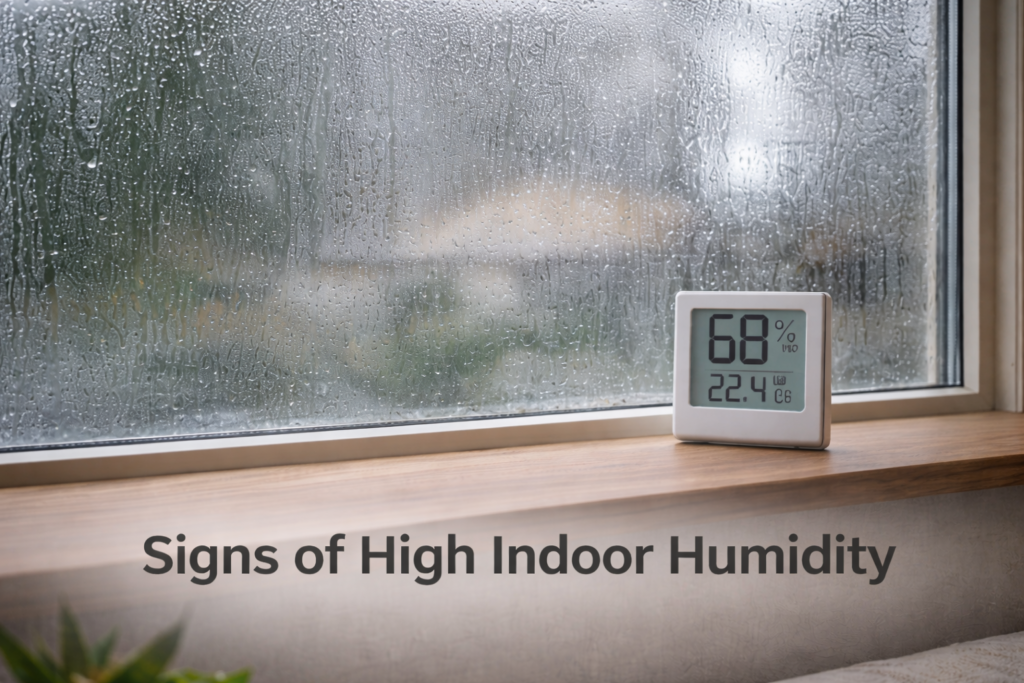
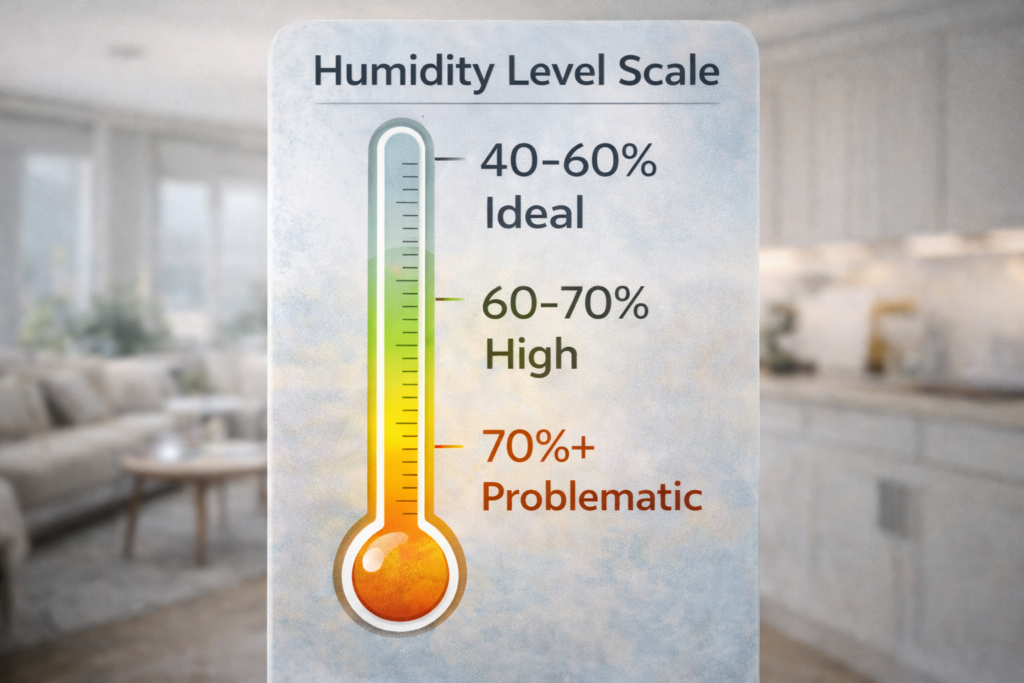
Indoor humidity is generally considered healthy between 40% and 60%. Levels below 40% can feel dry and uncomfortable, while levels above 60–65% begin to create favorable conditions for mold growth and material damage.
Many homeowners ignore the early signs your home has high humidity because they appear harmless at first.
According to the EPA, controlling indoor moisture is one of the most important factors in preventing mold problems.
If you’re unsure what level your home should maintain throughout the year, review our complete guide on ideal humidity levels for homes.
Once indoor humidity consistently exceeds 60%, warning signs typically begin to appear.
7 Signs Your Home Has High Humidity
1. Condensation on Windows and Glass Surfaces
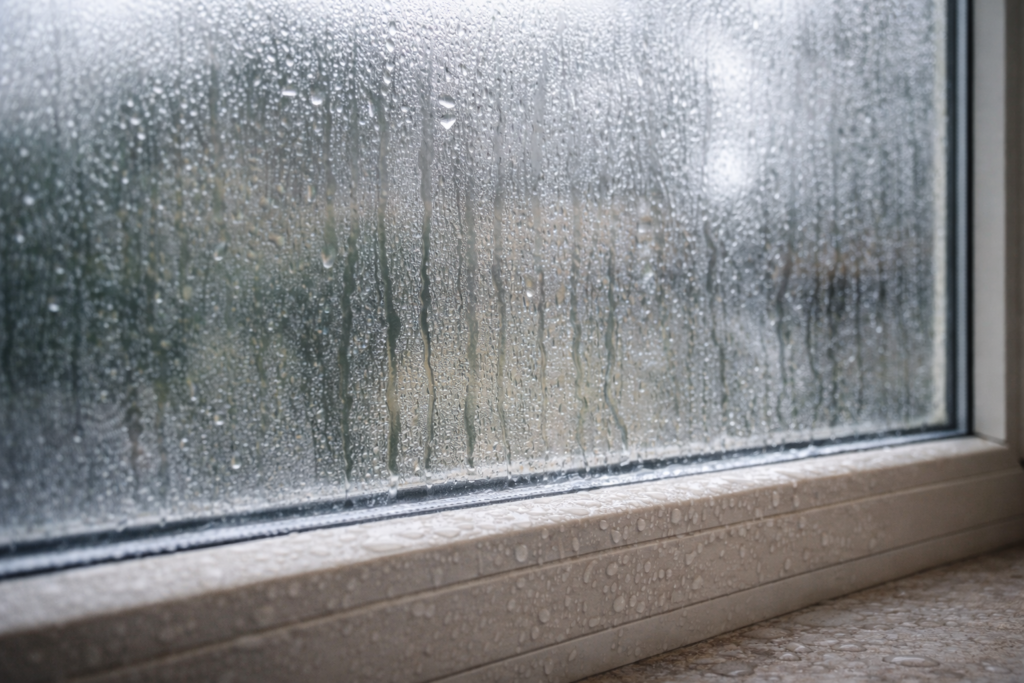
One of the earliest signs your home has high humidity is condensation.
You may notice:
- Water droplets forming on window glass
- Foggy windows in the morning
- Moisture on mirrors even without long showers
Condensation occurs when warm, humid air contacts cooler surfaces. When indoor humidity is elevated, moisture in the air condenses into liquid water.
If this happens daily — especially outside of winter months — indoor humidity is likely too high.
Over time, repeated condensation can damage window frames and encourage mold growth around seals.
2. Persistent Musty Odors
A damp or earthy smell is often a strong indicator of hidden humidity problems.
Even when mold isn’t immediately visible, excess moisture encourages microbial growth in:
- Wall cavities
- Carpets and padding
- Behind furniture
- Inside HVAC systems
High humidity allows mold spores to multiply more easily. The smell you notice is often microbial volatile organic compounds (MVOCs) released by mold colonies.
If your home smells musty despite regular cleaning, humidity may be the underlying issue.
3. Visible Mold Spots
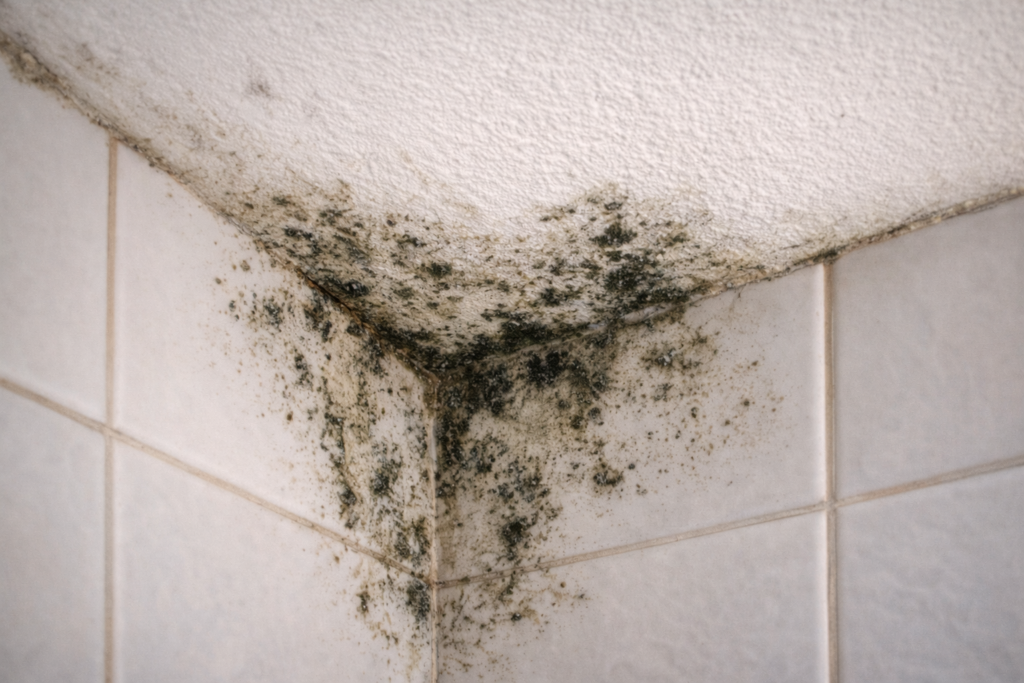
Mold thrives in environments where humidity exceeds 60–70%.
Common places to check:
- Bathroom corners
- Around windows
- Basement walls
- Ceiling edges
- Behind appliances
Small black, green, or gray spots may appear first. Even minor visible mold indicates moisture imbalance.
If left untreated, mold can spread and cause respiratory irritation and structural damage.
4. Peeling Paint, Bubbling Wallpaper, or Wall Damage
High humidity affects building materials over time.
When walls absorb excess moisture, finishes begin to deteriorate. You might see:
- Peeling or flaking paint
- Wallpaper separating from the wall
- Soft drywall spots
- Stains near ceilings
Moisture trapped behind walls can weaken adhesives and cause materials to expand and contract repeatedly.
This is often a sign of prolonged elevated indoor humidity rather than a short-term spike.
5. Warped Wood Floors, Swollen Doors, or Sticking Cabinets
Wood is hygroscopic — meaning it absorbs moisture from the air.
When humidity levels remain high, wooden materials can:
- Expand unevenly
- Warp or cup
- Swell and become difficult to open
- Develop cracks after repeated cycles
If doors begin sticking during humid weather or hardwood floors feel uneven, indoor humidity may be the cause.
6. Increased Allergy or Asthma Symptoms
High humidity significantly affects indoor air quality.
Elevated moisture creates ideal conditions for:
- Dust mites
- Mold spores
- Mildew growth
If members of your household experience:
- Frequent sneezing
- Itchy or watery eyes
- Persistent congestion
- Worsened asthma symptoms
Humidity may be contributing to respiratory irritation.
Maintaining balanced humidity is often recommended for individuals with allergies.
7. Sticky or Clammy Indoor Air
Sometimes the most obvious sign your home has high humidity is how it feels.
If your home feels:
- Heavy or damp
- Uncomfortable even with air conditioning
- Hard to cool
- Sticky on the skin
Humidity levels may be elevated.
Air conditioners cool the air but may not remove sufficient moisture if oversized or poorly maintained.
Secondary Signs of High Indoor Humidity
Beyond the main warning signs, you may also notice:
- Rust forming on metal fixtures
- Damp basement smell
- Increased insect activity
- Frequent mildew in closets
- Foggy smell when returning home after being away
These subtle indicators often suggest chronic humidity rather than occasional spikes.
Quick Reference: High Humidity Warning Signs
| Warning Sign | What It Suggests | Likely Humidity Level |
|---|---|---|
| Window condensation | Mild moisture buildup | 55–65% |
| Musty odor | Hidden mold growth | 60%+ |
| Visible mold | Active moisture problem | 65–75% |
| Peeling paint | Long-term exposure | 65%+ |
| Warped wood | Sustained humidity | 60–70% |
| Allergy flare-ups | Air quality impact | 55%+ |
| Sticky air | Elevated indoor moisture | 60%+ |
Occasional vs Chronic Humidity
It’s important to distinguish between temporary humidity spikes and ongoing problems.
Temporary humidity may occur:
- After cooking
- After long showers
- During rainy days
Chronic humidity, however, remains elevated even when no moisture-producing activity is happening.
If humidity readings stay above 60% for multiple days, the issue likely requires corrective action.
How to Confirm High Humidity
The only reliable way to confirm high humidity is to measure it.
Use a digital hygrometer and monitor levels for several days. Place it:
- In central living areas
- Away from kitchens and bathrooms
- At breathing height
Track readings at different times of day.
If levels consistently exceed 60%, action is recommended.
Why High Humidity Shouldn’t Be Ignored
Ignoring early warning signs can lead to:
- Mold infestations
- Structural wood damage
- Electrical corrosion
- Increased energy bills
- Health complications
Humidity problems often worsen over time if left untreated.
What To Do If Your Home Has High Humidity
If humidity is only slightly elevated, you may be able to correct the issue naturally.
Start by:
- Improving ventilation
- Reducing indoor moisture sources
- Fixing leaks
- Increasing air circulation
You can follow our complete guide on how to reduce humidity naturally for detailed steps.
If indoor humidity remains above 65–70% despite these efforts, a properly sized home dehumidifier may be necessary.
Final Thoughts
Recognizing the signs your home has high humidity early allows you to prevent costly damage and protect indoor air quality.
Humidity problems rarely resolve on their own. Monitoring levels consistently and acting quickly can keep your home comfortable and safe year-round.
Understanding the signs your home has high humidity allows you to prevent long-term damage before it becomes expensive.