
When your furnace or heat pump kicks on for the season, dry skin, chapped lips, static shocks, and even more frequent morning nosebleeds often show up within days — even though nothing in the house changed except the thermostat setting. The short answer: heating the air doesn’t remove moisture from your home, but it does lower the relative humidity, which is the number your hygrometer and weather app actually display. The same amount of water vapor that felt comfortable in September can register as uncomfortably dry once your heating system starts running in October and November.
The Real Reason: Warm Air Can Hold More Moisture
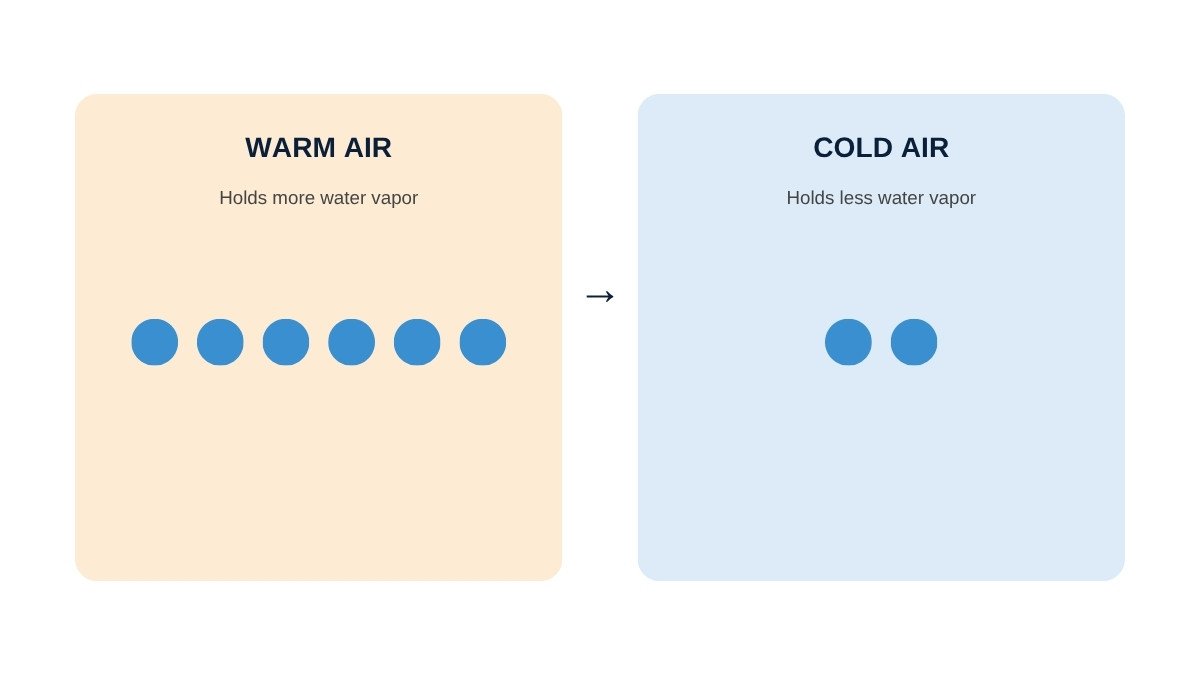
Humidity is usually described two different ways, and mixing them up is where the confusion starts. Absolute humidity is the actual amount of water vapor physically present in the air, typically measured in grams per cubic meter. Relative humidity (RH) — the percentage your hygrometer displays — compares that actual moisture to the maximum amount the air could hold at its current temperature. If you want the full breakdown of how these two measurements differ, our guide to relative humidity vs. absolute humidity covers it in detail.
According to the National Weather Service, “warm air can possess more water vapor (moisture) than cold air, so with the same amount of absolute/specific humidity, air will have a HIGHER relative humidity if the air is cooler, and a LOWER relative humidity if the air is warmer.” That single sentence is the entire mechanism behind furnace-season dryness. Cold outdoor air might only hold a small amount of moisture and still register 70-80% RH. Bring that exact same air inside and heat it to 68-72°F, and its capacity to hold moisture jumps sharply — while the actual water vapor in it hasn’t increased at all. The result is a much lower relative humidity reading, even though not a single molecule of water has left the air. Meteorologists at the University of Wisconsin-Madison’s Weather Guys describe this same relationship using dew point, a more direct way to track the true moisture content of air regardless of temperature swings.
Why This Matters for Your Health and Home
A drop in relative humidity into the teens or low 20s dries out the thin mucous membranes lining your nose and throat, which is a big reason nosebleeds, sore throats, and sinus irritation tend to spike in winter. It also pulls moisture out of your skin faster than your skin can replace it, leading to flaking, cracking, and itchiness — a connection we cover in more detail in how humidity affects your skin and hair. Dry air is also a much better environment for static electricity to build up, since moisture on surfaces normally helps dissipate the electrical charge created as you walk across a carpet or pull a sweater over your head; once the air dries out, that charge has nowhere to go until it discharges as a shock.
Research summarized by North Dakota State University Extension links low indoor humidity to increased incidents of respiratory infections, allergic rhinitis, dry and cracking skin, and static damage to furniture and musical instruments. Wood floors, furniture joints, and instruments can also shrink slightly as they lose moisture, sometimes leaving visible gaps or cracks by the end of winter.
How Much Does Indoor Humidity Actually Drop?
The drop can be more dramatic than most people expect. Using standard psychrometric relationships, air at 32°F and a fairly humid 90% RH outdoors will fall to roughly 20-25% RH once it’s heated to a typical indoor temperature around 68-70°F, with no moisture added or removed in the process. Colder, drier winter air pushes the number even lower — it’s common for homes in cold climates to sit at 10-20% indoor RH by midwinter without a humidifier running. That’s a wide gap below the 30-50% relative humidity range the EPA identifies as the healthy target for most homes, and it explains why the driest, most uncomfortable stretch of the year usually lines up with the coldest outdoor temperatures rather than the lowest outdoor humidity.
What You Can Do About It
Because the problem is caused by temperature, not by moisture actually leaving your home, the fixes focus on adding vapor back into the air or preventing what little humidity you have from escaping.
- Run a humidifier, sized to your space, alongside a hygrometer so you’re actually maintaining a healthy range rather than guessing. Our guide to choosing the right humidifier for your bedroom is a good starting point for single-room coverage.
- Don’t count on houseplants alone. Plants do release some moisture through transpiration, but the effect is small relative to the volume of air in an average room. You would need many large, actively transpiring plants to meaningfully shift whole-house humidity, and most homes don’t have the light or floor space for that. Treat plants as a minor supplement, not a primary humidity strategy.
- Seal air leaks around windows, doors, and attic penetrations. Every cubic foot of heated indoor air that leaks out and gets replaced by cold, dry outdoor air makes the drying effect worse, since that incoming air has to be reheated — and its relative humidity re-lowered — all over again.
- Avoid overheating your home. Since relative humidity drops as temperature rises, keeping your thermostat a degree or two lower where comfortable preserves a slightly higher RH for the same amount of moisture in the air.
For a target number to aim for as you make these changes, see our full breakdown of the ideal humidity level for homes. The EPA recommends keeping indoor relative humidity below 60%, ideally between 30% and 50%, which is a useful range to aim a humidifier toward once heating season sets in.
Bottom Line
Your house isn’t losing moisture when the heat turns on — the air’s capacity to hold moisture is increasing while the actual amount stays the same, which drives relative humidity down. Understanding that distinction is what makes the fixes make sense: you’re not chasing a leak, you’re adding back what colder air never had enough of to begin with. A properly sized humidifier, sealed air leaks, and a hygrometer to track your progress toward the EPA’s 30-50% range will handle most of the dry-air symptoms that furnace season brings.
Frequently Asked Questions
Why does my house feel drier in winter even with the windows closed?
Closed windows keep the same air (and its moisture) inside, but when your furnace heats that air, its capacity to hold water vapor increases while the actual amount of moisture stays the same. That pushes relative humidity down, which is what makes the air feel dry even though nothing physically left the house.
Does running the furnace actually remove moisture from the air?
No. A standard furnace or heat pump doesn’t remove water vapor; it only raises the air’s temperature. The drop in relative humidity you notice is a side effect of that added heat increasing the air’s moisture-holding capacity, not the furnace pulling moisture out.
What indoor humidity level should I aim for during heating season?
The EPA recommends keeping indoor relative humidity below 60% and ideally between 30% and 50% for comfort and to discourage dust mites and mold, while staying high enough to avoid the dryness symptoms associated with furnace season.
Can houseplants fix dry winter air on their own?
Not by themselves. Plants add a small amount of moisture to the air through transpiration, but the volume is generally too low to noticeably raise whole-room or whole-house humidity. They can help marginally alongside a humidifier, but shouldn’t be relied on as the main fix.
Will a humidifier damage my house if I run it too much?
It can, if you push humidity too high. Keeping levels within the EPA’s recommended 30-50% range and monitoring with a hygrometer helps you add enough moisture to feel comfortable without pushing past 60%, the point at which condensation and mold risk on windows and walls starts to increase.
Why do nosebleeds and static shocks get worse specifically when the heat turns on?
Both are direct effects of falling relative humidity. Dry air pulls moisture out of the mucous membranes in your nose, making them more prone to cracking and bleeding, and dry surfaces are far less able to dissipate static charge, so shocks become more frequent once heating season lowers indoor RH.