
Knowing how to choose a hygrometer starts with the price range: they run from $8 impulse-buy gadgets to $150 data-logging sensors, and the price difference doesn’t always track with accuracy. Every guide on this site keeps coming back to the same instruction: check a hygrometer. It’s the one piece of equipment that turns “the air feels dry” into an actual number you can act on.
This guide covers what actually matters when choosing one, how to check whether the one you already own is accurate, and where to put it for a reading you can trust. If you haven’t nailed down your target range yet, start with our guide on the best humidity level for sleeping.
Digital vs. Analog Hygrometers
Digital hygrometers use an electronic sensor and display an exact percentage, often alongside temperature. They’re easier to read at a glance and many models add extras like min/max tracking, smiley-face comfort indicators, or Bluetooth logging. Analog (dial) hygrometers use a coiled hair or mechanical strip that expands and contracts with moisture, moving a needle across a scale.
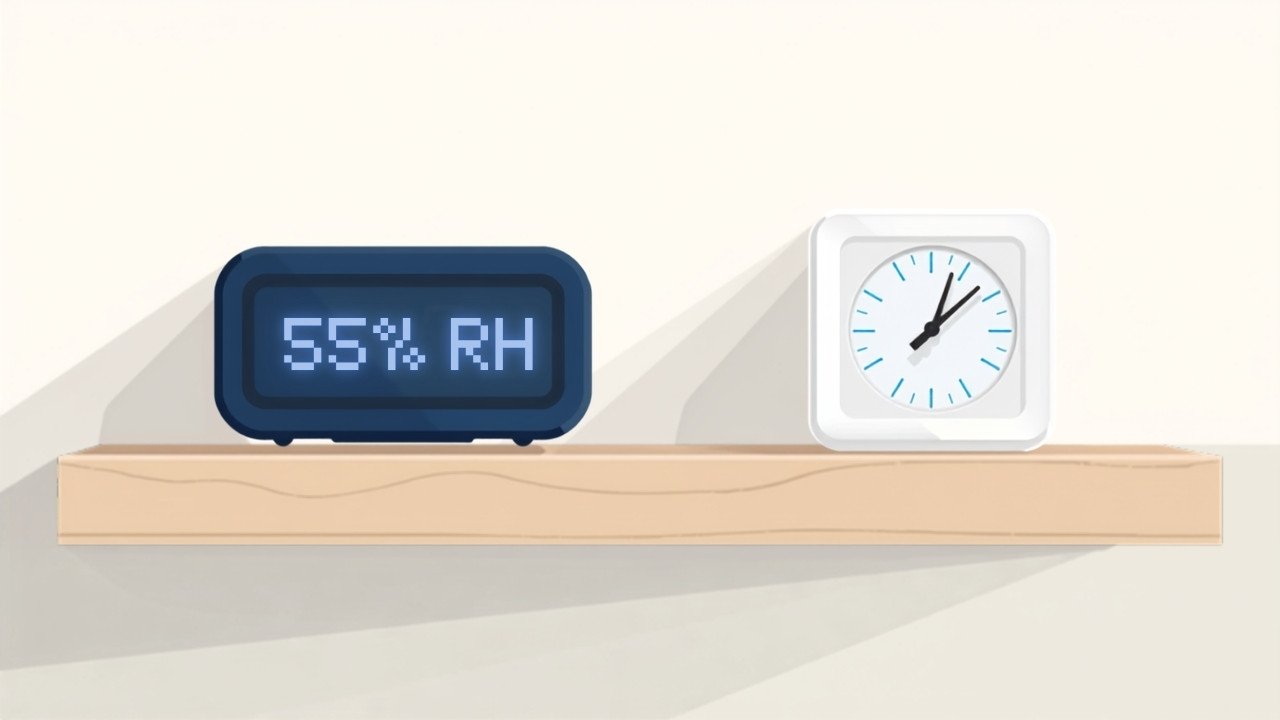
Analog dials are simple and need no batteries, but they drift out of calibration faster than digital sensors and are harder to read precisely — most scales only mark every 5 or 10 percentage points. For anything more exact than “roughly comfortable,” a basic digital model is the better default, and they’re inexpensive enough that cost isn’t much of a barrier.
How Accurate Do You Need It to Be?
For home use, a hygrometer accurate to within 3-5 percentage points is plenty — you’re deciding whether to run a humidifier or dehumidifier, not conducting a lab experiment. Budget digital hygrometers ($10-15) are usually within that range out of the box. If a listing doesn’t state an accuracy spec at all, treat the reading as a rough estimate rather than a precise number until you’ve checked it yourself.
The accuracy standards that professional-grade instruments are held to trace back to NIST’s humidity metrology research, which keeps lab hygrometers calibrated against a common reference. That level of precision is overkill for a home — it’s part of why a $150 data-logging unit costs so much more than an $8 dial — but it’s reassuring to know the underlying measurement science behind every hygrometer is solid.
How to Calibrate a Hygrometer (The Salt Test)
You can check any hygrometer’s accuracy at home with table salt. Dampen about a teaspoon of salt with a few drops of water — enough to feel wet without dissolving completely — and place it in a small cap or lid inside a sealed plastic bag along with the hygrometer. Leave it undisturbed for six to eight hours, then read the display without opening the bag.

A damp salt solution in a sealed space settles at very close to 75% relative humidity, a well-documented property used by instrument makers for exactly this kind of check (see Ambient Weather’s explanation of the saturated salt test). If your hygrometer reads 70% instead of 75%, it’s running 5 points low — so add 5 points to every future reading, or subtract if it reads high. Repeat this once a year, since sensors do drift over time. For the full walkthrough, including troubleshooting tips if your reading won’t settle, see our dedicated guide on how to calibrate a hygrometer.
Where to Place a Hygrometer for the Most Accurate Reading
Keep it away from direct sunlight, air vents, exterior doors, and bathrooms with running water — all of these create localized readings that don’t reflect the room as a whole. A shelf or wall at roughly chest height, a few feet from any window, gives the most representative number. The EPA specifically recommends using a humidity indicator to track relative humidity in the home as one of the main ways to catch moisture problems early.
Standalone Hygrometers vs. Smart Sensors vs. Built-In Displays
A basic standalone hygrometer is the cheapest and most reliable starting point — no app, no Wi-Fi dependency, just a number on a screen. Smart sensors add history graphs, phone alerts, and multi-room tracking, which is genuinely useful if you’re managing humidity across several rooms or want to catch a spike while you’re not home. Built-in displays on humidifiers, dehumidifiers, and baby monitors are convenient but tend to run a few points off — worth cross-checking against a dedicated hygrometer occasionally rather than trusting them blindly, similar to how we recommend checking humidity monitoring more broadly.
How Many Hygrometers Do You Need for Your Home?
One per zone you actually care about is a reasonable rule: bedroom, nursery, and basement are the three most common priorities, since those are where humidity extremes cause the most noticeable problems. Humidity can vary meaningfully floor to floor and room to room — see our room-by-room humidity guide for why a single reading from one part of the house often doesn’t apply to the rest of it.
Common Hygrometer Mistakes
Trusting a reading you’ve never checked against the salt test is the most common one — a hygrometer that’s off by 10 points can lead you to run a humidifier or dehumidifier when you don’t actually need one. Placing it too close to a window, vent, or exterior wall gives a reading that reflects that one spot, not the room. And relying solely on a humidifier or dehumidifier’s built-in display, without an independent check, means you have no way of knowing if the appliance itself is reading correctly.
Bottom Line
A basic digital hygrometer, checked once against the salt test and placed away from vents and windows, is all most homes need. It’s a small purchase that makes every other humidity decision in this guide — running a humidifier, choosing a dehumidifier, adjusting a nursery — a matter of reading a number instead of guessing. Once you trust the number, the EPA’s guidance on indoor moisture control is a solid target: keep relative humidity in the 30-50% range, and treat anything sustained above 60% as a mold risk worth addressing.
Frequently Asked Questions
Related reading: Digital vs. Analog Hygrometer: Which Is More Accurate? and Ideal Humidity Level for Homes: The Complete Guide.
Are cheap hygrometers accurate?
Most budget digital hygrometers ($10-15) are accurate to within 3-5 percentage points, which is precise enough for home use. The bigger risk isn’t the price tag but skipping a calibration check — the salt test takes a few hours and tells you exactly how far off any given unit is, regardless of what it cost.
How do I know if my hygrometer is accurate?
Use the salt test: seal the hygrometer in a bag with a cap of damp table salt for six to eight hours, then check the reading without opening the bag. A properly calibrated hygrometer should read very close to 75%. Whatever the difference is becomes your correction factor for future readings.
Should I choose a digital or analog hygrometer?
Digital is the better default for most homes. It displays an exact percentage, is easier to read at a glance, and holds calibration longer than analog dial hygrometers, which rely on a mechanical strip that drifts more over time and is harder to read precisely.
Where should I place a hygrometer in my house?
Choose a wall or shelf at roughly chest height, away from direct sunlight, air vents, exterior doors, and bathrooms. Locations too close to these create a localized reading that doesn’t reflect the humidity of the room as a whole.
Do I need a hygrometer in every room?
Not every room, but one in each space you’re actively managing — typically the bedroom, a nursery if you have one, and the basement, since these are the areas where humidity extremes cause the most noticeable problems. Humidity can vary significantly between floors and rooms, so a single reading from one part of the house doesn’t necessarily apply elsewhere.