
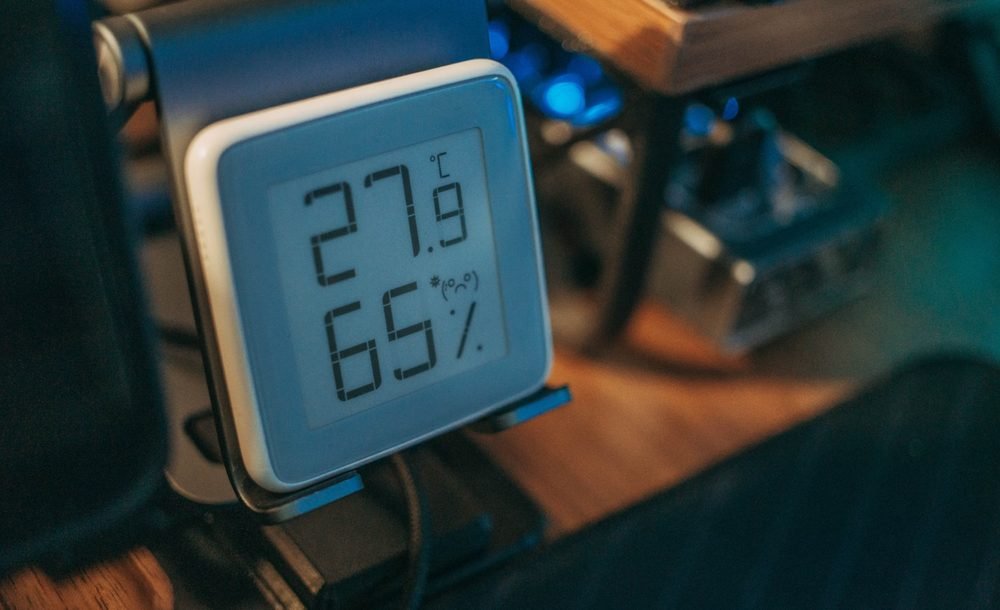
If your hygrometer says 45% but the room feels a lot damper (or drier) than that, the reading might be wrong. Hygrometers drift out of calibration over time, especially the cheap digital ones — and a hygrometer that lies to you is worse than no hygrometer at all, because it gives you false confidence. The good news: you can check and fix this in about 10 minutes with a method that costs less than a dollar.
Why Hygrometer Accuracy Actually Matters
Most home humidity advice — including our own guide to the ideal humidity level for homes — is built around a 30–50% target range, and that range can shift a bit depending on which room you’re checking (a basement and a nursery don’t have quite the same ideal humidity range). That advice is only useful if the number your hygrometer shows is actually close to the real relative humidity in the room. An uncalibrated hygrometer that reads 10 points high or low can send you chasing a problem that doesn’t exist. Worse, it can miss a real one — like humidity that’s actually high enough to encourage mold, even though the display says you’re fine.
Cheap digital hygrometers (the small battery-powered ones under $15) are the most common offenders. Analog dial hygrometers can also drift, usually worse. Even mid-range smart hygrometers benefit from an occasional check, since the sensor inside degrades slightly with age and exposure to dust or extreme humidity swings.
The Salt Test: How to Calibrate a Hygrometer at Home
This method doesn’t require any special equipment — just table salt and water. A saturated salt solution reliably holds the air around it at a known, fixed relative humidity once it reaches equilibrium in a sealed container. It’s the same underlying principle NIST uses to characterize humidity sensors, just scaled down for a kitchen counter — the exact reference point (75.1% RH for table salt) comes from a 1977 NIST paper by Lewis Greenspan that’s still the standard reference for this method today.
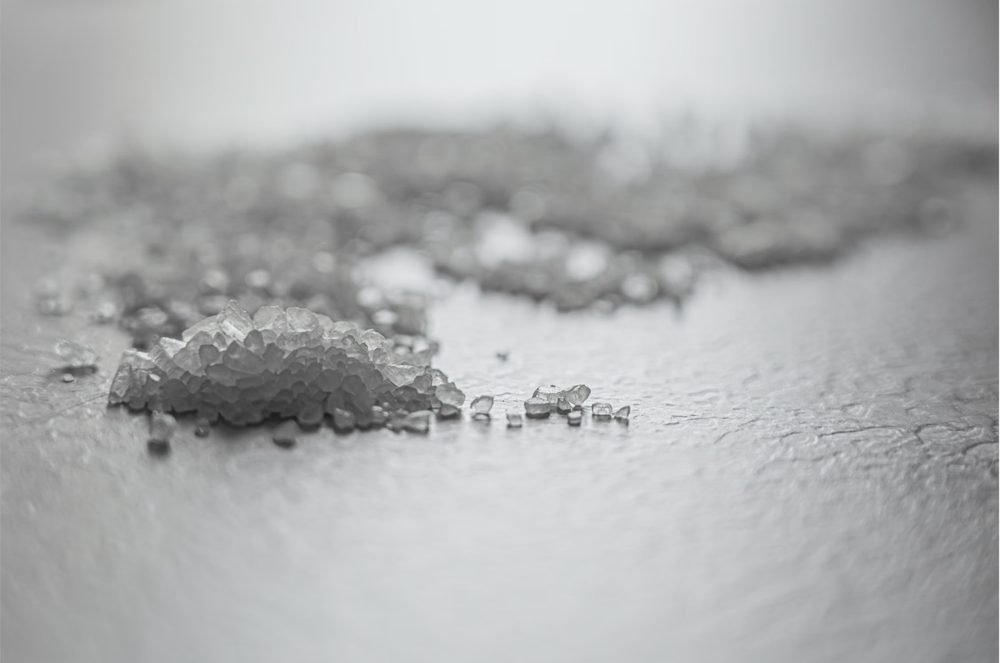
- Pour a small pile of regular table salt (about 1–2 tablespoons) into a bottle cap or small dish.
- Add a few drops of water — just enough to dampen the salt without fully dissolving it. It should look like wet sand, not a puddle.
- Place the dish and your hygrometer together inside a sealable plastic bag or airtight container, close it, and make sure the hygrometer’s sensor isn’t touching the salt directly.
- Leave it undisturbed for 8–12 hours (overnight is easiest) at a stable room temperature.
- Without opening the bag, read the display immediately. Opening it lets outside air in and throws off the reading within seconds.
How to Read the Results
Inside a sealed container, salt and water should stabilize the air at 75% relative humidity. Whatever your hygrometer shows after the 8–12 hour wait tells you its offset:
- Reads 75%: Your hygrometer is accurate. No adjustment needed.
- Reads 72% or 78% (within 3 points): Normal, minor drift. Most household hygrometers fall in this range and are fine to trust.
- Off by more than 5 points: Note the exact offset (for example, if it reads 68%, it’s running 7 points low) and mentally adjust every future reading by that amount, or use the device’s calibration/offset setting if it has one.
If Your Hygrometer Has a Calibration Button
Some digital hygrometers — mostly the smart, app-connected models — let you enter a calibration offset manually instead of just mentally correcting for it. After the salt test, look for a “CAL” button or a calibration option in the companion app, and enter the difference between 75% and what it displayed. Basic battery-powered hygrometers usually don’t have this feature, which is fine — knowing the offset is enough to keep using the number correctly.
How Often Should You Calibrate a Hygrometer?
Once every 6 months is a reasonable default for most homes. Do it sooner if you dropped the device, if it was exposed to very high humidity or condensation, if the battery was recently changed, or if the reading suddenly seems way off from what the room feels like. Check it sooner if you’re about to make a real decision with it — like whether to run a dehumidifier in a basement, or how seriously to take a mold-risk assessment. Check before the decision, not after.
The EPA’s own guidance on moisture and mold prevention puts it simply: control of humidity is the single most effective way to prevent mold indoors, which only works if what you’re measuring is actually accurate.
Frequently Asked Questions
Do I need distilled water for the salt test?
No. Regular tap water is fine. The test works because of the salt reaching saturation, not the water’s purity — a few drops of any water is enough to dampen it.
Can I use a resealable bag instead of a container?
Yes, a thick resealable plastic bag works well and is what most people use. Just make sure it seals completely and press out as much air as possible before sealing, so the salt and water can dominate the small trapped air pocket.
My hygrometer read exactly 75% — does that mean it’s perfect forever?
It means it’s accurate right now. Sensors drift gradually with age and use, so it’s still worth repeating the test every 6 months rather than assuming a single good result holds indefinitely.
What if my hygrometer doesn’t move at all overnight?
That usually means the seal isn’t tight enough and outside air is getting in, or the device’s sensor has failed. Try a fresh seal first; if the reading still won’t shift toward 75% after a full 12 hours, the sensor itself may need replacing.