
The simplest way to drain a dehumidifier continuously is a gravity drain: connect a hose to the unit’s drain port and route it downhill to a floor drain, sump pit, or laundry tub, so water flows out on its own and the internal tank never fills up. If there’s no lower drain point available, a condensate pump can push the water out instead, actively overcoming gravity where a simple hose can’t.
Step 1: Confirm Your Unit Supports Continuous Drainage
Look at the back or side of the dehumidifier for a threaded drain outlet, usually covered by a small removable cap near or behind the water tank. Nearly all mid-range and larger dehumidifiers include this feature, though a few compact or budget models are bucket-only. Check the manual if it’s not obvious, since forcing a hose onto a port that isn’t designed for it can damage the fitting.
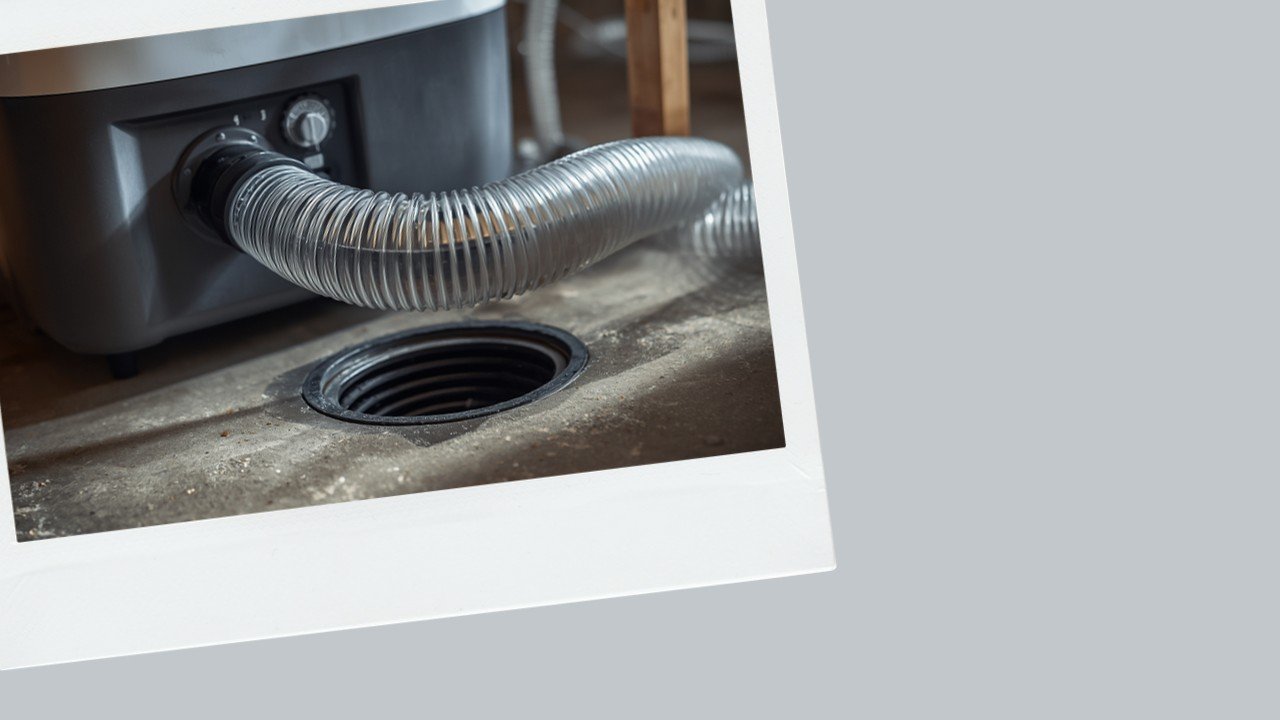
Step 2: Connect the Drain Hose
- Remove the drain port cap and set it aside (you may need it again if you ever switch back to bucket collection).
- Screw or push-fit a garden hose or dedicated dehumidifier drain hose onto the threaded outlet, making sure the connection is snug and won’t leak under water pressure.
- Use a hose at least 1/2 inch in diameter — smaller tubing restricts flow and clogs more easily with the fine particulate that sometimes collects in condensate.
Step 3: Route the Hose Downhill to a Drain
Run the hose to a floor drain, laundry sink, sump pit, or any drain point that sits lower than the dehumidifier’s drain outlet. Gravity is doing all the work here, so the entire run needs a continuous downward slope, roughly a quarter inch of drop per foot of horizontal distance as a practical minimum. Avoid letting the hose sag, loop upward at any point, or rest in a dip, since any low spot traps water and air the same way a plumbing trap does, stopping flow even though the endpoints are correctly positioned.
Step 4: Test It Before Walking Away
Run the dehumidifier for 20-30 minutes after connecting the hose and check the drain end for a steady trickle rather than drips or nothing at all. If water isn’t coming through, retrace the hose route looking for kinks, sags, or an accidental uphill section, since that’s the cause in the large majority of continuous-drain setups that don’t work on the first try. If the unit isn’t collecting any water in the tank to begin with, that’s a separate issue — see our guide on why a dehumidifier might not be collecting water.
Why Continuous Drainage Matters for Serious Humidity Problems
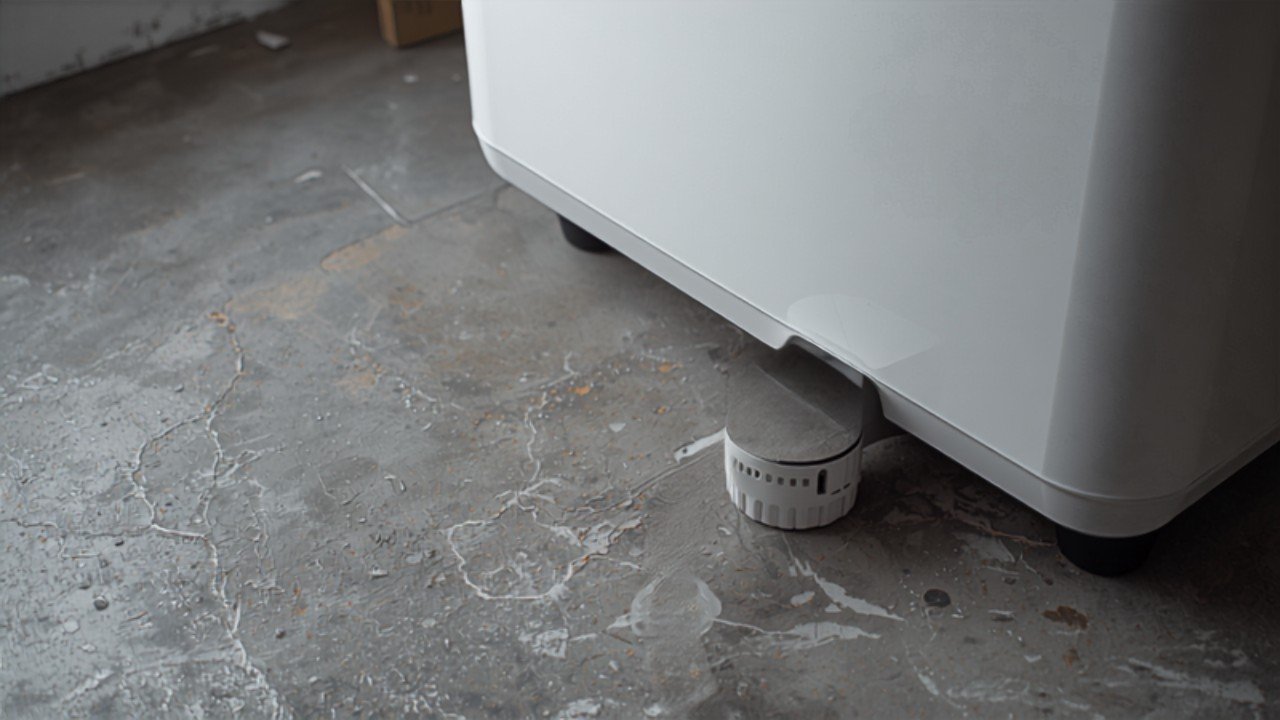
A dehumidifier’s internal tank typically holds just a few gallons, and in a genuinely damp basement or crawl space, a high-capacity unit can fill that tank multiple times a day. Without continuous drainage, most units have an automatic shutoff that stops dehumidifying entirely once the tank is full, meaning humidity climbs right back up until someone empties it. This is one of the most common reasons a dehumidifier “isn’t working” when it’s actually working fine but sitting idle, full, and unattended. Continuous drainage removes that failure point entirely, letting the unit run around the clock exactly when unattended operation matters most. Letting humidity climb back up matters beyond comfort, too — the EPA recommends keeping indoor relative humidity in the 30-50% range and never sustained above 60%, since prolonged stretches above that threshold are when mold and dust mites start to thrive.
Setting Up a Gravity Drain the Right Way
Beyond just running the hose downhill, a few details separate a reliable gravity drain from one that clogs or backs up. According to ENERGY STAR’s dehumidifier guidance, keeping the drain hose as short and direct as practical reduces the chance of sediment buildup and sagging over long runs. It also helps to secure the hose in place with zip ties or clips along its route so it can’t shift, sag, or get bumped into an uphill kink by accident, especially in basements where the hose may run along framing, shelving, or floor joists rather than a flat, unobstructed path.
When Gravity Won’t Work: Condensate Pumps
If the only available drain is above the dehumidifier’s outlet, or there’s no floor drain within reach at all, a small condensate pump solves the problem by actively pumping the water out and upward rather than relying on gravity. These pumps sit in a small reservoir that collects water from the dehumidifier’s drain hose, then switch on automatically once a float sensor detects enough water has accumulated, pushing it up and out to a sink, window, or exterior drain line. They’re a common solution in basements and utility rooms where the only nearby drain sits higher than the unit itself.
Where the Water Should — and Shouldn’t — Go
A dehumidifier’s condensate is just water pulled out of the air, so it’s generally fine to drain into a standard floor drain, sump pit, laundry sink, or exterior drainage point where local code allows it. EPA guidance on managing moisture around the home notes that condensate drainage should avoid pooling near a home’s foundation, since redirecting one moisture problem (indoor humidity) into another (foundation dampness) defeats the purpose. If routing the hose outside, extend it far enough from the foundation that the water disperses into soil or a proper drainage path rather than collecting right against the house.
- Good destinations: floor drains, laundry sinks, sump pits, properly graded exterior drainage at least several feet from the foundation.
- Avoid: draining directly against the foundation, into a crawl space with poor drainage, or anywhere that could refreeze and create ice hazards in cold climates.
Seasonal Checks Even With Continuous Drainage
Continuous drainage removes the daily emptying chore, but it doesn’t eliminate maintenance entirely. Once a season, disconnect the hose and flush it with warm water to clear any sediment or biofilm that’s accumulated inside, then reconnect and re-test flow before leaving it running unattended again. It’s also worth periodically checking the drain destination itself, since a floor drain or sump pit can develop its own clogs over time independent of anything happening at the dehumidifier, and a backed-up destination will eventually cause the same overflow problems continuous drainage was meant to prevent. For broader guidance on keeping the air in your home healthy year-round, see the EPA’s indoor air quality guide. Treating the whole path, from unit to final drain, as one system to maintain rather than a set-and-forget installation keeps it reliable for the long haul, particularly in basements where a dehumidifier may run for months without anyone checking on it directly.
Common Mistakes to Avoid
- Using a hose that’s too narrow, which restricts flow and traps air bubbles that interrupt the siphon effect.
- Leaving any uphill section or sag in the hose route, even a small one, which creates a water trap and stops flow entirely.
- Forgetting to test the setup before leaving it running unattended for hours or days.
- Not checking the hose for algae or sediment buildup over time, which can gradually narrow the effective diameter and slow drainage.
- Assuming continuous drainage means zero maintenance — the unit’s filter and coils still need regular attention even when the tank itself is bypassed.
Related reading: Dehumidifier Freezing Up? Causes and Fixes and Desiccant vs. Compressor Dehumidifier: Which Should You Buy?.
Do all dehumidifiers support continuous drainage?
Most portable dehumidifiers have a drain port for continuous drainage, but check your specific model’s manual first, since a few budget models only support bucket collection. Look for a threaded drain outlet on the back or side of the unit, usually near or behind the water tank.
What size hose should I use for a gravity drain?
A garden hose or dedicated dehumidifier hose at least 1/2 inch in diameter works best. Smaller diameter tubing restricts flow and is more prone to clogging or trapping air bubbles that stop the water from draining.
Can I drain a dehumidifier if there’s no floor drain nearby?
Yes, either by routing the hose to any point lower than the unit (a sump pit, laundry tub, or exterior drain) or by using a condensate pump, which actively pushes water upward or over longer horizontal distances when gravity alone won’t work.
Why does water stop flowing through my drain hose?
The most common cause is an uphill section or sag in the hose creating a low point where water pools and blocks airflow, similar to a trap in plumbing. Straightening the hose and confirming a continuous downward slope from the unit to the drain usually resolves it.
Is a condensate pump worth it over gravity drainage?
If gravity drainage is physically possible (a nearby floor drain or sump lower than the unit), it’s simpler, silent, and has nothing to maintain. A condensate pump is worth it specifically when the only available drain is above or level with the dehumidifier’s outlet, which gravity can’t overcome.
Bottom Line
Draining a dehumidifier continuously comes down to two options: a gravity-fed hose running downhill to any lower drain, or a condensate pump when gravity isn’t physically possible. Either setup means never emptying a tank manually again, which is especially useful in basements, crawl spaces, and any space where a dehumidifier needs to run unattended for long stretches.