
Dehumidifier freezing up usually means frost or a solid sheet of ice has formed on the cooling coils inside the unit, and it happens when airflow across those coils drops, or the room is too cold for the compressor to defrost itself between cycles. The fix is almost always to unplug the unit, let it thaw completely, then correct whatever caused the freeze — a dirty filter, a cold room, blocked airflow, or a humidity setting that is too aggressive.
Why Dehumidifiers Freeze Up in the First Place
A compressor-style dehumidifier pulls air across a set of refrigerant coils that are colder than the surrounding air, so moisture condenses on them and drips into the tank (see our full breakdown of how a dehumidifier works for the complete cycle). That only works if warm room air keeps moving across the coils fast enough to melt any frost between cycles. When airflow slows down or the air itself is already cold, the coils drop below freezing and the condensation turns to ice instead of water. Once ice builds up, it blocks airflow even further, so the problem gets worse the longer the unit keeps running.
Cause 1: Room Temperature Is Too Low
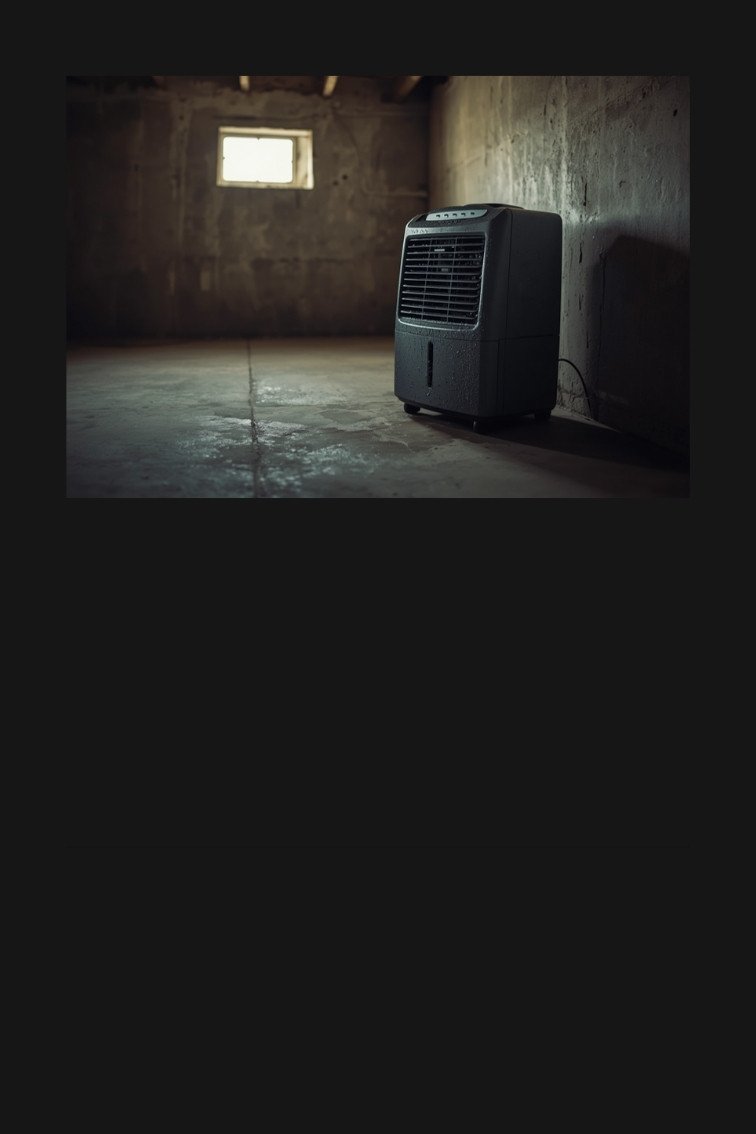
This is the single most common cause, especially in basements and garages. Most compressor dehumidifiers are not designed to run efficiently below about 65°F, and many struggle noticeably once the room drops into the 60s. If the space you are dehumidifying tends to run cold, check the manufacturer specs for a minimum operating temperature, and consider a model built for low-temperature use if the room rarely warms up.
This is also why so many dehumidifiers marketed for basements list a specific low-temperature rating — some compressor units include an automatic defrost cycle designed to handle temperatures down into the upper 50s, while budget models without that feature will ice over reliably any time the room dips below the mid-60s. Checking the spec sheet or manual for a stated minimum operating temperature before you run a unit through a cold winter is worth the five minutes it takes.
Cause 2: Dirty or Clogged Air Filter
A clogged filter starves the coils of airflow the same way a blocked nose changes your breathing — the unit still runs, but far less air moves across the coils, so they get colder than they should. Most manufacturers recommend checking the filter every two to four weeks during heavy use. Rinse it with water or vacuum off dust, let it dry fully, and reinstall before running the unit again.
Cause 3: Blocked Airflow Around the Unit
Dehumidifiers need open space on all sides to draw in room air and exhaust it back out. Pushing a unit tight against a wall, behind curtains, or into a corner surrounded by boxes restricts intake, which has the same freezing effect as a dirty filter. Leave at least six inches of clearance around the unit, and make sure nothing is draped over the top or front grille.
Cause 4: A Failing Fan or Blower Motor
If the filter is clean and the unit has plenty of clearance but coils are still icing over, the fan itself may be the problem. A slow, wobbly, or silent fan will not move enough air across the coils no matter how clean everything else is. Listen for grinding or humming without airflow, and check that the fan blades spin freely when the unit is unplugged.
Cause 5: A Faulty Thermostat or Humidistat Sensor
Dehumidifiers use an internal sensor to decide when to cycle the compressor on and off based on temperature and humidity. If that sensor misreads conditions, the compressor can run continuously instead of cycling, which never gives the coils a chance to defrost between runs. This is harder to diagnose at home and often points toward a warranty repair or replacement if the unit is older.
Cause 6: The Humidity Setting Is Too Aggressive
Setting a dehumidifier to its lowest possible target, or to “continuous” / “max” mode in a room that is already fairly dry, forces the compressor to run far more than necessary. Overworking the compressor in a room with little moisture left to remove makes freezing more likely. A target in the EPA-recommended 30–50% relative humidity range — aiming for the upper end, around 45–50%, rather than the lowest setting — is comfortable for most homes and easier on the equipment. See our guide to the ideal humidity level for homes for room-by-room targets.
One quick way to tell whether the setting is the culprit: if the unit only freezes on its lowest humidity setting but runs fine at 45–50%, the setting itself is the fix, not a mechanical repair. That said, if it freezes at every setting including the highest ones, look at temperature and airflow first.
Compressor vs. Desiccant: Which One Freezes?
Freezing coils are specifically a compressor-dehumidifier problem, since desiccant units use a moisture-absorbing wheel instead of refrigerant coils and have nothing that can ice over. That makes desiccant models a common workaround for cold basements and garages where compressor units struggle all winter, though they typically cost more to run and remove moisture more slowly at room temperature. If you are choosing between the two for a cold space, that trade-off is worth weighing before you buy.

How to Fix a Frozen Dehumidifier Right Now
- Unplug the unit immediately — running it iced over strains the compressor and can shorten its lifespan.
- Let it thaw fully at room temperature, which typically takes two to four hours depending on how much ice has built up.
- Do not use a hair dryer, space heater, or anything sharp to speed up the thaw; concentrated heat can warp the thin coil fins, and anything sharp risks puncturing the refrigerant line.
- Once fully thawed, empty any water in the tank and check that it drains freely before restarting.
- Clean or replace the filter before turning the unit back on.
Preventing It From Happening Again
- Move the unit to a warmer part of the room, or wait until the space warms up before running it, if the room regularly sits below 65°F.
- Check and clean the filter on a set schedule rather than waiting for a problem.
- Keep several inches of clearance on every side of the unit.
- Set the target humidity to a moderate 45–55% instead of the lowest available setting.
- Consider a low-temperature-rated or desiccant unit if the space is a basement or garage that stays cold most of the year.
When to Call a Professional
If a unit freezes repeatedly after you have addressed the filter, clearance, room temperature, and humidity setting, the sensor or compressor itself may be at fault. For a unit still under warranty, contact the manufacturer before attempting any repair. For an older unit out of warranty, weigh the cost of a repair technician against simply replacing it, since dehumidifier compressors are not typically an economical DIY fix. The U.S. Department of Energy’s ENERGY STAR dehumidifier guidance is a useful reference when comparing replacement models for cold, damp spaces like basements. If your unit has stopped collecting water altogether instead of freezing, see our guide to why a dehumidifier stops collecting water. For broader efficiency and sizing guidance, the Department of Energy’s Energy Saver guide to dehumidifiers is another solid reference.
Basements are also where humidity problems tend to be worst overall, so it is worth checking your levels against our guide to humidity levels by room, and reviewing the EPA’s mold and moisture guidance if freezing keeps happening alongside visible dampness or musty odors. For a broader look at how humidity affects the air you breathe, see the EPA’s guide to indoor air quality.
Frequently Asked Questions
Related reading: Desiccant vs. Compressor Dehumidifier: Which Should You Buy? and Can a Dehumidifier Help With Allergies?.
Is it safe to keep running a dehumidifier that has frozen coils?
No. Running it iced over forces the compressor to work harder than it is designed to and can shorten its lifespan or cause permanent damage. Unplug it and let it thaw fully before running it again.
How long does it take a dehumidifier to thaw?
Most units thaw fully within two to four hours at room temperature, depending on how much ice has built up. Placing it somewhere warm and never using direct heat to speed things up will help it thaw safely.
Will a dehumidifier freeze up if the room is warm enough?
It is unlikely. Most compressor dehumidifiers operate reliably above 65°F. If a unit still freezes in a warm room, the cause is more likely a dirty filter, blocked airflow, or a sensor problem rather than temperature.
Do desiccant dehumidifiers ever freeze up?
No. Desiccant dehumidifiers use a moisture-absorbing wheel rather than refrigerant coils, so there is nothing inside that can ice over, which is why they are often recommended for cold basements and garages.
Should I keep using a dehumidifier that freezes up repeatedly?
Not without addressing the cause first. If cleaning the filter, giving it clearance, and adjusting the room temperature and humidity setting do not stop the freezing, have the sensor and compressor checked, or consider replacing the unit.
Bottom Line
A dehumidifier freezing up almost always comes down to airflow or temperature: a dirty filter, a blocked unit, a cold room, or a humidity setting pushed too low. Unplug it, let it thaw completely, fix whichever cause applies, and most units run fine afterward. If freezing keeps happening despite doing all of that, the sensor or compressor likely needs professional attention.