
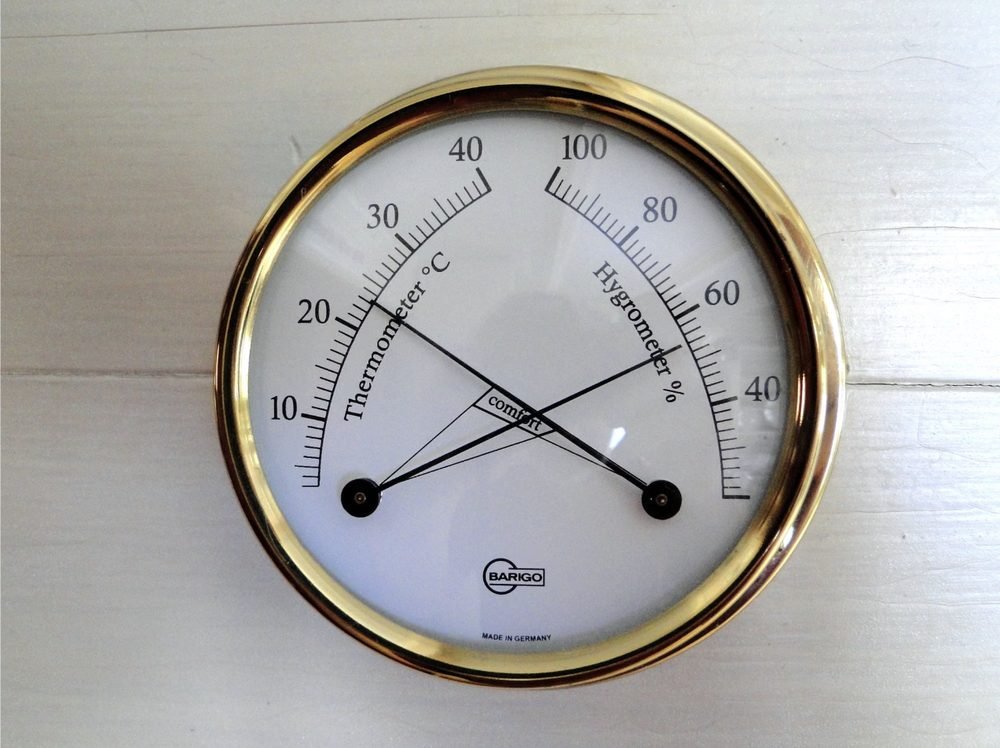
Fifty percent relative humidity sits right at the top edge of the range most health and building agencies call ideal — so on paper, no, it’s not too high. But “ideal on paper” and “fine in your actual house” aren’t always the same thing, especially in a hot, sticky summer or a room with a cold exterior wall. Here’s what the real guidance says, and when 50% stops being fine.
What Health and Building Authorities Actually Recommend
The EPA’s own guidance on mold and moisture is direct: keep indoor humidity below 60 percent, ideally between 30 and 50 percent. That puts 50% at the very top of the “ideal” band, not outside it — see our full breakdown of the ideal humidity level for homes for that range in more depth. Building scientist Joseph Lstiburek, citing ASHRAE Standard 62, sets a slightly wider comfort range in a widely referenced research report on relative humidity: 25% to 60%. Either way, 50% lands comfortably inside the range every major source treats as normal, not a warning sign.
So Is 50% a Problem, or Right Where You Want to Be?
In most homes, 50% is fine — often better than fine. It’s higher than the borderline dryness discussed in our guide to whether 40% humidity is too low, and well under the level where 60% starts causing real problems. If your home reads 50% on a decent hygrometer and nothing looks or smells off, there’s usually nothing to fix. The U.S. Department of Energy’s ENERGY STAR guidance agrees, putting the optimal indoor range at 30–50% RH and reserving dehumidifiers for spaces that stay consistently above that. Where it gets more nuanced is what’s happening at the surfaces in the room, not just the air in the middle of it.
Where Air at 50% Can Still Cause Trouble
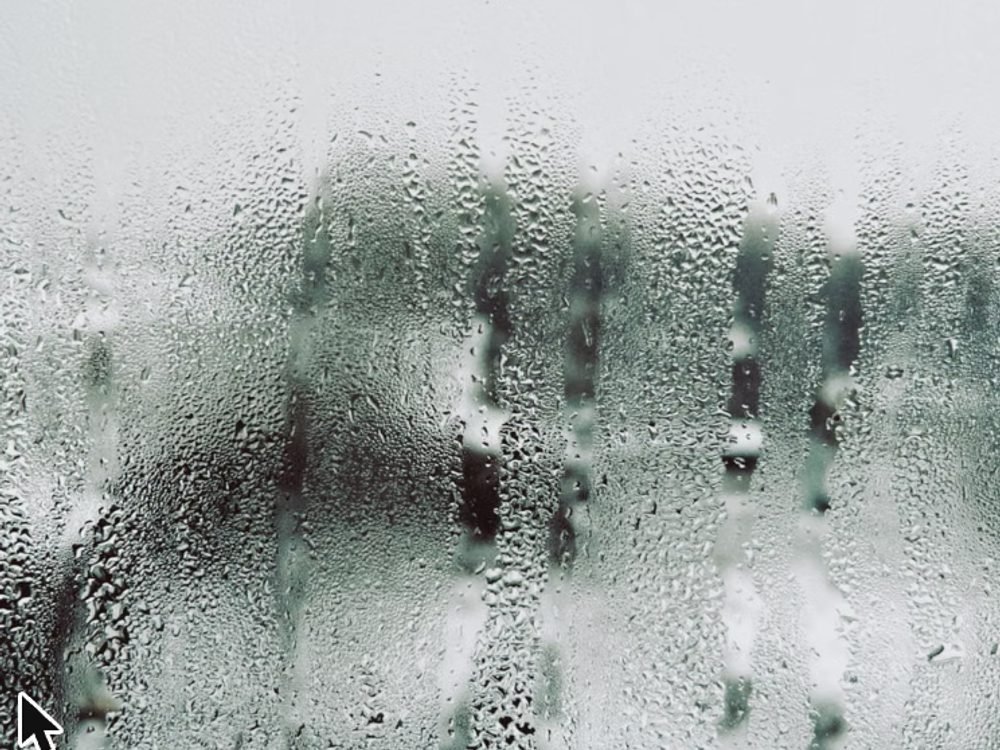
Relative humidity isn’t uniform across a room. The air a few inches from a cold exterior wall or a single-pane window runs measurably more humid than the air near the middle of the room. That’s because relative humidity rises as temperature drops — the same moisture packed into cooler air reads as a higher percentage. Lstiburek’s report puts the real risk threshold at surface humidity of 70% or higher. That’s the point where mold, dust mites, and material decay become likely. A room reading 50% at the thermostat can still have corners, closets, or window sills sitting well above that. Condensation forming on windows is usually the first visible sign this is happening, and it’s worth investigating before it reaches the range that causes trouble at 55% or higher room humidity.
Why 50% Feels Different in Summer vs. Winter
The same 50% reading doesn’t mean the same thing in July as it does in January. The National Weather Service explains it simply: warm air can hold more actual moisture than cold air. So 50% relative humidity at 85°F carries far more water vapor than 50% at 65°F — which is why a house can feel “sticky” at 50% in summer but perfectly comfortable at the same reading in winter. That’s the difference between relative and absolute humidity, and it’s the real reason “50% feels different” is a legitimate complaint, not just perception.
Signs 50% Has Tipped Into a Real Problem
A hygrometer reading of 50% is not, on its own, something to act on. Start paying attention if you also notice any of the following:
- Condensation collecting on windows or in window tracks each morning
- A musty smell in closets, bathrooms, or basements
- Visible dark spots forming in corners, behind furniture, or around window frames
- Worse allergy or asthma symptoms indoors than outdoors
- Wallpaper peeling or wood trim swelling
Any of these point to moisture problems bigger than the number on your hygrometer — see our full list of warning signs your home has high humidity for the complete picture, especially in a nursery or bedroom where tighter humidity targets matter more.
Frequently Asked Questions
Is 50% humidity too high in summer?
Not on its own, but it can feel that way. Because warm air holds more moisture, 50% at 85°F feels noticeably muggier than 50% at a cooler indoor temperature. If it feels sticky, running the AC or a dehumidifier will drop the number your body actually notices.
Does 50% humidity cause mold?
Room-air humidity of 50% rarely causes mold by itself. Mold needs sustained surface humidity around 70% or higher, which usually shows up first at cold windows, exterior-wall corners, or areas with poor airflow — not in the open air of a well-ventilated room.
Is 50% humidity too high for a baby’s nursery?
No — 50% is within the range most pediatric and building guidance recommends for a nursery. Our dedicated guide to the best humidity level for a baby’s nursery covers the tighter comfort range some parents prefer.
Should I run a dehumidifier if my house reads 50%?
Usually not. A dehumidifier is worth running when humidity is consistently above 55-60%, or when you’re already seeing condensation or a musty smell at 50%. Running one at a steady 50% mostly just adds electricity cost for no real benefit.