
Fog on the inside of your windows every morning isn’t a window problem — it’s a humidity problem. When warm indoor air touches the cold glass, it cools past its dew point and drops the moisture it was carrying right onto the pane. The window is just the messenger.
This guide covers why condensation forms on windows, what it means about the air in your home, and the specific steps that stop it. If you haven’t checked your indoor humidity yet, our ideal humidity level guide covers the 30-50% target most experts recommend.
What Actually Causes Condensation to Form on Windows
Warm air can hold more water vapor than cold air. When that warm, moist indoor air reaches a cold surface like a window pane, it cools rapidly, and the air’s capacity to hold moisture drops with it. Whatever moisture the air can no longer hold condenses into visible water droplets. This threshold is called the dew point — the temperature at which air becomes fully saturated (100% relative humidity) and starts releasing liquid water.
The dew point depends entirely on how much moisture is in the air, not on the air temperature itself. That’s why the same cold window will fog up on a humid day and stay clear on a dry one — the glass temperature hasn’t changed, but the amount of moisture available to condense has.
Is Window Condensation a Sign of a Problem?
Usually, yes — but the problem is almost never the window itself. Condensation shows up because the relative humidity indoors is higher than the glass can handle at its current temperature. The EPA recommends keeping indoor relative humidity below 60%, with 30-50% being ideal. Persistent condensation is often the first visible clue that humidity has crept above that range, well before you’d notice it any other way.
Older single-pane windows fog up at higher indoor humidity than modern double-pane or Low-E coated windows, simply because the glass itself runs colder. So the same indoor humidity level might be invisible on a newer window and dripping on an older one — that’s a window efficiency difference, not a sign the humidity itself is fine.
Condensation and Mold Risk on Window Sills
Water that collects on the glass runs down and pools on the sill, and window sills are exactly the kind of enclosed, rarely-cleaned surface where mold takes hold fastest. Wood sills absorb the moisture directly; painted sills trap it under the paint film. Left unaddressed, this is one of the more common places mold starts indoors — see our guide on what humidity level lets mold grow for how quickly that risk builds once conditions are right.
Wiping down sills each morning helps in the short term, but it treats the symptom. Fixing the underlying humidity level is what actually stops the cycle.
How to Stop Condensation on Windows
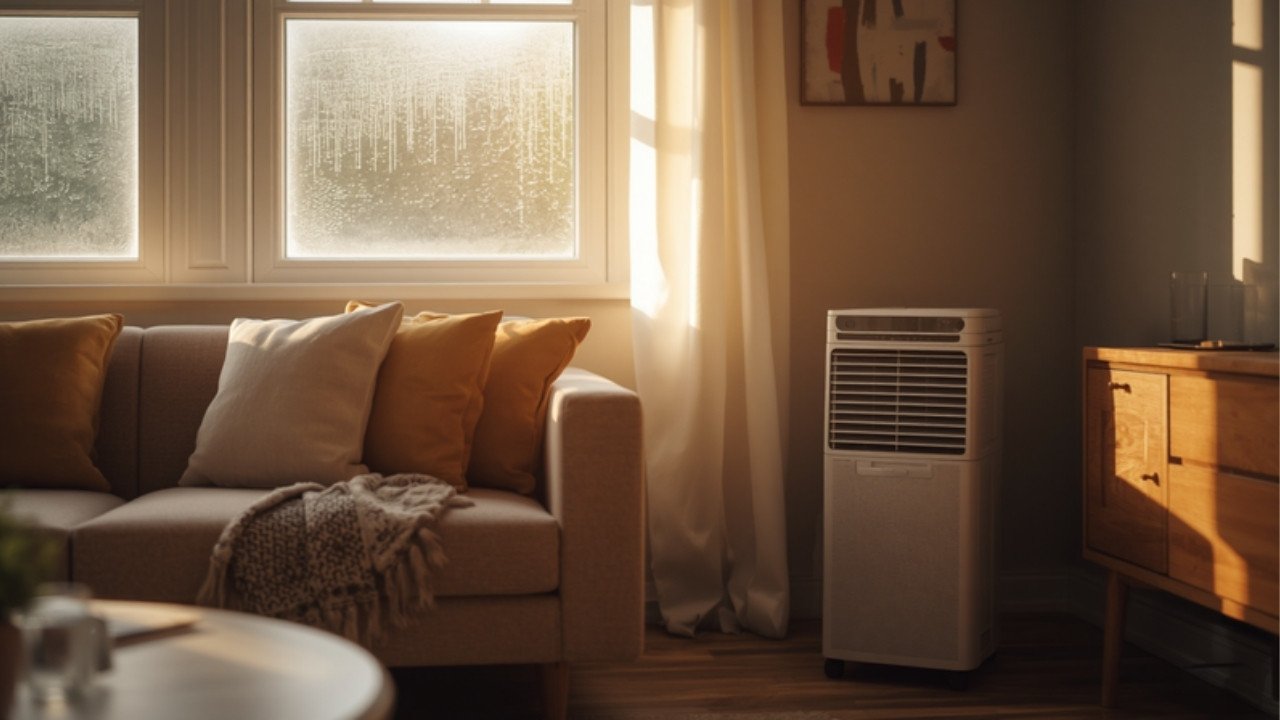
Lower the indoor humidity toward the 30-50% target. A dehumidifier is the most direct fix in rooms that run consistently damp, especially basements and bathrooms. Run kitchen and bathroom exhaust fans during and after cooking or showering — these two activities add more moisture to indoor air than almost anything else in a typical day.
Improve air circulation near the glass: pull heavy curtains and furniture a few inches away from windows so warm room air can actually reach the pane instead of trapping cold, stagnant air against it. Opening interior doors so air moves between rooms also helps prevent moisture from settling on whichever wall happens to be coldest. For a full checklist of moisture-control steps, see the EPA’s guide to controlling moisture in your home.
Check weep holes on the exterior of window frames — small drainage slots that let condensation and rainwater escape. When they clog with dirt or old paint, water backs up into the frame and migrates into the drywall around it.
Do New Windows Fix Condensation?
Partially. Modern double-pane windows with Low-E coatings keep the interior glass surface warmer than older single-pane glass, which raises the humidity level needed before condensation starts. But new windows don’t change how much moisture is in your air — they just raise the threshold. If indoor humidity is significantly above 50%, even good windows will eventually fog. Fixing the humidity level solves the problem at the source; new windows just buy a wider margin.
If you’re shopping for replacements, look for ENERGY STAR-certified windows — their tighter seals and lower U-factor keep the interior glass warmer, which raises the humidity level needed before fogging starts. Full replacement isn’t always in the budget, though; the U.S. Department of Energy’s guide to energy-efficient storm windows covers a cheaper option that reduces the air leakage and cold-glass effect behind a lot of condensation.
Interior vs. Exterior Condensation
Condensation on the inside of the glass means indoor humidity is too high relative to the window’s surface temperature — the fix is inside the house. Condensation on the outside of the glass, usually seen on cool mornings, is normal and caused by outdoor humidity and overnight temperature drop, similar to dew forming on grass. It clears on its own as the day warms and isn’t a sign of an indoor problem.
Bottom Line
Condensation on the inside of your windows is a direct, visible signal that indoor humidity has climbed above what your glass can handle — almost always fixable by bringing humidity back into the 30-50% range, improving ventilation near cold surfaces, and running exhaust fans during high-moisture activities like cooking and showering.
Related reading: Humidity and Mold in Bathrooms: What Level Is Too High?, Relative Humidity vs. Absolute Humidity: What’s the Difference?, and How to Reduce Humidity Naturally.
Frequently Asked Questions
Is condensation on windows always bad?
Not always. Occasional light condensation during temperature swings is common and not a major concern. Persistent condensation every morning, especially pooling on the sill, usually means indoor humidity is consistently above the 30-50% range and is worth addressing before it leads to mold.
What humidity level causes window condensation?
There’s no single number — it depends on how cold the glass surface is. Older single-pane windows can fog at 40% relative humidity in cold weather, while modern double-pane windows may stay clear until well above 50%. As a target, keeping indoor humidity in the EPA-recommended 30-50% range prevents condensation on most window types.
Should I run a dehumidifier to stop window condensation?
Yes, if the room runs consistently humid — basements and bathrooms especially. A dehumidifier addresses the root cause (excess moisture in the air) rather than just wiping the symptom off the glass each morning.
Does condensation on windows mean I have mold?
Not by itself, but it creates the conditions mold needs. Water pooling on a sill day after day, especially on wood or painted surfaces, is one of the more common starting points for indoor mold. Wiping sills dry and lowering humidity both reduce that risk significantly.
Will new windows stop condensation completely?
They raise the humidity threshold before fogging starts, since modern double-pane and Low-E glass stays warmer than older single-pane glass. But if indoor humidity is well above 50%, even new windows will eventually condense. Lowering humidity fixes the underlying cause; new windows just widen the margin.