
Mold in bathrooms starts when relative humidity sits above 60% for a day or two — and every hot shower pushes the room well past that line. The fix isn’t complicated: keep bathroom humidity below 50% most of the time, and you starve mold before it gets a foothold on grout, caulk, or drywall.
This guide covers exactly what humidity level triggers mold in bathrooms, why this room is the riskiest in the house, and the specific habits that keep it dry. For whole-home targets, see our ideal humidity level guide.
Ideal Bathroom Humidity Level
The ideal bathroom humidity level is 30-50%. A short spike during a hot shower is normal, but the room shouldn’t stay above 60% for long periods — that’s the point where mold risk starts to climb. Keep your bathroom in the 30-50% range most of the day and mold has a much harder time getting a foothold.
What Humidity Level Causes Mold in Bathrooms?
The EPA’s guidance on mold and moisture puts the danger line at 60% relative humidity. Most mold species need 24 to 48 hours of sustained humidity above that mark before they start colonizing an organic surface — grout, caulk, wallpaper paste, or the paper backing on drywall. Push past 70%, and visible growth on damp materials can show up in as little as 24 hours. For whole-home reference, the EPA also recommends keeping indoor relative humidity in the 30–50% range and never letting it run above 60% for any length of time, per its moisture-control guidance.
A single hot shower can spike bathroom humidity to 90% or higher for several minutes. That spike isn’t the problem by itself — the problem is a bathroom that never drops back below 60% between showers because it has no fan, no window, or no airflow. Our mold-prevention guide covers the same threshold for the rest of the house.
Why Bathrooms Are the Highest-Risk Room in the House
No other room combines heat, water, and organic material the way a bathroom does. Showers and baths dump several pints of water vapor into the air in minutes. Grout, caulk, and drywall paper are all cellulose-based — mold’s preferred food source. And most bathrooms have the least natural airflow in the house: one small window at best, often none at all.
That combination is why bathrooms grow mold faster than bedrooms or living rooms at the same average humidity. It’s not that the air is worse — it’s that bathrooms spend more time above the 60% threshold, and they offer mold more surfaces it can actually digest. The same moisture dynamics explain window fogging and mold elsewhere in the house — see our guide on why condensation forms on windows.
Signs Mold Is Already Growing
- Pink, black, or dark spots forming along grout lines or in silicone caulk around the tub or shower
- A persistent musty smell that doesn’t go away after cleaning
- Peeling or bubbling paint near the tub, shower, or on the ceiling above it
- Condensation that lingers on the mirror or walls long after the shower ends
Pink discoloration is often mistaken for soap residue, but it’s usually a bacteria/mold combination (Serratia marcescens is the common culprit) that thrives in the same damp conditions as black mold. Both point to the same root cause: humidity that isn’t clearing fast enough.
Mold affects people differently. The CDC notes that most people have no reaction at all, though some experience nasal stuffiness, throat irritation, coughing, or skin irritation, and mold can trigger asthma attacks in people who are allergic to it. Mayo Clinic describes mold allergy symptoms as similar to other airborne allergies — sneezing, a runny or stuffy nose, and itchy eyes — rather than the more severe “toxic mold” illnesses sometimes described online, which current evidence doesn’t support. If you spot a small patch, clean it and fix the moisture source; if it’s extensive, or if someone in the home has asthma or a mold allergy, professional remediation is worth the cost.
How to Keep Bathroom Humidity Below the Mold Threshold
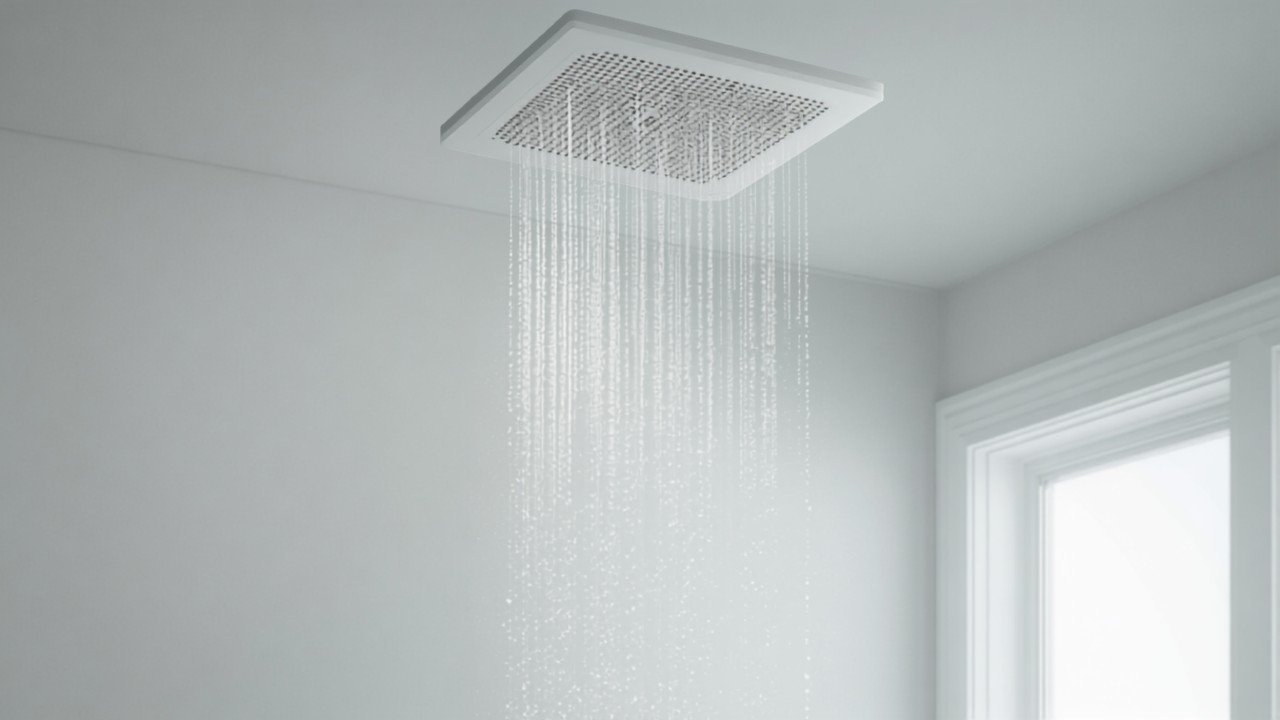
Run the exhaust fan during and after every shower. The standard sizing is 1 CFM per square foot of bathroom, with a 50 CFM minimum — so a typical 50-square-foot bathroom needs at least a 50 CFM fan, more if the ceiling runs higher than 8 feet. Leave it running for 20 to 30 minutes after you finish; that’s usually how long it takes humidity to drop back under 60%.
Squeegee the walls and glass. A 60-second pass with a squeegee after every shower removes most of the standing water before it has a chance to evaporate slowly into the room — which is what keeps humidity elevated for hours instead of minutes.
Crack a window or leave the door open if you don’t have a fan or it’s underpowered. Any cross-airflow speeds up how fast the room returns to baseline.
Use mold-resistant caulk and paint when you recaulk or repaint. They don’t lower humidity, but they remove the food source mold needs, which matters in a room that will always see occasional spikes no matter how good your ventilation is.
Check the number, don’t guess it. A basic hygrometer placed on a bathroom shelf tells you whether your fan and habits are actually keeping the room under 60% — most people are surprised by how long humidity lingers after they assume the room is “dry.”
Do You Need a Dehumidifier in a Bathroom?
Usually, no. A properly sized exhaust fan clears a shower spike faster than a dehumidifier can, since fans remove moist air directly rather than waiting to condense it out. A small dehumidifier can help in a windowless bathroom with a weak or missing fan, or in humid climates where the rest of the house is already running high — but fixing the ventilation is almost always the cheaper, faster first step. If you do go this route, our dehumidifier sizing guide shows what capacity a small bathroom actually needs.
Bottom Line
Mold in bathrooms needs two things: humidity above 60% and enough time for it to take hold. Take away either one — with a fan that actually runs long enough, a quick squeegee habit, or just cracking a window — and you remove the conditions mold needs, regardless of how hot your showers are.
Related reading: Relative Humidity vs. Absolute Humidity: What’s the Difference? and Why Does My House Feel Humid Even With the AC On?.
What humidity level is too high for a bathroom?
Anything sustained above 60% relative humidity is high enough for mold to start colonizing grout, caulk, and drywall within 24 to 48 hours. Aim to get the room back under 50-60% within 20-30 minutes after a shower.
How long can a bathroom stay humid before mold starts growing?
Most mold species need 24 to 48 hours of humidity above 60% before they colonize a surface. At 70% or higher, visible growth on damp materials can appear in as little as 24 hours.
Does a bathroom need a dehumidifier?
Usually not. A properly sized exhaust fan (roughly 1 CFM per square foot, 50 CFM minimum) clears a shower’s humidity spike faster than a dehumidifier can. A small dehumidifier only makes sense in a windowless bathroom with a weak or missing fan.
Is mold on shower caulk dangerous?
It’s not typically an acute health emergency, but it can trigger allergy-like symptoms and worsen asthma or respiratory sensitivity with prolonged exposure. It should be cleaned or the caulk replaced rather than left to spread.
What’s the fastest way to lower bathroom humidity after a shower?
Run the exhaust fan for 20-30 minutes, squeegee the walls and glass to remove standing water, and crack a window or leave the door open if ventilation is weak. Combined, these clear a humidity spike far faster than any one of them alone.