
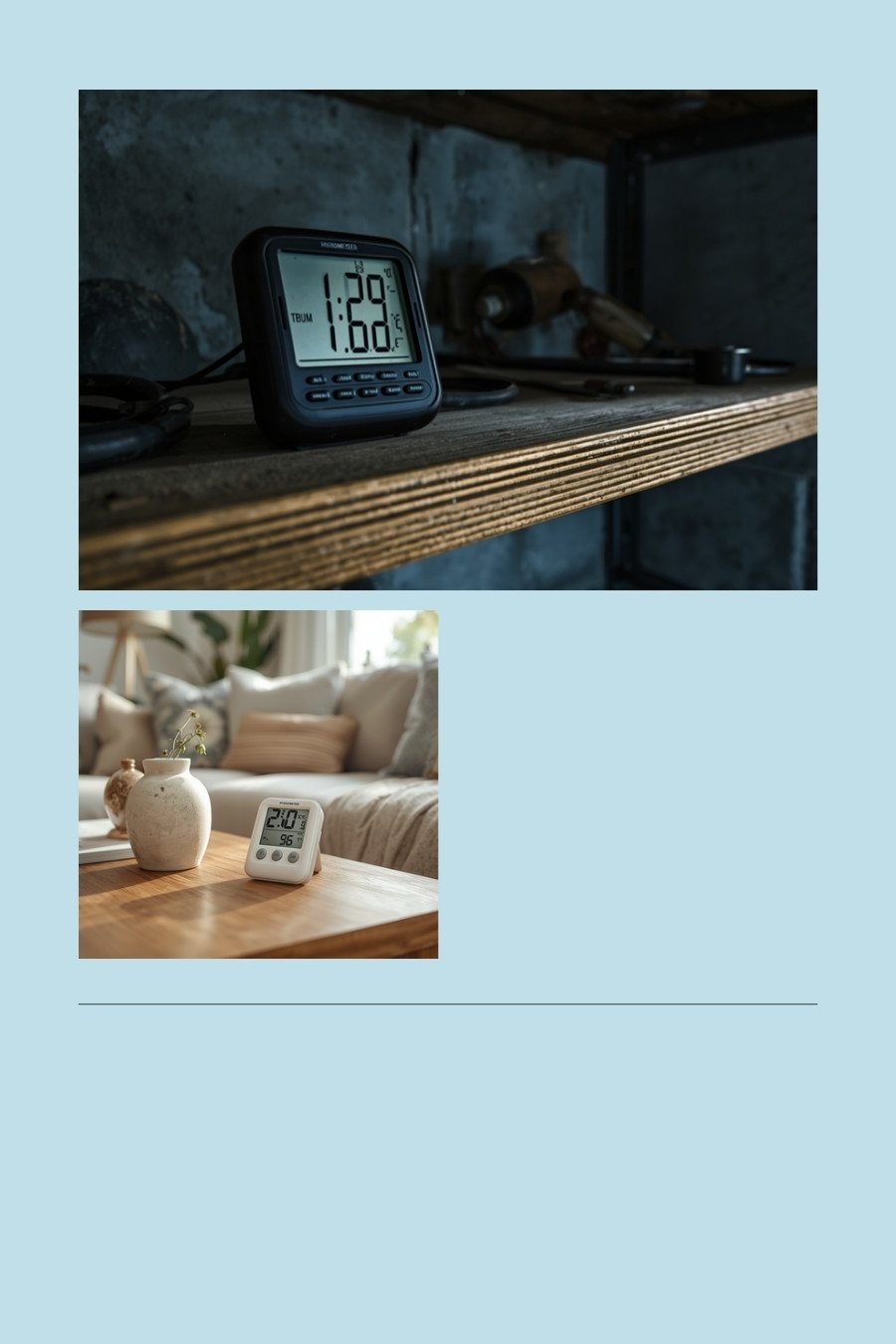
Does your hygrometer show different readings in different rooms? It’s one of the most common questions people ask after buying their first digital thermo-hygrometer, and the short answer is that it’s almost always normal. Relative humidity is not a fixed property of a house the way square footage is — it shifts with temperature, moisture sources, airflow, and even the specific spot where the sensor sits, so a 10-15 percentage point gap between a bathroom and a bedroom is completely expected.
Why This Is Normal, Not a Malfunction
Relative humidity (RH) is a ratio, not an absolute amount of water in the air. It compares how much moisture the air is currently holding to how much it could hold at that exact temperature. Because every room in a house can sit at a slightly different temperature — a sunny living room, a cooler basement, a warm kitchen with the oven running — the same amount of water vapor spread through the house will register as different RH percentages in each spot, even with zero difference in actual moisture.
Temperature Is the Biggest Driver
Warm air can hold more water vapor than cold air, so relative humidity and temperature move in opposite directions when the actual moisture level stays the same. A basement that runs 5-8°F cooler than the rest of the house will almost always show a higher RH reading, not because it’s wetter, but because the cooler air is closer to its moisture capacity. This is also why a hygrometer near a heating vent or a sunny window reads noticeably lower than one in a shaded corner of the same room.
Real Moisture Differences Between Rooms
- Bathrooms and kitchens generate moisture directly from showers, cooking, and dishwashing, so they run higher than bedrooms or hallways.
- Basements and crawlspaces sit closer to the ground and foundation walls, where moisture migrates in from soil and concrete.
- Rooms with lots of houseplants, aquariums, or drying laundry add localized humidity that a nearby room won’t share.
- Closed-off rooms with little air circulation trap whatever moisture is already present, while rooms near return air vents mix more evenly with the rest of the house.
These are genuine differences in moisture content, not sensor error, and they’re one of the reasons whole-home comfort guides recommend checking humidity levels by room rather than relying on a single reading for the entire house.

Airflow and HVAC Zoning
Central heating and air conditioning mix and redistribute air, which tends to even out humidity differences between connected rooms. But closed doors, multi-story layouts, and unbalanced ductwork all create pockets that barely get touched by that circulation. An upstairs bedroom with the door kept shut can run several points different from the hallway just outside it, simply because conditioned air isn’t reaching it as effectively.
Placement Mistakes That Exaggerate the Gap
- Placing one hygrometer near a window or exterior wall and another in an interior room — exterior walls run cooler or warmer depending on season.
- Setting a unit on top of a heat register, radiator, or in direct sunlight, which skews the local temperature reading and the RH calculation with it.
- Keeping a hygrometer inside a closet, cabinet, or enclosed shelf where air barely circulates.
- Placing a monitor too close to a humidifier, dehumidifier, diffuser, or kettle, which measures a artificial microclimate instead of the room’s true condition.
Sensor Tolerance and Calibration Drift
Even good consumer hygrometers carry a manufacturer tolerance of plus or minus 2-5 percentage points, and that margin compounds when you’re comparing two separate devices instead of one. As Meaco’s technical blog explains, disagreements between a built-in appliance sensor and a separate hygrometer are common even when both units are functioning correctly, simply because of where each sensor sits and how it was calibrated. Dust, cooking residue, and age can also cause a sensor to drift a few points off over a year or two of use.
How to Tell Real Differences From Sensor Error
The simplest test is to place two hygrometers side by side in the same spot for a few hours. If they land within 2-3 percentage points of each other, the sensors are working within normal tolerance and the room-to-room differences you’re seeing elsewhere in the house are real. If they disagree by 8-10 points or more in the same location, one of the units likely needs calibration or replacement. Once you trust your equipment, comparing rooms against the general ideal humidity level for a home gives you a useful baseline for judging which rooms are actually running too high or too low.
What to Do About Room-to-Room Differences
In most homes, some variation between rooms is fine and doesn’t need fixing. But if one room consistently reads well above 60% while the rest of the house sits in a comfortable range, that’s worth addressing directly — a small dehumidifier for a damp basement, a bathroom exhaust fan run longer after showers, or better door clearance to let conditioned air circulate into a stuffy bedroom. Track each room for a few days rather than reacting to a single reading, since humidity naturally rises and falls with cooking, weather, and daily activity.
Related reading: How Accurate Are Phone Weather App Humidity Readings? and Best Humidity Level for a Home Office or Server Room.
Is it normal for hygrometers to show different readings in different rooms?
Yes. Relative humidity depends on local temperature and moisture sources, so it naturally varies by room. A 10-15 point difference between a bathroom and a bedroom, or a basement and an upstairs room, is common and not a sign of a broken device.
How much difference between hygrometers is considered sensor error?
If two hygrometers placed side by side in the exact same spot disagree by more than 8-10 percentage points, one is likely out of calibration or defective. A gap of 2-3 points between identically placed units is within normal sensor tolerance.
Why does my basement always read more humid than the rest of my house?
Basements typically run cooler than the rest of the house, and cooler air holds less moisture at capacity, which pushes relative humidity higher for the same amount of actual water vapor. Basements also sit closer to soil and concrete, which adds real moisture migration on top of the temperature effect.
Should I use one hygrometer for the whole house or one per room?
One per room gives a far more accurate picture, especially in homes with basements, closed-off bedrooms, or bathrooms and kitchens that generate extra moisture. A single whole-house reading can hide problem areas that need separate attention.
Where is the best place to put a hygrometer to get an accurate room reading?
Place it at roughly chest height, away from exterior walls, direct sunlight, heat registers, and any humidifier, dehumidifier, or diffuser, so it measures the room’s general air rather than a localized microclimate.
Bottom Line
A hygrometer showing different readings in different rooms is usually telling the truth about real conditions in your house, not malfunctioning. Temperature differences, moisture sources, airflow, and placement all genuinely change the local humidity from room to room. The only time to suspect the equipment itself is when two hygrometers placed side by side in the identical spot disagree by a wide margin.