
Finding the best humidity level for sleeping can make a significant difference in how well you rest each night. The ideal range is between 30% and 50% relative humidity, and it should never be allowed to climb above 60% — low enough to prevent mold and dust mites, high enough to keep your airways comfortable throughout the night.
Too much moisture in the bedroom makes the air feel heavy and can disrupt sleep. Too little dries out your nasal passages and throat. This guide covers exactly what to target, why it matters, and how to maintain it year-round.
What Is the Best Humidity Level for Sleeping?
The best humidity level for sleeping is between 30% and 50% relative humidity (RH), and it should never be allowed to exceed 60%. This range is recommended by the EPA and the Sleep Foundation, which both point to 30% to 50% as ideal for respiratory comfort during rest.
| Humidity Level | Sleep Impact | What You May Notice |
|---|---|---|
| Below 30% | Too dry | Dry throat, nasal irritation, chapped lips |
| 30% – 50% | ✅ Ideal | Comfortable breathing, minimal allergens |
| 50% – 60% | Borderline | Slightly heavy air, watch for condensation |
| Above 60% | Too humid | Sweating, disrupted sleep, mold risk |
Your body temperature naturally drops during sleep. High humidity interferes with this process because moist air makes it harder for sweat to evaporate — the main way your body cools itself. That is why sleeping in a humid room often feels uncomfortable even at moderate temperatures.
Why Bedroom Humidity Affects Sleep Quality
Humidity influences sleep in three main ways: breathing comfort, body temperature regulation, and allergen levels. Understanding each one helps you prioritize which problems to solve first.
Breathing and airway comfort
Your respiratory system works best when the air it processes has adequate moisture. Air that is too dry irritates the mucous membranes lining your nose and throat, which can cause snoring, a dry cough, or a sore throat in the morning. Air that is too humid promotes the growth of mold spores and dust mites — two of the most common indoor allergens that disrupt breathing during sleep.
Body temperature regulation
Core body temperature needs to drop by about 1 to 2 degrees Fahrenheit for sleep to begin and be maintained. High humidity slows evaporative cooling, making it harder for your body to reach that lower temperature. This is why humid nights often feel restless even when the room is not particularly hot.
Allergen levels
Dust mites thrive at humidity levels above 50%. These microscopic organisms live in mattresses, pillows, and bedding, and their waste particles are a leading cause of nighttime allergy symptoms. Keeping bedroom humidity at or below 50% significantly reduces their population over time. Similarly, mold spores become airborne more easily in humid conditions, triggering respiratory irritation during sleep.
How to Measure Humidity in Your Bedroom
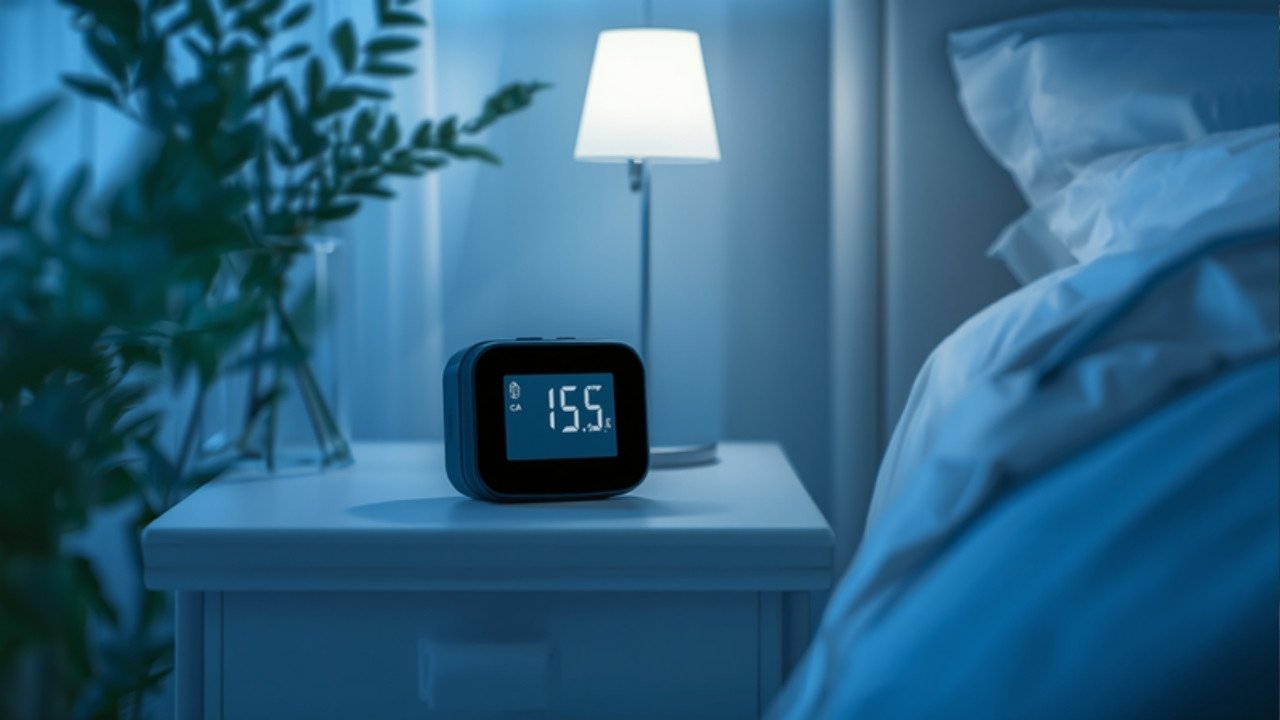
The only reliable way to know your bedroom humidity is to measure it with a hygrometer. Digital models cost between $10 and $30 and display both temperature and relative humidity. Place it away from windows, vents, and exterior walls for the most accurate reading.
Check readings at different times — humidity tends to be higher in the morning after a night of breathing in a closed room, and lower in the afternoon. If readings consistently fall outside the 30% to 50% range, it is worth addressing before assuming your sleep problems have another cause.
For ongoing tracking, smart hygrometers from brands like Govee or Inkbird connect to a phone app and log data automatically, so you can spot patterns without manually checking each day.
How to Fix Bedroom Humidity That Is Too High
If your bedroom consistently reads above 50%, the following steps will bring it back into the ideal range for sleeping.
Improve ventilation
A closed bedroom accumulates moisture from breathing alone — each person releases roughly one liter of water vapor per night. Opening a window for 10 to 15 minutes before bed helps exchange stale humid air for drier outdoor air, particularly in cooler months. In summer, this may not help if outdoor humidity is already high.
Use a small dehumidifier
A compact 20 to 22 pint dehumidifier is typically sufficient for a standard bedroom. Look for models with a built-in humidistat so the unit cycles off automatically once it reaches your target level. Running it during the day rather than at night avoids any noise disruption during sleep.
Avoid moisture sources in the bedroom
Common but overlooked sources of bedroom humidity include drying laundry indoors, keeping houseplants in the room, and leaving wet towels on the floor. Removing these reduces the load on any dehumidification you have in place.
Run your air conditioner
Air conditioning removes moisture as it cools. Running it consistently during humid months keeps bedroom humidity within the ideal sleep range without needing a separate dehumidifier. Some units have a dedicated dry mode that prioritizes dehumidification over temperature reduction.
How to Fix Bedroom Humidity That Is Too Low
In winter, heated air becomes very dry and bedroom humidity can drop below 30%. This is the most common cause of dry throat and nasal irritation that disrupts sleep in cold climates.
Use a bedroom humidifier
A cool mist or ultrasonic humidifier adds moisture back into the air. For a standard bedroom, a 1 to 1.5 gallon capacity unit is usually sufficient for one night of operation. Place it a few feet from the bed — not directly next to your head — and clean it every two to three days to prevent mold or bacteria buildup inside the tank. If you have not picked one yet, see our guide on how to choose the right humidifier for your bedroom, and if an existing unit is keeping you up, check out our guide on common causes of a noisy humidifier and how to fix them.
Warm mist vs. cool mist humidifiers
Warm mist models boil water before releasing it as steam, which kills bacteria in the process but adds a small amount of heat to the room. Cool mist models are safer for households with children and more energy efficient, but require more frequent cleaning. Either type works well for maintaining the best humidity level for sleeping — see our full cool mist vs. warm mist humidifier comparison for more detail.
Bedroom Humidity and Specific Sleep Concerns
Snoring
Low humidity dries out the tissues in the nose and throat, causing them to become irritated and swollen. This narrowing of the airway increases the likelihood of snoring. Raising bedroom humidity into the upper half of the ideal range — about 45% to 50% — often reduces snoring frequency, particularly in people without underlying sleep apnea.
Asthma and allergies
For people with asthma or allergies, staying at the lower end of the ideal range — around 30% to 40% — provides the best balance. This level is comfortable for breathing while staying below the threshold where dust mites and mold thrive most actively.
Babies and young children
The same 30% to 50% range applies for children’s bedrooms, and our guide to nursery humidity covers baby-specific setup in more detail. Babies are more sensitive to dry air because they breathe primarily through their noses and cannot clear congestion as easily as adults. A cool mist humidifier is recommended for nurseries rather than warm mist models, which pose a burn risk.
Frequently Asked Questions
What is the best humidity level for sleeping in summer?
The target stays the same — 30% to 50% — but achieving it in summer usually requires running air conditioning or a dehumidifier, since outdoor humidity is typically high. If your bedroom reads above 55% on summer nights, a dedicated bedroom dehumidifier or improved AC will make a noticeable difference in sleep quality.
Is 60% humidity too high for sleeping?
At 60% RH, most people will notice the air feels heavier and may experience more sweating during sleep. It also approaches the threshold where dust mite populations increase significantly. While not immediately harmful, consistent readings above 55% to 60% are worth addressing for better sleep and to prevent longer-term moisture issues.
Does the best humidity level for sleeping change in winter?
The target range stays at 30% to 50%, but winter makes it especially hard to stay above that 30% floor because heating systems dry out indoor air significantly. In cold climates, a bedroom humidifier is often necessary from November through March to maintain comfortable sleeping conditions.
Can humidity affect how long it takes to fall asleep?
Several environmental factors — including humidity — play a role in how quickly the body reaches the core temperature drop needed to initiate sleep. Rooms that are too humid or too dry both delay this process, increasing the time it takes to fall asleep and reducing overall sleep efficiency.
Should I run a humidifier or dehumidifier all night?
It depends on your readings. If bedroom humidity is consistently below 35%, running a humidifier overnight is reasonable. If it is consistently above 55%, running a dehumidifier during the day before sleep is more effective — and quieter — than running it overnight. Devices with a built-in humidistat cycle automatically and do not need to run continuously.
Bottom Line
The best humidity level for sleeping is 30% to 50% relative humidity, and it should never be allowed to climb above 60%. Staying within this range keeps your airways comfortable, reduces allergen levels, and supports the body temperature regulation your body needs to sleep well through the night.
Start by measuring your bedroom with a hygrometer for a few days to see where you actually stand. From there, a small humidifier or dehumidifier — depending on which direction you need to move — is the most direct solution. Getting bedroom humidity right is one of the lowest-effort, highest-impact changes you can make for better sleep.