
You feel humid even with the AC on for one of a handful of reasons, and almost all of them trace back to the same root cause: your AC is cooling the air without running long enough to actually pull moisture out of it. Temperature and humidity are two separate jobs for the same machine, and a unit can nail the first while quietly failing the second.
This guide covers the most common reasons an air conditioner cools a room but leaves it feeling clammy, and the specific fixes for each one. For target ranges, see our ideal humidity level guide.
The AC Is Probably Oversized
This is the single most common cause. An air conditioner removes humidity by running refrigerant-cooled coils long enough for water vapor to condense out of the air and drain away. An oversized unit satisfies the thermostat’s temperature setting in just a few minutes, then shuts off — long before the coils have run enough to meaningfully dehumidify. The result is called short cycling: the room reaches temperature fast, but humidity barely drops, because the system spent most of its time recirculating air rather than actively dehumidifying it.
A properly sized system typically runs in 15-20 minute cooling cycles. If your AC is shutting off in 5 minutes or less on a hot day, oversizing is a likely culprit, and it usually means a professional load calculation and a right-sized replacement is the real long-term fix. ENERGY STAR’s sizing guidance confirms that a correctly sized unit runs longer, steadier cycles instead of shutting off before it can dehumidify the air.
Check Your Thermostat Fan Setting
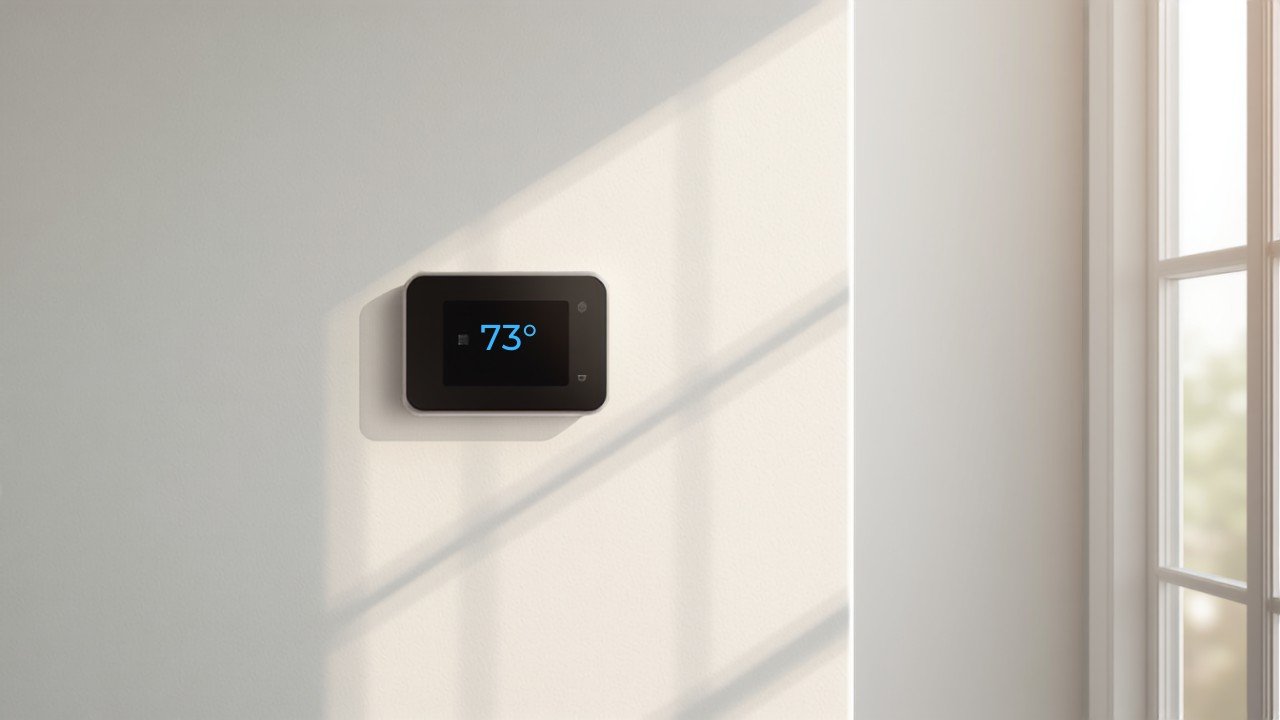
This one is free to fix right now. If your thermostat fan is set to “On,” the blower runs continuously, even when the compressor isn’t cooling — which blows the moisture sitting on the cold evaporator coil right back into your house instead of letting it drain outside. Switch the fan setting to “Auto.” That way the fan only runs during active cooling cycles, giving condensation time to drain away between cycles instead of getting redistributed through your ducts.
Dirty Filters and Coils Quietly Kill Dehumidification
A clogged air filter restricts airflow across the evaporator coil, and a dirty coil can’t absorb heat and moisture as effectively even when airflow is fine. Both problems reduce how much water vapor the system pulls out per cycle, even if the room still feels reasonably cool. Check and replace the filter monthly during cooling season, and have coils professionally cleaned if it’s been a year or more. ENERGY STAR’s heating and cooling maintenance guidance recommends this same monthly check during peak season to keep the system’s dehumidifying capacity intact.
Low Refrigerant and Duct Leaks
Low refrigerant — usually from a slow leak — reduces the system’s capacity to absorb heat and moisture, leaving you with air that’s cool but clammy rather than properly dried out. Leaky return ducts running through an attic, crawl space, or garage can also pull in humid unconditioned air and mix it back into your supply air, undoing the dehumidification your AC just did. ENERGY STAR notes that a typical home loses 20-30% of conditioned air through duct leaks, which is more than enough to reintroduce humidity. Both require a technician to diagnose properly — refrigerant level and duct integrity aren’t something you can eyeball.
What to Do About It
- Set the thermostat fan to “Auto,” not “On” — this alone fixes the problem for a lot of households
- Replace or clean the air filter monthly during cooling season
- Schedule a maintenance visit to check refrigerant charge and clean the coils if it’s been over a year
- Have a technician run a load calculation if your AC is short-cycling — it may be oversized for the space
- Add a standalone dehumidifier if humidity still runs high after everything above checks out — this is common in especially humid climates even with a well-functioning AC. See our dehumidifier vs. air conditioner comparison to decide if one makes sense for your home.
Bottom Line
Feeling humid even with the AC on almost always means the system is cooling faster than it’s dehumidifying — whether that’s from oversizing, a fan setting, a dirty filter, or a mechanical issue. Start with the thermostat fan setting since it costs nothing to check, then work through filters, maintenance, and sizing from there. If you’re not sure whether your levels are actually a problem, our signs of high humidity guide covers what to look for. For reference, the EPA recommends keeping indoor relative humidity between 30% and 50%, and not letting it sit above 60% for extended periods, since that’s the range where mold and dust mites thrive.
Related reading: How Humidity Affects Your Skin and Hair and Best Humidity Level for a Baby’s Nursery.
Why does my house feel humid even with the AC on?
Usually because the AC is cooling the air faster than it’s dehumidifying it. Common causes include an oversized unit that short-cycles, a thermostat fan set to ‘On’ instead of ‘Auto’, a dirty filter or coil, or low refrigerant.
Should my AC fan be set to Auto or On?
Auto. Setting the fan to ‘On’ runs the blower continuously and blows moisture sitting on the cold evaporator coil back into your house instead of letting it drain outside. ‘Auto’ lets the fan run only during active cooling cycles.
Can an oversized air conditioner cause high humidity?
Yes. An oversized AC cools a room to the thermostat setpoint quickly and shuts off before it has run long enough to meaningfully dehumidify the air, a problem called short cycling. A properly sized unit runs longer cycles that remove more moisture.
Do I need a dehumidifier if I have central AC?
Not always, but it can help in especially humid climates or if your AC still can’t keep humidity down after checking the fan setting, filter, and maintenance. A standalone dehumidifier can supplement a properly functioning AC system.
How often should I change my AC filter to help with humidity?
Monthly during cooling season is a safe standard. A clogged filter restricts airflow across the evaporator coil, which reduces how effectively the system removes moisture from the air, even if it still cools adequately.