
Dehumidifier vs air conditioner: which one actually removes more moisture from the air? The dehumidifier wins by a wide margin — a quality dehumidifier can pull 30-70 pints of water from the air per day, while a typical AC system removes moisture only as a side effect of cooling and usually manages less than two gallons daily. If humidity control is the actual goal, a dehumidifier is the more direct and effective tool, though the two work best together rather than as substitutes.
Dehumidifier vs Air Conditioner: Why ACs Only Partially Solve Humidity
U.S. Department of Energy guidance on air conditioning confirms this basic mechanism. Air conditioners cool air by passing it over a cold evaporator coil, and moisture in the air condenses on that cold surface and drains away as a byproduct of the cooling process, not as the AC’s primary job. This means humidity removal only happens while the compressor is actively running to satisfy the thermostat. Once the room reaches the target temperature and the AC cycles off, moisture removal stops immediately too, even though outdoor humidity keeps pushing more moisture into the house.
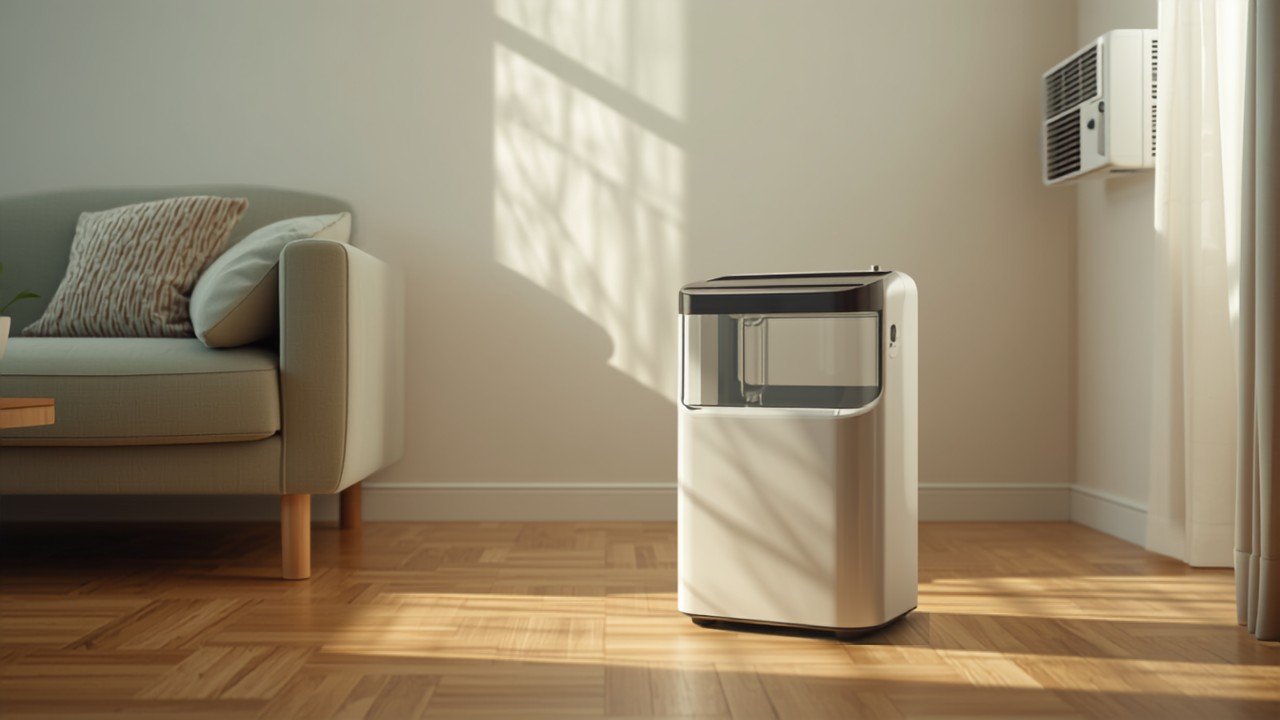
Why This Creates the “Cold But Sticky” Feeling
This cycling behavior explains a common complaint: a room that feels appropriately cool but still humid and clammy. An oversized AC system is especially prone to this, since it cools the air quickly and shuts off before it’s run long enough to meaningfully dehumidify, leaving temperature satisfied but humidity still elevated. A correctly sized system that runs in longer, steadier cycles does noticeably better at humidity control than an oversized one that short-cycles, even though both may hit the same temperature target.
How Dehumidifiers Work Differently
A dehumidifier also uses a cold coil to condense moisture out of the air, but instead of stopping once a temperature target is met, it runs based on a humidistat targeting a specific humidity percentage, typically in the 30-50% ideal range. It reheats the air slightly after removing moisture so it doesn’t cool the room significantly, meaning it can keep removing water around the clock regardless of the thermostat setting. This is why a dedicated dehumidifier consistently outperforms an AC alone for actual humidity numbers. The EPA’s indoor moisture control guidance supports this same 30-50% target and cautions against letting indoor relative humidity stay above 60% for extended periods.
Where This Matters Most
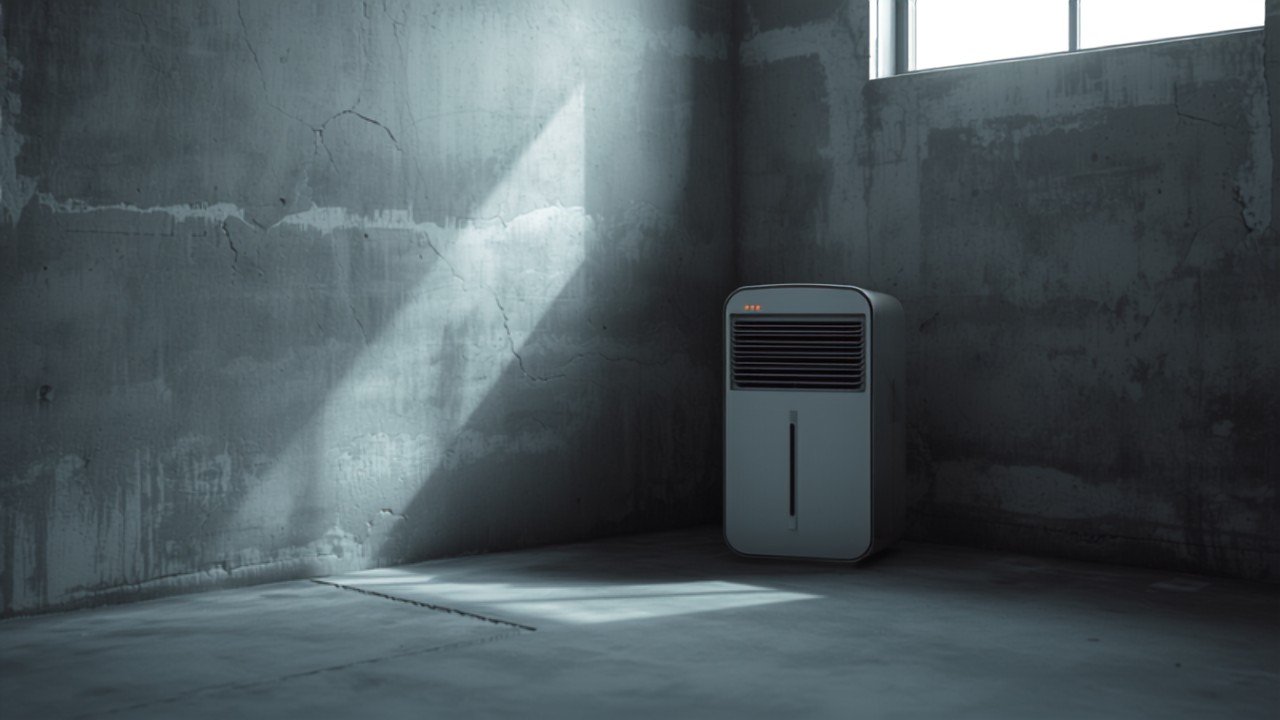
- Basements: often stay humid year-round regardless of AC use, since they’re naturally cooler and less connected to the home’s main cooling airflow — a dedicated dehumidifier is usually necessary here.
- Shoulder seasons (spring/fall): outdoor humidity can be high even when temperatures don’t call for much AC use, leaving indoor humidity to climb unchecked without a dehumidifier.
- Oversized or short-cycling AC systems: these hit temperature targets fast without running long enough to dehumidify effectively.
- Homes with humidity-sensitive concerns: allergy sufferers, homes with wood floors or instruments, or anyone specifically monitoring for mold risk benefit from the more precise, direct control a dehumidifier offers.
Energy Efficiency Comparison
Because a dehumidifier targets moisture removal directly rather than as a byproduct of cooling, it’s generally more energy-efficient per pint of water removed than running an AC purely to manage humidity. According to ENERGY STAR guidance on dehumidifiers, a certified model can use meaningfully less electricity than an equivalent-capacity older unit while removing the same amount of moisture, and a right-sized dehumidifier running on a humidistat is typically cheaper to operate for humidity control than cranking an AC lower than necessary just to dry out a room.
How Much Moisture Are We Actually Talking About
To put the numbers in perspective, a mid-size dehumidifier rated around 30 pints per day removes roughly 3.75 gallons of water from the air daily under humid conditions, and larger 50-70 pint units remove proportionally more. An AC system, by contrast, typically condenses somewhere in the range of one to two gallons per day as a byproduct of normal cooling operation, and that number drops sharply on mild days when the compressor doesn’t need to run much. This gap is exactly why a basement that never gets meaningfully cooler or drier from the upstairs AC often needs its own dedicated dehumidifier to reach a healthy 30-50% range.
A Quick Way to Tell Which One You Need
- Room feels cool but the air still feels damp or clammy: AC is handling temperature but not humidity — add a dehumidifier.
- Room is comfortable temperature-wise most of the year but still reads high humidity on a hygrometer: dehumidifier territory, not an AC problem.
- Whole house feels hot and humid together: AC is likely undersized or malfunctioning — that’s a cooling problem first.
- Basement or crawl space stays musty regardless of season: classic dedicated-dehumidifier case, since these spaces rarely get enough airflow from a central AC system.
Cost Considerations Beyond Just Energy Use
Beyond electricity costs, it’s worth factoring in equipment lifespan and maintenance when weighing a dehumidifier against relying purely on AC for humidity control. A dedicated dehumidifier is generally cheaper to purchase and replace than upgrading or oversizing an AC system specifically to chase better humidity performance, and it’s far easier to relocate a portable dehumidifier to whichever room needs it most as seasons or problem areas change. On the other hand, running an AC harder or colder than necessary just to squeeze out more humidity control wastes energy on unnecessary cooling and can leave a room uncomfortably cold well before humidity reaches a healthy level, which is one more reason the two appliances work better as a team than as competing solutions to the same problem.
The Practical Recommendation: Use Both, for Different Jobs
A properly sized, well-maintained AC system should keep most living spaces comfortable during peak summer without additional help. Where a dehumidifier earns its keep is in the gaps: basements, crawl spaces, shoulder seasons, and any room where the hygrometer shows humidity climbing above 50% despite the AC running normally. Rather than treating this as an either-or decision, most homes benefit from letting the AC handle temperature and general comfort while a dehumidifier handles the specific rooms or seasons where humidity control needs to be more precise.
For a deeper look at why a home can feel humid even with the AC running constantly, see our related breakdown, and for choosing the right dehumidifier size for a specific room, check the pint-capacity guidance in our sizing guide as well.
Related reading: How to Drain a Dehumidifier Continuously (No More Emptying the Tank) and Dehumidifier Freezing Up? Causes and Fixes.
Does running the AC lower humidity as well as a dehumidifier?
It reduces humidity somewhat as a side effect of cooling, but nowhere near as much as a dedicated dehumidifier, which can remove several times more moisture per day and keeps working even when the thermostat isn’t calling for cooling.
Why does my house feel humid even with the AC running?
Air conditioners only remove moisture while actively cooling, so once the thermostat is satisfied and the unit cycles off, humidity removal stops too. In mild weather or oversized AC systems that cool quickly and shut off often, this leaves humidity elevated even though the AC is technically running.
Should I use a dehumidifier and AC together?
Yes, this is generally the most effective setup: a properly sized AC handles routine cooling and moisture removal, while a dehumidifier targets specific problem areas like basements or handles shoulder-season humidity when cooling demand is too low for the AC to run enough.
Is a dehumidifier cheaper to run than an air conditioner for humidity control?
Yes, generally. Dehumidifiers are built specifically for moisture removal and use less energy per pint of water removed than an AC system, which is spending most of its energy on cooling and only removing moisture as a byproduct.
Can a dehumidifier replace an air conditioner?
No. A dehumidifier removes moisture but does very little to lower air temperature, so it can’t replace an AC’s cooling function. The two solve different problems and work best as a complementary pair rather than substitutes for each other.
It’s also worth checking your AC’s actual capacity against your home’s size before assuming a dehumidifier is needed at all — an undersized AC struggling to cool a large space will also struggle to dehumidify it, and the fix there is addressing the cooling system itself rather than layering on a separate dehumidifier to compensate for equipment that’s simply too small for the job.
Bottom Line
A dehumidifier removes moisture far more effectively and directly than an air conditioner, which only dehumidifies as a side effect of cooling and stops the moment it cycles off. For most homes, the ideal setup uses both: AC for temperature and general comfort, and a dehumidifier for basements, shoulder seasons, and any space where the humidity reading stays elevated no matter how much the AC runs.