
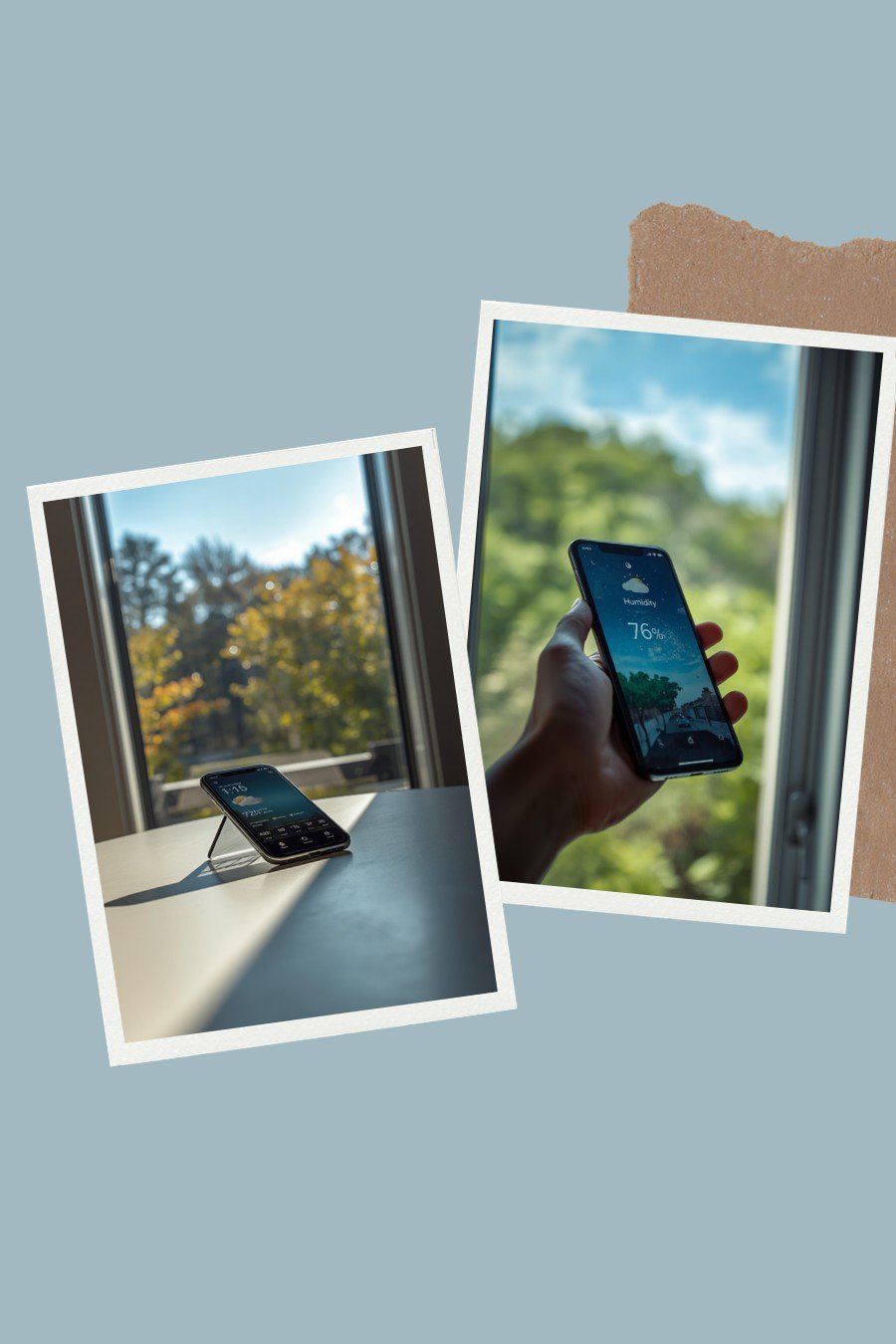
How accurate are phone weather app humidity readings, really? Not very, at least not for the room you’re standing in. The percentage your phone shows is a broad estimate of outdoor conditions somewhere near you, pulled from a weather station that could be miles away, and it has almost nothing to do with the actual air inside your house.
Where Weather Apps Actually Get Their Humidity Numbers
Your phone doesn’t have a humidity sensor measuring the air around it. Instead, the weather app pulls a reading from the nearest official or crowdsourced weather station and displays it as if it were local to you. Some apps blend readings from a few nearby stations to smooth out the estimate, and increasingly they layer in crowdsourced data from other users’ connected devices, but the core number still comes from outdoor sensors positioned somewhere else entirely, not from your phone and not from your living room.
Why That Number Isn’t Your Indoor Humidity
Even a perfectly accurate outdoor reading tells you little about conditions inside your home, because indoor and outdoor humidity diverge constantly. Heating a home in winter dries out already-cold, low-moisture outdoor air even further once it’s warmed indoors, often pushing indoor relative humidity well below the outdoor percentage. Running air conditioning in summer pulls moisture out of the air as it cools, so an indoor reading can sit far below what the app reports outside. Cooking, showering, houseplants, and drying laundry all add moisture indoors that no outdoor sensor will ever detect.
Do Any Phones Have Real Humidity Sensors?
A handful of older Android phones, including the Samsung Galaxy S4 and Note 3, did include built-in humidity sensors as a hardware feature, but manufacturers largely abandoned the component in later models since it added cost without much mainstream demand. Today, the overwhelming majority of smartphones on the market, including every current iPhone, have no physical humidity sensor at all. Any humidity figure your phone displays is sourced from the network, not measured locally.
What About Apps That Show an “Indoor Humidity” Estimate?
A few weather services, including AccuWeather, now advertise a dedicated “indoor humidity” metric that models what your home’s air is likely doing based on outdoor conditions, typical building behavior, and whether you’re probably running heating or air conditioning. It’s a modeled estimate, not a measurement from inside your house, and it can’t account for the specific age of your home, how well it’s sealed, or what’s happening in any one room. It’s a better guess than a raw outdoor percentage, but it’s still a guess rather than a reading.
How Far Off Can the App Be From Your Actual Room?
- Distance from the reporting station: readings can already vary meaningfully between locations just a few miles apart, especially in areas with varied terrain.
- Outdoor vs. indoor gap: heating and air conditioning alone can create a 15-30 percentage point difference between outside air and a specific room.
- Room-specific factors: a bathroom after a shower or a kitchen during cooking can spike far above whatever the app displays, while a dry, over-heated bedroom can sit far below it.
Stacked together, it’s entirely possible for a weather app to show 45% humidity outside while your actual living room sits at 25% in winter or 65% in a humid, un-air-conditioned summer afternoon. For context on what a healthy indoor range actually looks like, see our guide to the ideal humidity level for a home.
When a Weather App Number Is Still Useful
None of this makes the weather app number useless — it’s a reasonable proxy for regional climate trends, useful for deciding whether to expect a muggy afternoon or a dry cold snap outside. Apple’s own documentation on its Weather app’s data sources confirms that conditions are aggregated from external weather providers and regional stations rather than measured by the device itself, which is exactly why it should be read as general area weather, not a room-by-room measurement.
What to Use Instead for Real Indoor Readings
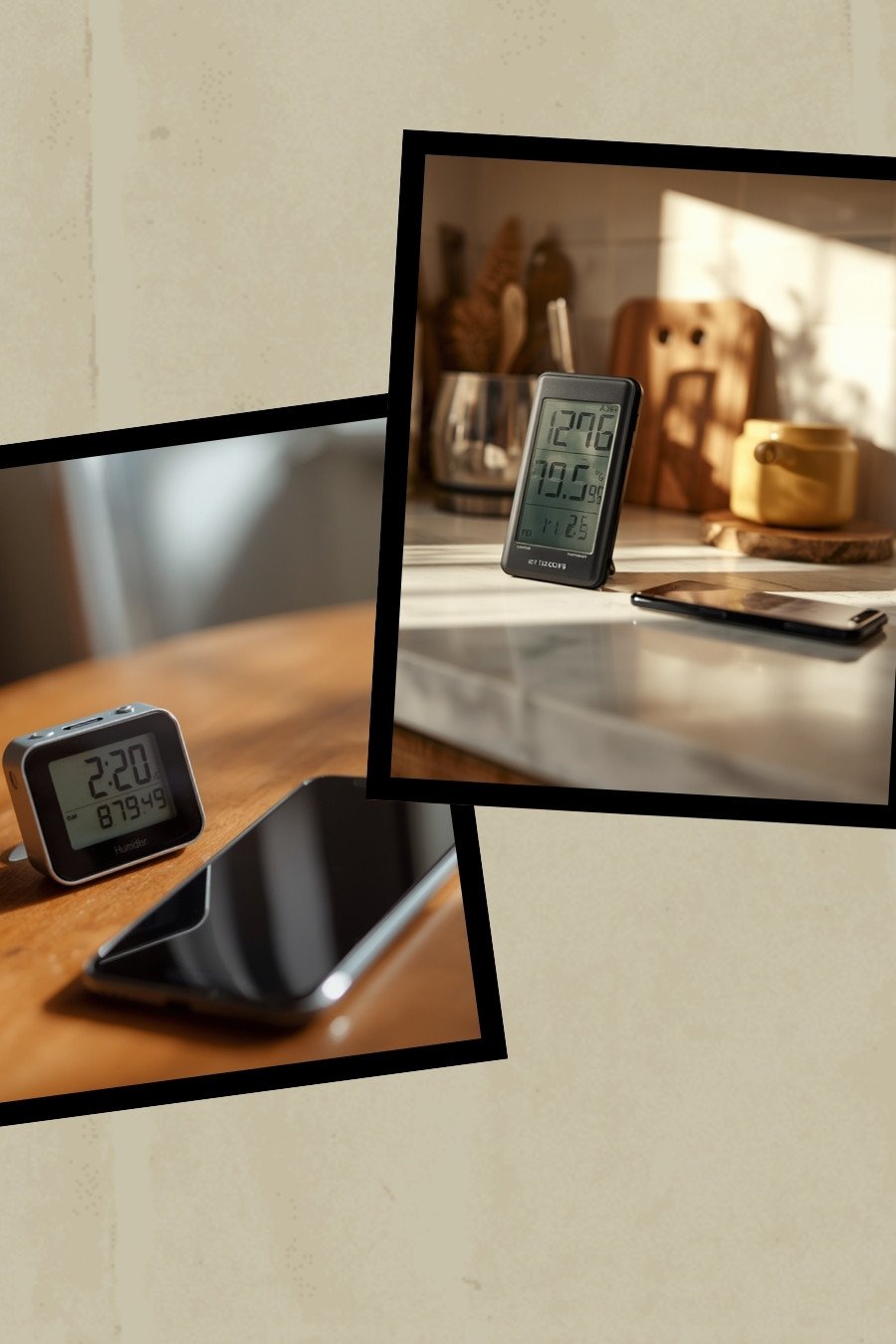
If you actually want to know the humidity in a specific room, a dedicated hygrometer is the only reliable option. Standalone digital hygrometers cost very little and give a direct reading from the exact spot you place them, while Bluetooth-connected sensors from brands like Govee, SensorPush, and ThermoPro sync to a phone app and log trends over time. Government meteorological data, like the observation network described on the National Weather Service’s data page, is built for regional forecasting, not for telling you what’s happening inside a specific bedroom or basement.
A Quick Way to Check How Far Off Your App Really Is
Place a real hygrometer in the room you check most often and compare its reading against your weather app over a few days. You’ll likely notice the gap grows during extreme outdoor weather and shrinks on mild days when windows are open and indoor air exchanges more freely with the air outside. Once you have real numbers, you can compare each room against typical humidity levels by room to see which areas of your home actually need attention.
Related reading: Best Humidity Level for a Home Office or Server Room and How to Choose a Hygrometer for Your Home.
Do phone weather apps measure indoor humidity at all?
No. Weather apps display humidity data pulled from outdoor weather stations near your location, not a reading from inside your home. Almost no modern smartphone has a built-in humidity sensor, so the app cannot measure your actual room.
Why is my weather app humidity so different from what I feel indoors?
Heating, air conditioning, cooking, and showering all change indoor humidity independently of outdoor conditions. It is common for indoor relative humidity to be 15-30 percentage points different from what a weather app reports outside at the same moment.
Did any smartphones ever have real humidity sensors?
A few older Android models, including the Samsung Galaxy S4 and Note 3, included built-in humidity sensors. Manufacturers largely dropped the feature in later phones, and virtually no current smartphone, including any iPhone, has one today.
Are indoor humidity estimates from apps like AccuWeather accurate?
They are modeled estimates based on outdoor conditions and typical building behavior, not direct measurements from inside your specific home. They can be a reasonable general guess but will not reflect your home’s actual construction, sealing, or individual rooms.
What should I use instead of a weather app for accurate indoor humidity?
A dedicated digital hygrometer placed in the room you want to monitor gives a direct, accurate reading. Bluetooth-connected models let you track trends over time through a phone app while still measuring the actual air in your home.
Bottom Line
Phone weather app humidity readings describe outdoor conditions somewhere near you, not the air in your home. Indoor humidity is shaped by heating, cooling, cooking, and daily activity in ways an outdoor sensor can never capture. If precise indoor numbers matter to you, a dedicated hygrometer will always beat a weather app.