
As the leaves turn and the first cold snaps of fall arrive, outdoor humidity drops and home heating systems kick on for the season — which means it’s time to make the seasonal swap. The dehumidifier that kept your basement or crawl space dry all summer needs to go into storage, and the humidifier that’s been boxed up since spring needs to come back out to counter the dry, heated air of winter. Do this transition right and it takes about an hour per appliance. Skip it, and you risk a humidifier that spreads mineral dust or mold spores, or a dehumidifier that’s ruined by moisture left sitting in its tank all winter. Here’s exactly how to winterize both, step by step.
Why Autumn Is the Real Turning Point, Not Midwinter
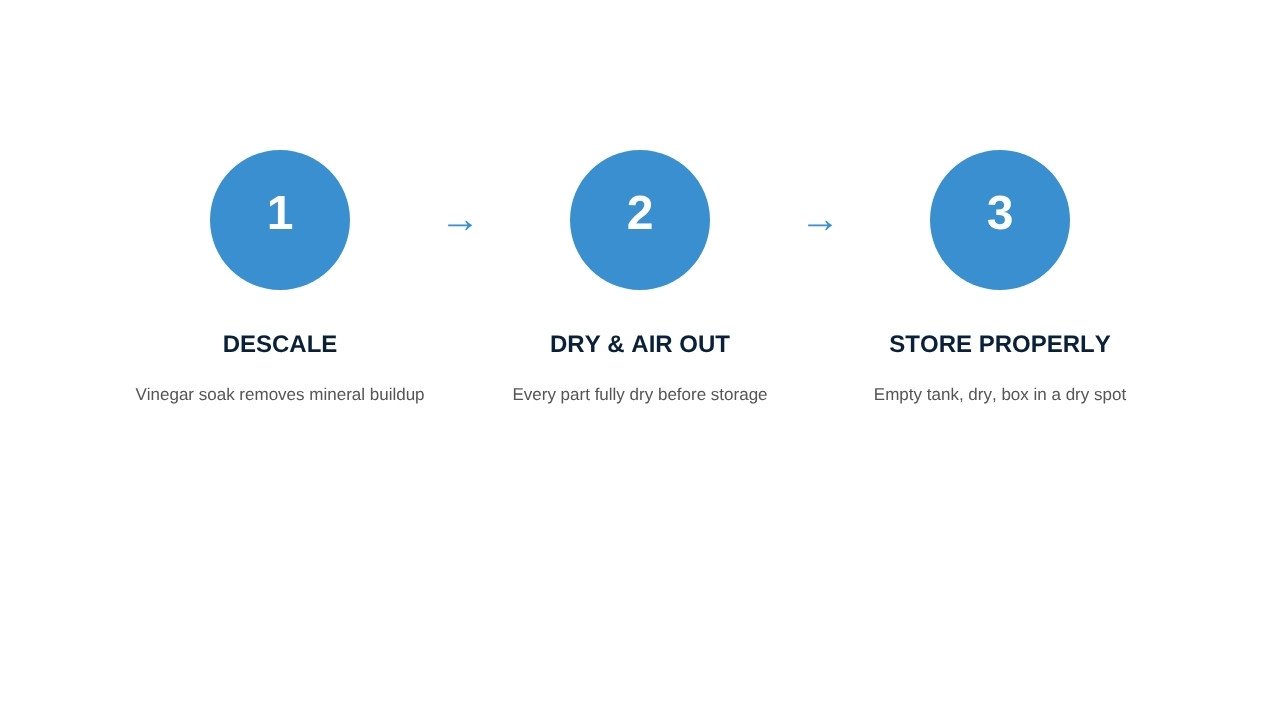
Most people wait until a room feels uncomfortably dry — usually well into December — before they think about a humidifier. But the transition actually starts in fall. As outdoor air cools, it holds less moisture, and once furnaces and heat pumps start running regularly, indoor relative humidity can fall well below the comfortable range even on mild autumn days. At the same time, the humid summer conditions that justified running a dehumidifier are fading, so that unit is about to sit idle for months. Handling both jobs in the same weekend — while the weather is still mild enough to work in a garage or basement with the windows open — is far easier than doing it during the first cold snap. For a full breakdown of what “comfortable” actually means indoors, see our guide to the ideal humidity level for your home.
Step 1: Deep-Clean and Descale the Humidifier Before You Turn It On
A humidifier that has been sitting in a closet or attic since spring is not ready to run straight out of the box, even if it looks clean. Any water left in the tank or base during storage — even a few drops — can support mold and bacterial growth, and mineral deposits from hard water harden over months into scale that’s much tougher to remove later. The EPA’s Use and Care of Home Humidifiers guidance recommends a full clean before seasonal startup, not just a rinse. Before you plug anything in, work through this checklist:
- Unplug the unit and fully disassemble the tank, base, and any removable trays or caps.
- Fill the tank with a 50/50 mix of white vinegar and water, swirl it around, and let it sit for 20-30 minutes to dissolve mineral scale.
- Scrub the tank interior, base reservoir, and any visible scale with a soft brush or bottle brush — avoid abrasive pads that can scratch plastic and create bacteria-trapping grooves.
- Rinse thoroughly with clean water, running several changes through the tank to remove all vinegar residue before any cleaning agents touch the mist path.
- Wipe down the exterior and control panel with a damp cloth, and inspect the power cord and base for cracks or corrosion.
- Let every component air-dry completely — ideally overnight — before reassembling, since reassembling while damp reintroduces the exact moisture that breeds mold.
If you’re unsure how often this level of cleaning should happen once the unit is back in regular use, our guide on how often you should clean your humidifier covers the ongoing schedule for the rest of the season.
Step 2: Replace Filters, Wicks, and Check the Working Parts
Filters and evaporator wicks are consumable parts, and most manufacturers recommend replacing them at least once per heating season — sooner if the humidifier ran heavily last winter or the wick shows discoloration, stiffness, or a musty smell. A wick or filter that was still damp when it went into storage is one of the most common sources of mildew odor when a humidifier is restarted in fall. While you have the unit apart:
- Check the fan (on evaporative and ultrasonic models) for dust buildup that can strain the motor.
- Inspect the float valve or auto shut-off sensor on tank-fill models to make sure it moves freely.
- Test the mist output on ultrasonic units for a weak or sputtering spray, which usually signals it’s time for a new transducer plate or a deeper descale.
If you’re replacing an aging unit entirely, it’s worth revisiting cool-mist versus warm-mist humidifiers — the right type affects both maintenance frequency and how much benefit you’ll see in a cold, dry bedroom or nursery this winter.
Step 3: Putting Your Dehumidifier Away for the Season
While the humidifier comes out, the dehumidifier that ran through the humid months needs to go into storage clean and completely dry — not just emptied. A dehumidifier packed away with any moisture in the tank, coils, or filter is a mold incubator waiting for spring. Follow these steps before you box it up:
- Unplug the unit and empty the water tank completely, including any drain hose if you were running it continuously.
- Remove and wash the air filter according to the manufacturer’s instructions, then let it dry fully before reinserting it.
- Wipe down the coils and interior housing to remove dust and any visible moisture or mineral film.
- Run the unit’s fan-only mode (no compressor) for 15-20 minutes in a dry room to help evaporate any residual moisture inside the coils and housing.
- Leave the tank out of the unit, or leave it slightly ajar, during storage so trapped moisture can continue to evaporate rather than getting sealed in.
- Store the unit upright in a dry, temperature-stable space — never a damp basement corner or an unheated shed prone to condensation swings.
Preventing Mold and Odors During Off-Season Storage
Whichever appliance is going into storage, the underlying risk is the same: trapped moisture plus months of no airflow. The EPA’s Brief Guide to Mold, Moisture and Your Home notes that materials generally need to dry within 24-48 hours to avoid mold taking hold — a standard worth applying to appliance storage as well, not just water damage. The CDC’s guidance on preventing waterborne germs at home similarly stresses that stagnant water in devices like humidifiers can harbor bacteria, including organisms linked to respiratory illness, which is exactly why nothing should go into a storage box still wet. A few extra precautions help:
- Store both appliances in a cardboard box lined with a breathable cloth rather than a sealed plastic bag, which can trap residual humidity against the plastic housing.
- Drop a small silica gel packet or a box of baking soda into the storage container to absorb ambient moisture and odors.
- Leave humidifier tank caps and dehumidifier bucket compartments slightly open rather than sealed shut.
- Choose a storage spot with stable temperature and humidity — an interior closet beats an attic or garage that swings widely with the weather.
If you’ve ever dealt with a musty smell or health complaints tied to a humidifier, it’s worth reading can a humidifier make you sick before you put a questionable unit back into service — sometimes a badly stored humidifier is better replaced than revived.
Safe Startup Checklist for Fall
Once cleaning and part checks are done, run through this quick safety pass before the humidifier runs unattended overnight for the first time this season:
- Fill the tank with distilled or demineralized water rather than tap water to slow scale buildup and reduce mineral dust.
- Plug into an outlet away from rugs, electronics, and wood furniture in case of an early leak.
- Run it for 30 minutes on a low setting first and check for unusual odors, dripping, or strange noises.
- Place a hygrometer nearby so you can track the room’s actual relative humidity rather than guessing.
- Set a recurring reminder to empty, rinse, and refill the tank daily, and deep-clean it every few days through the season.
Keeping Indoor Humidity in the Ideal Range All Winter
The goal of running a humidifier isn’t just comfort — it’s hitting a specific, evidence-based range. The EPA’s guidance on indoor air quality and moisture control recommends keeping indoor relative humidity between 30% and 50%, and never sustained above 60%, since higher levels encourage mold and dust mites while lower levels dry out skin, airways, and wood furnishings. A humidifier that’s freshly cleaned but left to run unmonitored can easily push a small bedroom above that ceiling on a mild fall night, which is exactly why pairing it with a hygrometer matters as much as the cleaning itself. Our full ideal humidity level guide breaks the target range down by room if you want a more detailed reference to keep near the thermostat this winter.
Winterizing isn’t a one-time chore — it’s the reset that determines how clean, efficient, and safe both appliances will be for the entire heating season. A half hour of descaling and drying now saves a winter of mineral dust, musty smells, or a dehumidifier that fails the moment you need it again next spring.
How often should I clean my humidifier when I first start using it again in fall?
Do a full descale-and-clean before the first use of the season, then empty and rinse the tank daily once it’s running, with a deeper vinegar clean every three to five days depending on your water hardness.
Can I store a humidifier or dehumidifier with water still in the tank?
No. Any water left in a tank during months of storage can grow mold and bacteria and, in humidifiers, allow scale to harden. Always empty, clean, and fully air-dry both appliances before storing them.
What’s the ideal indoor humidity level to aim for once my humidifier is running?
The EPA recommends keeping indoor relative humidity between 30% and 50%, and never letting it sit above 60% for extended periods, since higher levels support mold and dust mite growth.
Should I use tap water or distilled water in my humidifier?
Distilled or demineralized water is best. It contains far fewer minerals than tap water, which slows scale buildup inside the tank and reduces the fine white mineral dust some humidifiers release into the room.
Is it safe to run a dehumidifier’s fan without the compressor before storing it?
Yes. Running fan-only mode for 15-20 minutes helps evaporate residual moisture from the coils and interior housing before storage, which reduces the chance of mold forming while the unit sits unused.
How do I know if my humidifier or dehumidifier survived storage in good condition?
Run it for 30 minutes on a low setting and check for unusual odors, leaks, rattling, or weak output. A musty smell after cleaning, or a dehumidifier that won’t pull water despite high humidity, usually signals it’s time to service or replace the unit.