
The best humidity level for a baby’s nursery is 30% to 50% relative humidity, per EPA guidance — the same target as any bedroom, but nurseries leave less room for error. Newborns breathe faster, sleep longer, and have thinner, more sensitive skin than adults, so get the humidity right and you’re reducing the odds of stuffy noses, dry skin, and disrupted sleep; get it wrong in either direction and you’re creating the exact conditions that cause those problems.
This guide covers the target range for a nursery, how it differs slightly from general room advice, and the practical steps for keeping it there. For the broader adult-bedroom version of this guidance, see our best humidity level for sleeping guide.
What Is the Ideal Humidity Level for a Nursery?
The target for a nursery is the same as for any bedroom: 30% to 50% relative humidity, per EPA guidance on mold and moisture control. Many pediatric and parenting sources widen that slightly to 40-60%, but the EPA’s more conservative ceiling matters here — humidity above 50% meaningfully raises the risk of mold and dust mites, and a nursery is a room you want fewer allergens in, not more. Aim for the middle of that range, around 45%, rather than pushing toward either edge.
Room temperature is a related but separate variable. Overheating is a known risk factor in the American Academy of Pediatrics’ updated safe sleep recommendations, and a room that’s too warm often reads as more humid than it actually is, so it’s worth checking both together rather than humidity alone. See our room-by-room humidity guide for how bedrooms and nurseries compare to other spaces in the house.
Why Babies Are More Sensitive to Humidity Than Adults
Infants breathe almost exclusively through their nose for the first few months, so dry nasal passages affect them more directly than they do an adult who can shift to mouth breathing without much thought. Their skin is thinner and loses moisture faster, which is why dry air shows up as flaking, redness, or eczema flare-ups sooner in babies than in older children. On the other end, babies can’t easily communicate that a room feels heavy or uncomfortable, so parents are relying entirely on a hygrometer and their own senses rather than a complaint.
Signs the Nursery Air Is Too Dry
Watch for a stuffy or crusty nose that makes feeding harder, dry or flaky patches on the cheeks and hands, chapped lips, or static in the baby’s hair and clothes. Frequent waking that isn’t explained by hunger or a wet diaper is also worth checking against a hygrometer reading — dry air irritates the airway enough to disrupt sleep even without an obvious cold.
Signs the Nursery Air Is Too Humid
Condensation on the inside of windows, a musty smell, or visible dampness around the crib or curtains are the clearest signs. Because babies are more reactive to allergens, a nursery that stays above 55-60% for extended periods is also more likely to trigger congestion or skin irritation from dust mites, even before mold becomes visible.
The Best Way to Add Humidity to a Nursery
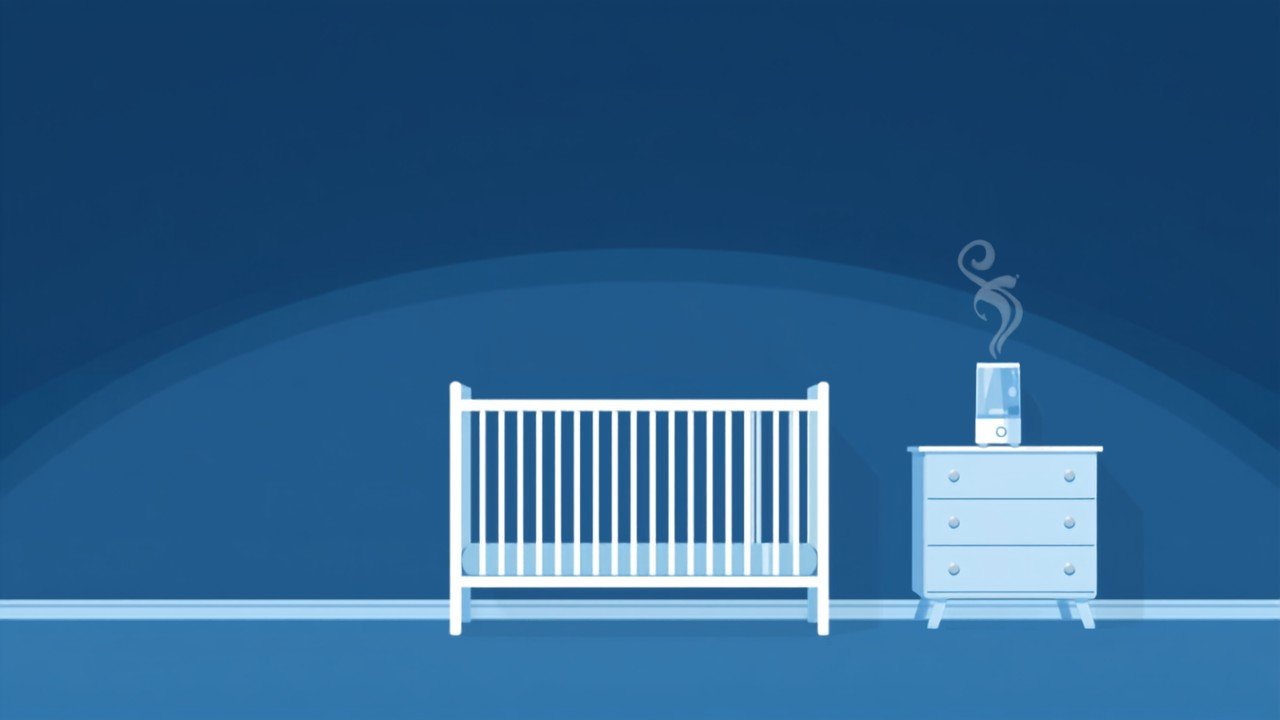
Cool mist is the only type recommended for a nursery. Warm mist humidifiers and steam vaporizers carry a real burn risk if a curious toddler pulls one over or gets too close, which is why the Mayo Clinic specifically recommends cool mist for children’s rooms. See our full cool mist vs. warm mist comparison for more on the safety differences between humidifier types. Place the unit on a dresser out of reach — not on the floor, and not on the crib rail — and keep it a few feet from where the baby sleeps so moisture spreads evenly instead of misting directly onto the mattress. If you’re deciding between models and sizes, our guide to choosing a humidifier covers the same logic in more depth.
How to Monitor Nursery Humidity
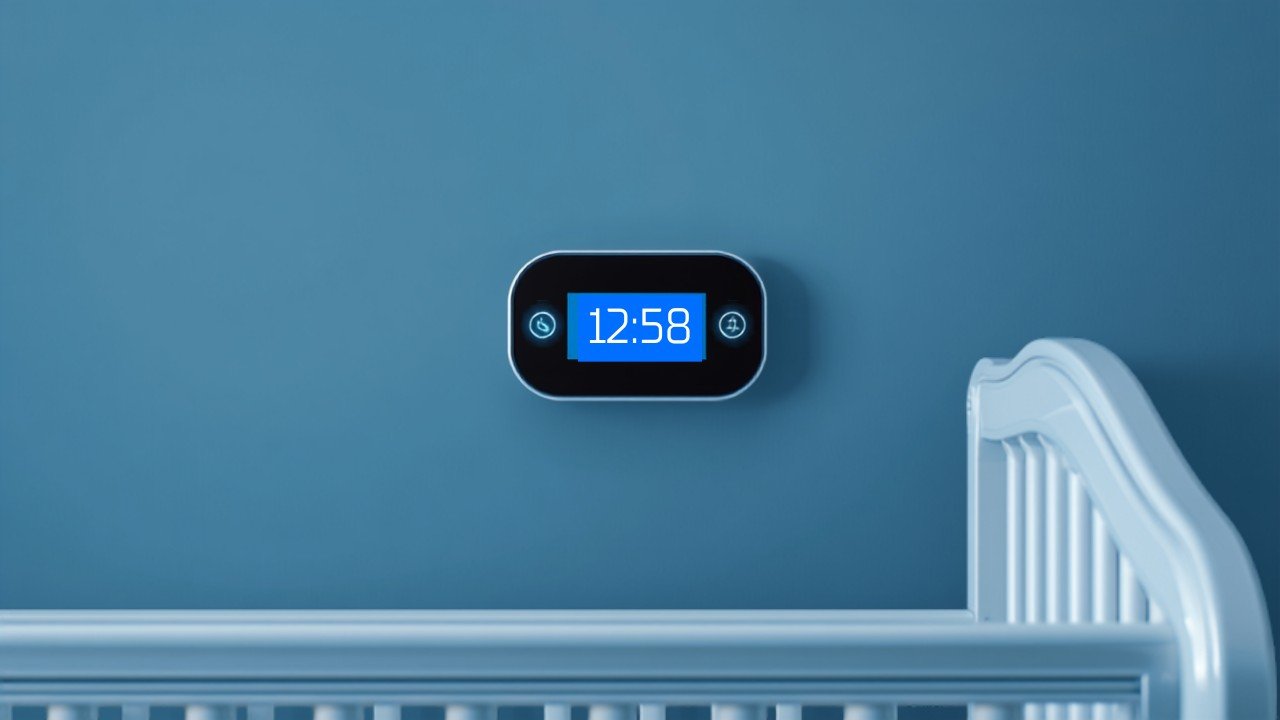
A simple digital hygrometer, placed at roughly crib height rather than up on a shelf, gives a far more reliable reading than guessing from how the air feels. Many baby monitors now include a built-in humidity and temperature display, which is convenient but worth double-checking against a dedicated hygrometer occasionally, since built-in sensors are sometimes less accurate. See our guide to humidity monitoring for what to look for in a reliable device.
Nursery Humidity by Season
Winter heating is the more common problem — indoor air can drop well below 30% once furnaces and radiators run consistently, even in climates that don’t feel dry outside. That’s when a nursery humidifier earns its place. In summer, especially in humid climates, the room is more likely to need air conditioning or a small dehumidifier than added moisture. Checking a hygrometer at the start of each season, rather than assuming last month’s setting still applies, avoids both problems.
Common Mistakes Parents Make
Running a humidifier nonstop without checking a hygrometer is the most common one — it’s easy to overshoot 50% in a small nursery, especially with the door closed. Using tap water instead of distilled water accelerates mineral buildup and bacteria growth inside the tank, which then gets released directly into the air the baby breathes. And skipping the manufacturer’s cleaning schedule “because it looks clean” is a close third — buildup inside a humidifier tank isn’t always visible until it’s significant.
Bottom Line
Keep the nursery between 30% and 50% relative humidity, lean toward the middle of that range, and use a cool mist humidifier with distilled water if the room runs dry — especially in winter. A hygrometer at crib height is the one piece of equipment that turns this from a guess into a number you can actually manage.
Frequently Asked Questions
Related reading: Why Does Condensation Form on Windows? and Humidity and Mold in Bathrooms: What Level Is Too High?.
What humidity level is best for a newborn’s room?
The target is 30% to 50% relative humidity, the same range recommended for any bedroom by the EPA. Aim for the middle of that range, around 45%, rather than the edges — newborns are more sensitive to both dry air and the mold and dust mite risks that come with excess humidity.
Is it safe to run a humidifier all night in a baby’s room?
Yes, as long as it’s a cool mist unit placed a few feet from the crib and cleaned regularly. Running it continuously without checking a hygrometer can push a small nursery above the ideal range, so it helps to check readings periodically rather than leaving it on the same setting indefinitely.
Can dry air make my baby congested?
Yes. Babies breathe primarily through their nose for the first few months, so dry air irritates and dries out nasal passages more noticeably than it does in adults. This can show up as a stuffy or crusty nose, more difficulty feeding, and more frequent night waking, even without an actual cold.
Should I use a warm mist or cool mist humidifier for a nursery?
Cool mist is the recommended choice for any room with an infant or young child. Warm mist humidifiers and steam vaporizers carry a real burn risk if a curious toddler gets too close or knocks the unit over, while cool mist units run at room temperature and pose no such risk.
How do I know if my nursery humidity is accurate?
A dedicated digital hygrometer placed at roughly crib height gives the most reliable reading. Baby monitors with built-in humidity displays are convenient but occasionally less accurate, so it’s worth cross-checking one against a standalone hygrometer every so often rather than relying on the monitor alone.