
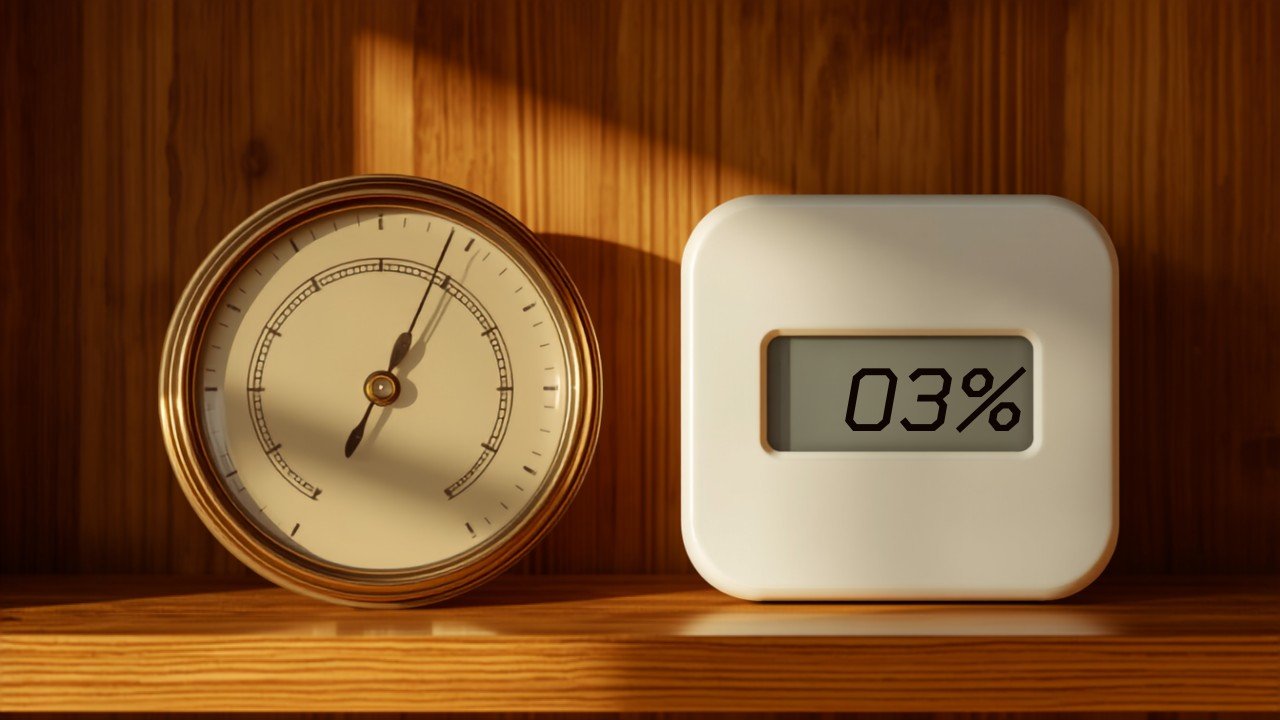
If you’re comparing a digital vs analog hygrometer to decide which is more accurate, the short answer is that digital wins in almost every practical scenario, but the reasons why — and the situations where an analog dial still holds up — are worth understanding before you buy either one.
How Each Type Actually Works
An analog hygrometer relies on a mechanical sensing element, usually a coil of hair, paper, or a synthetic polymer strip that physically expands and contracts as humidity changes. That movement is mechanically linked to a needle on a dial. It’s a purely physical process with no electronics involved, which is part of its old-fashioned appeal but also the root of its accuracy problems.
A digital hygrometer uses an electronic capacitive or resistive sensor that measures tiny changes in electrical properties caused by moisture absorption, then converts that signal into a numeric readout. Because it’s measuring an electrical property rather than relying on a physical material stretching and contracting, it’s inherently more stable and repeatable over time.
Accuracy: What the Numbers Actually Show
Digital hygrometers typically read within 2-5% of true relative humidity right out of the box, and higher-end models can get within 1-2%. Analog dial hygrometers are commonly off by 5-10% even when new, and that margin grows the longer the unit goes without being checked. The mechanical linkage inside an analog unit is simply more sensitive to age, temperature swings, and physical jostling than a solid-state electronic sensor.
The reference-grade calibration methods professional labs use to certify humidity sensors, including the saturated salt technique described below, are documented by NIST’s hygrometry research program, which is the standard digital sensor manufacturers test their accuracy claims against.
Calibration Requirements Are the Real Difference
This is where the two types diverge the most. An analog hygrometer needs to be recalibrated every 2-3 months to stay reliable, since its dial and needle mechanism drifts with normal use. Skip that recalibration and the reading can silently wander further from reality every month. A digital hygrometer doesn’t eliminate the need for checking altogether, but it drifts far more slowly — a spot-check roughly every 6 months, or sooner if a reading suddenly seems inconsistent with how a room or humidor actually feels, is generally enough.
The Salt Test: How to Calibrate Either Type Yourself
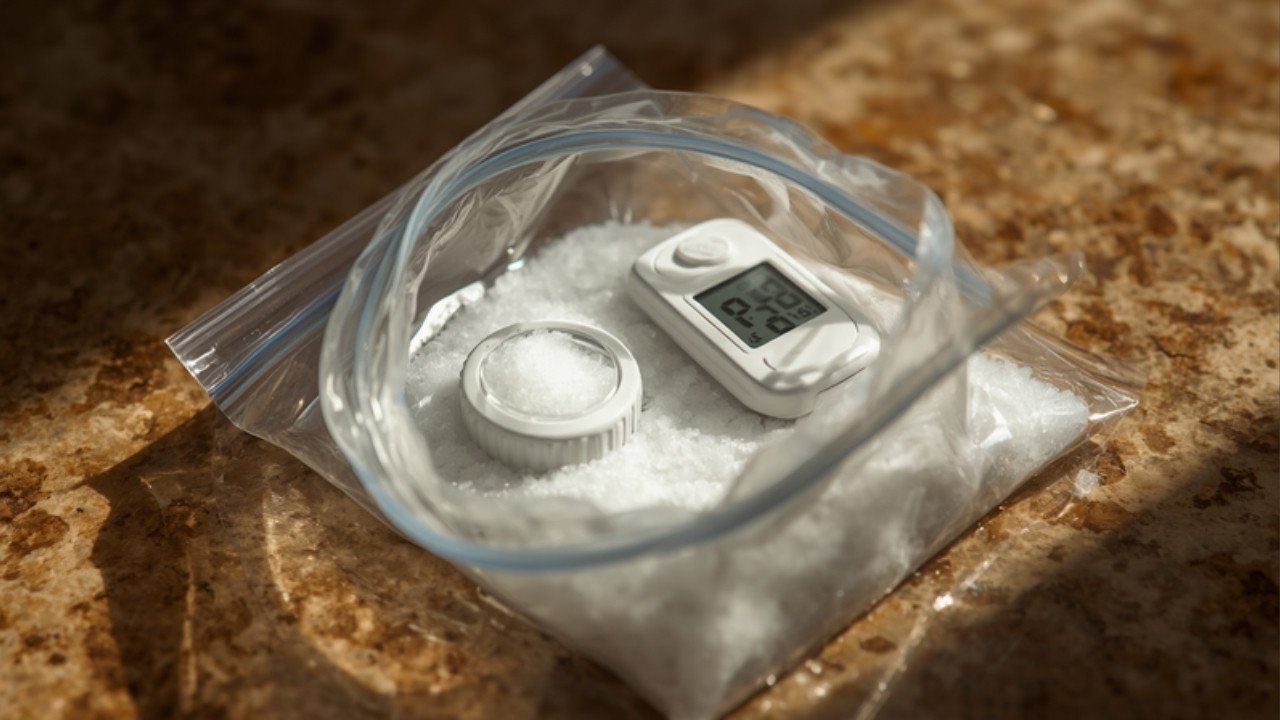
Both types can be checked with the same simple method: the saturated salt test. Fill a bottle cap with ordinary table salt, add just enough water to make a damp (not soupy) paste, and seal it in a small airtight container alongside your hygrometer for 8 to 12 hours. A saturated sodium chloride solution reliably settles at 75% relative humidity, a reference point documented in NIST’s own research on salt-solution humidity standards, and museums and professional calibration labs use variations of this same principle. If your hygrometer doesn’t read 75% after the test, note the difference and mentally adjust future readings by that same offset, or use the unit’s calibration screw or button if it has one. For the full step-by-step process, including how often to repeat it, see our complete guide on how to calibrate a hygrometer.
Temperature Sensitivity
Analog units are noticeably more sensitive to temperature swings than digital ones. A mechanical coil that’s calibrated at room temperature can give a meaningfully different reading in a cold basement or a hot attic, even at the exact same relative humidity. Digital sensors compensate for temperature far better internally, which is part of why they hold their accuracy across a wider range of environments, from a cool wine cellar to a warm greenhouse.
Response Time
Digital hygrometers also tend to react faster to real changes in humidity, often updating within a minute or two of a shift, while analog dials can take considerably longer to physically settle into a new position. If you’re monitoring something that changes quickly, like a room right after a shower or a grow tent after watering, that faster response matters more than it might seem.
Where Analog Still Makes Sense
- No batteries, ever: a purely mechanical dial can’t die silently from a dead battery the way a digital display can.
- Aesthetic or vintage preference: many cigar humidors and antique instrument cases use analog dials specifically for the look, and accuracy is a secondary concern to the overall presentation.
- Simple pass/fail glance: if you just want a rough sense of “too dry / about right / too damp” rather than a precise number, a well-calibrated analog dial is perfectly adequate.
- Very low cost: basic analog units are often cheaper than even entry-level digital ones, which matters if you need several units scattered around a large space.
Where Digital Wins Outright
- Any situation where the actual number matters — nurseries, wine cellars, instrument storage, server rooms, or medical storage — where a few percentage points of drift has real consequences.
- Long-term monitoring without frequent manual recalibration.
- Anywhere temperature swings meaningfully, since digital sensors compensate far better than mechanical ones.
- Situations where you want a fast, precise digital number rather than a needle position you have to interpret.
Once you’ve settled on a hygrometer type, the number it gives you is only useful if you know what to do with it. For most living spaces, our guide to when indoor humidity is too high and our humidity levels by room breakdown both give concrete targets to compare your reading against, and our ideal humidity level guide is a good general starting point if you’re not sure what to aim for yet.
Cost Comparison
Basic analog hygrometers are often the cheapest option available, sometimes just a few dollars for a simple dial, which is part of why they’re still common in inexpensive humidors and starter kits. Entry-level digital hygrometers cost only a little more than that these days, and mid-range digital models with a separate probe, memory of high/low readings, or smart app connectivity sit at a modest premium over analog. Given how much more reliable digital accuracy is for a relatively small price difference, cost alone rarely justifies choosing analog unless you need several units at once on a tight budget.
Matching the Hygrometer to the Use Case
A cigar humidor tolerates slightly more drift than, say, a room where a musical instrument or a piece of art is stored, so the accuracy gap between analog and digital matters less there — plenty of experienced humidor owners still run analog dials successfully as long as they recalibrate on schedule. A wine cellar, a nursery, or a home office doubling as a server closet all benefit more from digital’s tighter accuracy and faster response, since the acceptable margin of error is smaller and the cost of being wrong is higher. Grow tents and greenhouses sit somewhere in between: a small drift usually won’t kill a crop, but consistent digital readings make it much easier to track trends over days and weeks rather than guessing at a needle’s exact position.
Smart Digital Hygrometers Add Another Layer
Beyond basic digital models, a growing category of Wi-Fi or Bluetooth-connected hygrometers logs readings over time and sends alerts if humidity drifts outside a set range, which is useful for anyone monitoring a space they’re not standing in front of every day, like a vacation home, a wine cellar, or a server closet. These smart sensors use the same type of electronic sensing element as standalone digital hygrometers, generally rated accurate to within about 3-5% relative humidity according to manufacturer testing guidance from Ambient Weather, so the main advantage of going connected is the added logging and remote-alert convenience rather than a further jump in precision. If you’re already leaning digital for the accuracy benefits, a connected model is worth the small extra cost mainly for that visibility, not because it reads humidity any more precisely than a basic digital hygrometer sitting on a shelf.
Related reading: How to Choose a Hygrometer for Your Home and Relative Humidity vs. Absolute Humidity.
Are digital hygrometers always more accurate than analog ones?
In practice, yes. Digital sensors typically read within 2-5% of true relative humidity out of the box, while analog dial hygrometers commonly run 5-10% off unless they’ve been recently calibrated. The gap widens further if the analog unit hasn’t been checked in a while.
How often does an analog hygrometer need to be recalibrated?
Every 2 to 3 months for reliable results, since the mechanical coil or hair-tension mechanism inside drifts with age, humidity swings, and physical shock. Digital units should still be spot-checked roughly every 6 months, but they don’t drift nearly as fast.
What is the salt test and does it really work?
The salt test uses a saturated table salt (sodium chloride) solution sealed in a small container with your hygrometer, which settles at a known 75% relative humidity within about 8-12 hours. It’s the same basic principle NIST and museums use for professional calibration, and it’s reliable for both digital and analog hygrometers as long as the container stays sealed for the full test period.
Why do cigar and instrument enthusiasts still use analog hygrometers?
Mostly tradition, aesthetics, and the fact that a simple dial doesn’t need batteries or a display. Some also prefer that an analog unit can’t fail silently the way a digital display can if its battery dies unnoticed — though a dead digital hygrometer is easier to catch than a slowly drifting analog one.
Do digital hygrometers ever need batteries changed and does that affect accuracy?
Yes, most run on small button-cell or AA batteries, and a weak battery can cause an inaccurate or frozen reading before the display fails outright. It’s worth doing a quick salt-test check any time you replace the battery, just to confirm the sensor is still tracking correctly.
Bottom Line
For most people, a digital hygrometer is more accurate, drifts more slowly, and reacts faster to real humidity changes than an analog dial, which is why it’s the better choice for anything where the actual percentage matters. Analog units still have a place for simple, low-stakes monitoring or where the mechanical, battery-free design is part of the appeal, but plan on recalibrating one far more often to trust the number it’s showing you. Whichever type you pick, running the saturated salt test when you first set it up, and every few months after, is the simplest way to know the reading you’re looking at is actually correct.
Getting an accurate reading matters beyond convenience, too: the EPA’s guidance on moisture control and indoor air quality notes that reliable humidity monitoring is a first step in preventing the mold and moisture problems that follow from unnoticed drift, which is exactly what a poorly calibrated hygrometer can hide.