
A dehumidifier works by pulling room air across a cold coil, condensing the water vapor in that air into liquid droplets, and collecting the water in a tank or draining it away — then blowing the drier, slightly warmed air back into the room. Most household units do this with a small refrigeration cycle, the same basic technology found in a refrigerator or air conditioner, rather than by filtering or chemically absorbing moisture.
That simple loop — pull air in, cool it below its dew point, drain off the condensation, warm the air back up, push it out — repeats continuously until the unit’s humidistat senses that the room has reached your target relative humidity and shuts the compressor off.
How Does a Dehumidifier Work, Step by Step?
Inside a compressor-based dehumidifier, a fan draws humid air in through an intake grille and pushes it across a set of cold evaporator coils. Because cold air holds less moisture than warm air, the air’s temperature drops below its dew point — the specific temperature at which water vapor stops staying suspended in the air and turns back into liquid. According to the National Weather Service’s explainer on dew point versus humidity, this is the exact same principle that causes condensation to form on a cold glass of water on a humid day: air touching a surface colder than its dew point cannot hold onto its moisture, so the water condenses out.
As the condensed water drips off the coils into a collection tank (or down a hose, if the unit is set up to drain continuously), the air itself — now measurably drier — passes over a second, warm set of coils on the condenser side of the loop. This reheats the air slightly before it’s blown back into the room, which is why exhaust air from a running dehumidifier usually feels a few degrees warmer than the room around it. A built-in humidistat measures relative humidity continuously and cycles the compressor on and off to hold it near your target, typically the 30-50% range most health and energy agencies recommend.
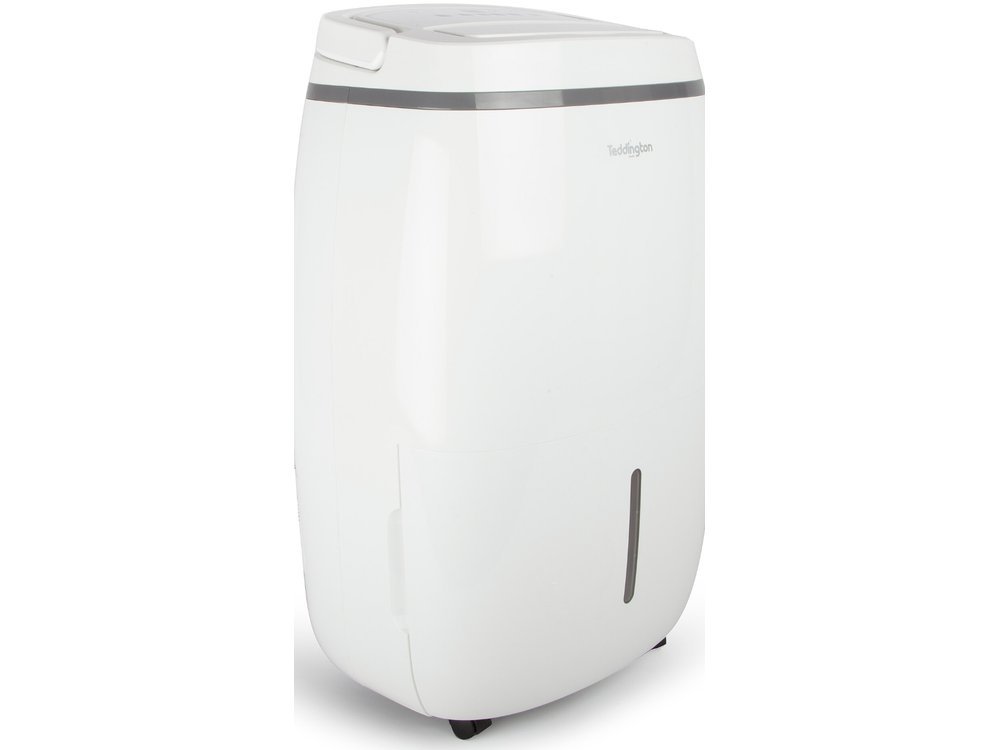
Compressor vs. Desiccant Dehumidifiers
Nearly all whole-room dehumidifiers sold for homes use the compressor-and-coil design described above. The ENERGY STAR dehumidifier guide notes that more efficient models rely on better-performing refrigeration coils, compressors, and fans to remove the same amount of water using less electricity, and that ENERGY STAR certified units include an automatic humidistat so the compressor isn’t running any longer than necessary.
A smaller category — desiccant dehumidifiers — skips refrigeration entirely. These pull humid air through a rotating wheel coated in moisture-absorbing material (often silica gel), then use a heating element to drive the collected water out of the desiccant and into a separate condenser. Desiccant units keep working in cold spaces, such as basements or garages below 65°F, where compressor coils are prone to icing over. That’s worth knowing if your unit is freezing up in a chilly room — it may be the wrong technology for the temperature, not a defect.
Why the Refrigeration Cycle Needs a Minimum Temperature
Because compressor-based dehumidifiers rely on air actually cooling below its dew point on the coil, the coil itself has to run colder than the room. If the room is already cold, that coil temperature can drop below freezing, and the condensed water turns to frost instead of dripping away. That frost layer blocks airflow and can eventually stop the unit from collecting any water at all, which is one of the most common reasons a dehumidifier stops working properly in a cool basement.
What Happens to the Water — and Why Sizing Matters
Once water condenses on the coil, it either drips into a removable tank you empty by hand, or flows out continuously through a hose to a floor drain or sump. Our guide on how to drain a dehumidifier continuously covers both gravity-drain and pump-drain setups.
How much water a unit can realistically pull out of the air depends heavily on matching its rated capacity to your space. An undersized dehumidifier will run its compressor almost constantly and still struggle to bring humidity down, while an oversized one cycles on and off so quickly it never runs long enough to dehumidify efficiently. If you’re shopping for a unit, our room size chart for choosing dehumidifier capacity breaks this down by square footage and how damp the space already is.
Why Removing Moisture From the Air Actually Matters
Understanding how a dehumidifier works only matters if you also know the humidity range you’re aiming for. The EPA’s guide to mold, moisture, and your home recommends keeping indoor relative humidity below 60%, and ideally between 30 and 50%, since mold needs sustained moisture to establish itself on drywall, wood framing, and other organic materials. Our breakdown of what humidity level prevents mold growth covers how quickly mold takes hold once humidity sits above that range for extended periods.
For general comfort rather than mold prevention specifically, most sources — including the EPA’s own moisture-control design guidance — converge on that same 30-50% band. Our guide to the ideal humidity level for homes covers how that target shifts slightly with the seasons and with your home’s construction.
It’s worth noting a dehumidifier is a moisture-removal tool, not a universal humidity fix. If your home runs the other direction — dry skin, static shocks, cracking wood trim in winter — that’s a low-humidity problem a dehumidifier can’t help with at all, and adding one would only make things worse. Our article on signs your home has low humidity explains how to tell which direction your home actually needs to move before buying any equipment.
When a Working Dehumidifier Seems to Do Nothing
Because the entire process depends on airflow crossing a cold coil, anything that restricts that airflow or throws off the coil temperature can make a perfectly functional unit appear broken. A dirty air filter, a blocked intake, low refrigerant, or a room that’s simply too cold for the coil to work efficiently can all lead to a unit that runs but barely collects water. If that’s happening to you, our troubleshooting guide on why your dehumidifier isn’t collecting water walks through the most common causes in order of likelihood, and our separate guide on dehumidifier freezing up covers the coil-icing issue specifically.
In short: a dehumidifier isn’t magic, and it isn’t a filter. It’s a small, purpose-built refrigeration system that cools air below its dew point on purpose, catches the water that falls out as a result, and returns drier air to the room — over and over, until your humidistat says the job is done.
Frequently Asked Questions
Does a dehumidifier cool or heat a room?
Neither, in any noticeable way. The air is cooled briefly inside the unit to condense moisture out of it, then reheated across the condenser coil before being released, so the exhaust air is usually slightly warmer than the room, not cooler.
How does a dehumidifier know when to stop?
A built-in humidistat continuously measures the room’s relative humidity and switches the compressor off once the air reaches the target level you’ve set, then switches it back on if humidity rises again.
Why does my dehumidifier stop collecting water in a cold room?
Compressor-based dehumidifiers cool air below its dew point on a coil, and in rooms below about 65°F that coil can drop below freezing, coating it in frost instead of dripping water. A desiccant dehumidifier, which uses moisture-absorbing material instead of refrigeration, performs better in cold spaces.
Is a dehumidifier the same as an air conditioner?
They use the same refrigeration cycle and both remove some moisture from the air, but an air conditioner is optimized to lower temperature and dehumidification is a side effect, while a dehumidifier is optimized to remove moisture and intentionally reheats the air afterward so room temperature stays roughly the same.